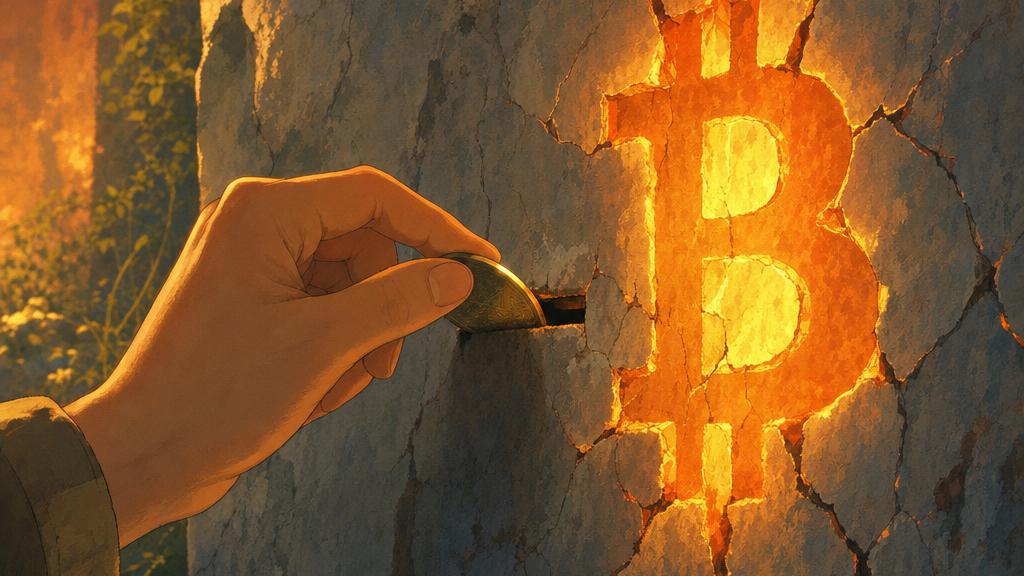
Your Paycheck Is A Melting Ice Cube

Every payday feels like progress until you measure what the money can actually buy.
The number hits your account, the email lands, the direct deposit clears, and for a moment the scoreboard looks higher. Then rent resets the board. Groceries take another bite. A quiet tax sits inside every dollar before you even spend it, and most people are trained to call that normal.
Bitcoiners see the trick.
The paycheck is only half the story. The other half is the unit you are being paid in, and if that unit keeps bleeding purchasing power, your labor is being discounted after the work is already done.

PAYDAY IS THE BEGINNING
Most people treat payday like the finish line. Bitcoin teaches you to treat it like the starting line.
The work happened in the past. The value arrived today. The question is what happens next. Do you leave that value inside a currency designed for constant expansion, or do you move some of it into money with a final supply?
That question changes everything about personal finance. It brings saving back to its original meaning, storing yesterday's labor in a form that can meet tomorrow with strength.
Every paycheck is a claim on your time. The state can create more currency units, but it cannot recreate your hours.
That is why Bitcoin hits hard once it clicks. It turns income from a temporary balance into a long-term decision. It gives the worker a way to keep score in something harder than policy promises.
THE UNIT MATTERS
A raise can still leave you behind when the measuring stick keeps changing.
This is the part the fiat world works hard to hide. People are told to ask whether they earned more dollars this year. Bitcoiners ask whether those dollars command more real life. More food. More shelter. More energy. More freedom.
When the unit melts, the headline number becomes theater.
Bitcoin gives savers a fixed reference point. Twenty-one million is more than a supply cap. It is a moral line in the sand. Nobody gets to dilute your share because a committee wants another lever.
This is why stacking sats feels different from saving cash. Cash saving asks you to trust the issuer. Bitcoin saving asks you to verify the rules. The difference shows up in your nervous system.
WORK DESERVES HARD MONEY
Labor is sacred because time matters.
A person trades hours, focus, skill, risk, and energy for money. That trade deserves a settlement asset that respects the weight of what was given up. Hard money gives work somewhere dignified to land.
This is why Bitcoin is so personal. It touches the person clocking in early, the founder skipping salary, the parent taking extra shifts, the freelancer chasing invoices, and the young saver building a future.
Bitcoin says your effort can be carried forward.
That is a radical idea in a culture built around consumption, debt, and planned monetary decay. Fiat culture pushes speed. Spend faster. Borrow sooner. Chase yield. Bitcoin culture slows the room down. Earn honestly. Save deliberately. Hold your keys. Think in decades.
Low time preference becomes practical when the money supports it.

SATOSHIS ARE STORED HOURS
A sat is more than a tiny fraction of a coin. It is a container for human time.
Once you see sats that way, the whole game changes. The daily coffee math changes. The raise changes. Extra money stops being loose fuel for impulse and starts becoming stored optionality.
That optionality is freedom in its quietest form.
It is the ability to wait. The ability to refuse bad terms. The ability to move. The ability to help family. The ability to build without begging permission from a bank.
Bitcoiners stack because they understand the trade. Every sat represents a decision to preserve energy instead of leak it back into the fiat machine. Every withdrawal to self-custody declares that earned value belongs with the earner.
Nobody needs to be rich to understand this. Workers understand it faster than anyone. When you know what it took to earn the money, you feel the insult of watching it melt.
THE QUIET REVOLUTION IS AUTOMATIC
The strongest Bitcoin habit is boring on purpose.
Get paid. Pay obligations. Stack sats. Withdraw. Repeat.
A steady conversion of melting units into scarce money. Over time, that routine rewires a life. It turns anxiety into a system. It turns the paycheck from a treadmill into a bridge.
That is the quiet revolution happening inside ordinary accounts. People are taking the money they earn in the old system and moving it, piece by piece, into the new one. They are voting with direct deposits, hardware wallets, nodes, and patience.
The fiat world still thinks in pay periods. Bitcoiners think in epochs.