
Every Company Holding Cash Is Making A Losing Bet

Every CFO in the world thinks they are playing it safe by holding dollars, when in reality they are placing a bet. A bet that the unit of account they chose to store value in will hold that value over time. And that bet has been losing for decades.
Bitcoin changed the math. And a growing number of companies have figured this out.
THE BET EVERY TREASURER IS ALREADY MAKING
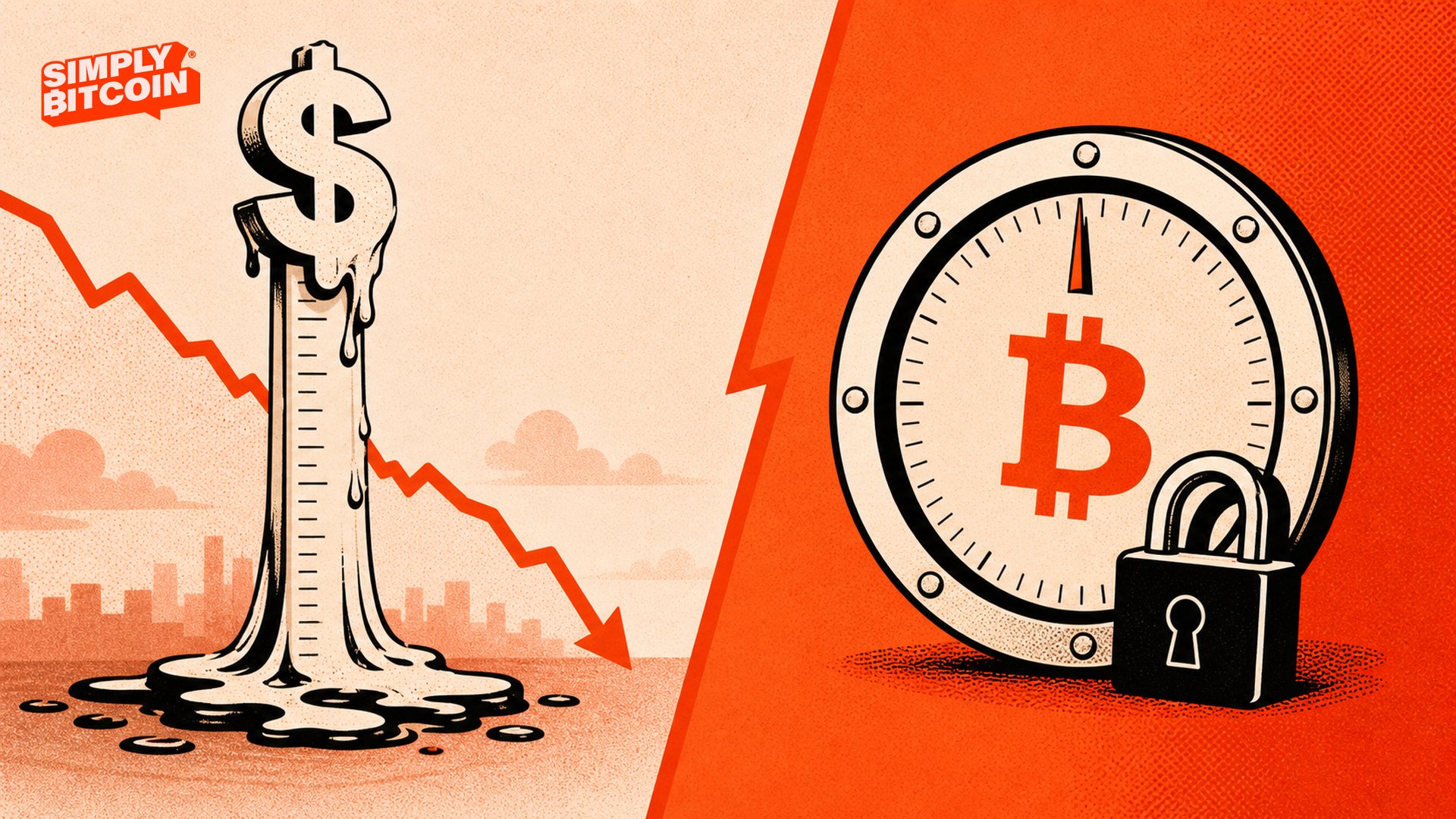
When a company keeps cash on its balance sheet, it isn't neutral. Cash doesn't just sit there, it erodes. The Federal Reserve has spent the better part of a century proving this. Since 1971, the dollar has lost over 85% of its purchasing power against real goods. Against Bitcoin, the comparison isn't even worth making.
A corporate treasurer who holds dollars is not being conservative. They are choosing to slowly bleed. They are trusting that central bankers will not devalue their savings, that politicians will not run deficits too large to manage, that the next crisis will not require another round of money printing. That is a lot of trust to extend to people with a printing press.
Bitcoin asks for none of that trust. Bitcoin's supply schedule is set. The issuance is known. The rules do not change because a committee voted. Every company that holds Bitcoin on its balance sheet has simply decided to stop relying on trust and start relying on math.
MICROSTRATEGY SHOWED THE BLUEPRINT
In August 2020, Michael Saylor made a decision that the financial media called reckless. MicroStrategy, his enterprise software company, converted its treasury reserves to Bitcoin. The explanation he gave was simple: holding dollars was a guarantee of loss, and he wanted a treasury strategy built on a harder asset.
The numbers since then have spoken clearly. While the dollar continued to lose purchasing power and bonds returned almost nothing in real terms, Bitcoin appreciated substantially, turning a corporate treasury move into one of the most discussed financial plays of the decade.
What Saylor did was not reckless. It was honest accounting. He looked at what the dollar actually does over time, looked at what Bitcoin does over time, and made a rational decision based on the data.
Other companies noticed. Metaplanet in Japan, Semler Scientific, a growing list of smaller firms across multiple continents. The template was out in the open. Any company sitting on idle cash now had a publicly documented model to examine.
"Go buy the Bitcoin and wait because hundreds of trillions of dollars of capital are going to flow into cyberspace to the Bitcoin network."
- Michael Saylor
THE FIDUCIARY ARGUMENT FLIPPED
For years, the argument against corporate Bitcoin adoption was fiduciary. "We have a duty to our shareholders not to take unnecessary risks." The assumption buried inside that argument was that holding dollars is risk-free and Bitcoin is risky.
That assumption is wrong, and more treasurers are starting to say so out loud.
Holding dollars is not risk-free. It is currency risk, debasement risk, and inflation risk, all bundled together and labeled "safe" by convention. Bitcoin is volatile in the short term and mathematically capped in the long term. The question every CFO should be asking is not "which is riskier" but "which risk do I understand better, and which risk do I want to carry?"
A company that understands Bitcoin and holds it is not gambling. A company that holds dollars without understanding monetary policy is gambling with its eyes closed.
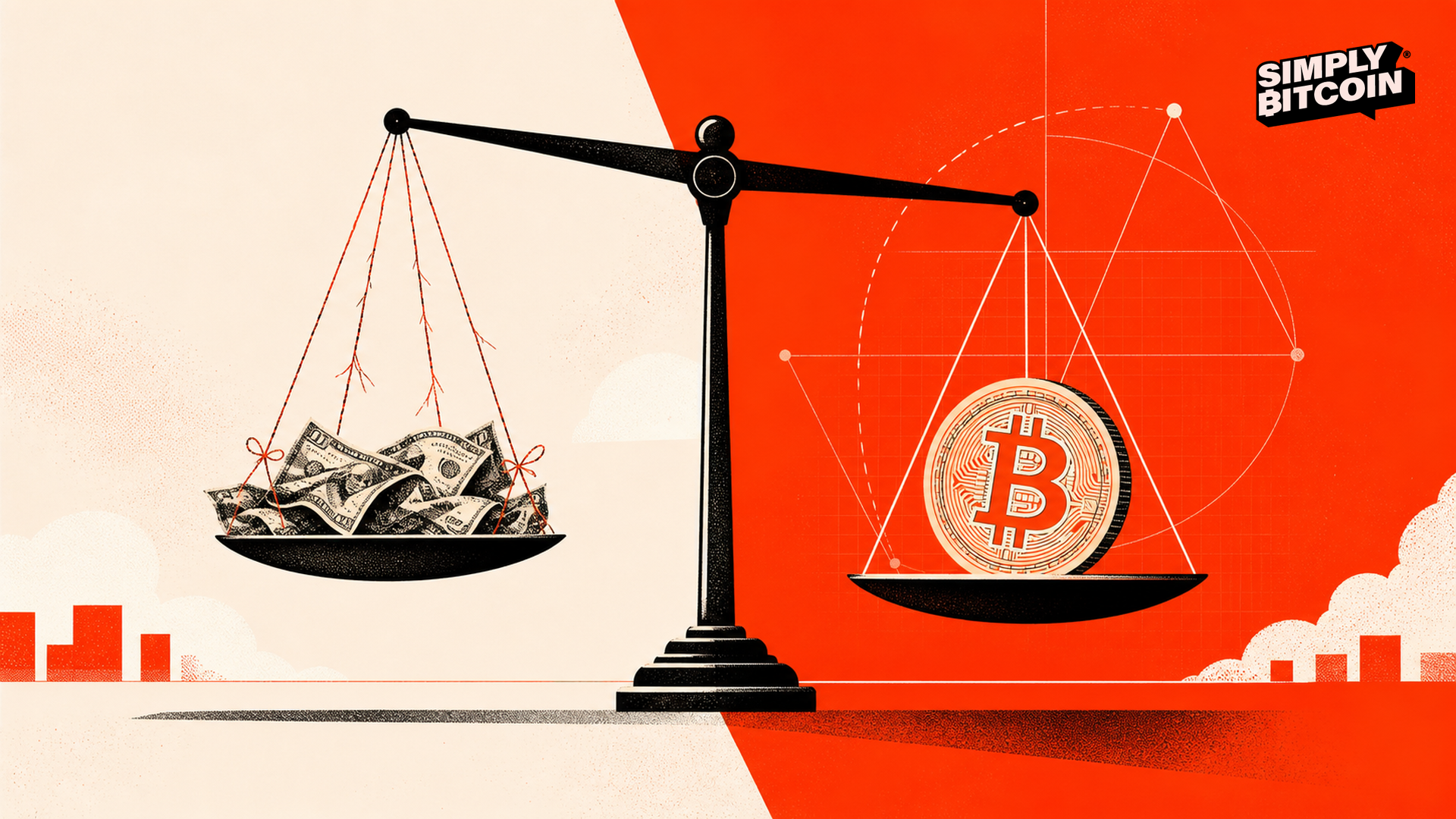
The fiduciary argument has flipped. The more defensible position for a long-term steward of capital is not "we stayed in dollars." It is "we analyzed every store of value available and chose the one with the hardest supply cap in history."
WHAT COMES NEXT
The companies that made this move early are already sitting on assets that their competitors do not have. That changes competitive dynamics over years and decades in ways that are hard to model but easy to understand directionally.
A company with a Bitcoin treasury can weather inflation in a way that a cash-heavy competitor cannot. A company with Bitcoin on its balance sheet has an asset that cannot be diluted by a central bank decision made at 2am. That is structural advantage, compounding quietly.
The accounting standards are catching up too. Bitcoin's treatment under evolving FASB guidance has made the boardroom conversation easier for public companies. The legal and accounting friction that once made this awkward is falling away.
Every year that passes, more CFOs will face the same decision Michael Saylor faced in 2020. And every year that passes, the case for holding only dollars gets harder to make.
The question is not whether more companies will hold Bitcoin. The question is which ones will move before the door gets crowded.
The companies that understood sound money first will have balance sheets that the rest can only envy.