
Aggregation Creates The Target. Bitcoin Was Built Without One.

Every few months another institution announces that its systems were breached, and every few months the public shrug gets a little wider. The outage becomes background noise, the apology letter becomes a template, the free credit monitoring becomes a punchline. But underneath the fatigue sits a mechanical fact nobody built into the conversation. The breach was never really bad luck. It was the predictable output of a design choice made years earlier: put everyone's secret in one place.
THE ECONOMICS OF A SINGLE TARGET
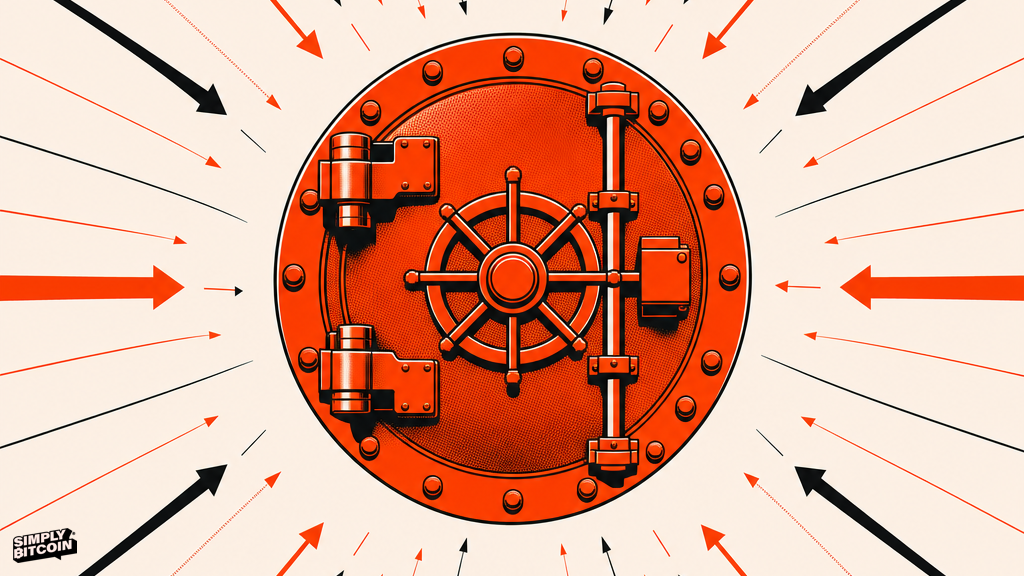
A thief who wants one person's financial history has to find that person, study them, and break into their specific life. A thief who wants a hundred million people's financial history only has to break into one database once. Centralization does not just make a system efficient to run. It makes a system efficient to rob, because it collapses the cost of the attack while multiplying the payoff.
This is why the targets keep being banks, credit bureaus, hospital networks, and federal agencies that store financial or identity records. Nobody has to out-think a sophisticated adversary one victim at a time. They just have to find the one door that every victim happens to share.
WHY WE BUILT IT THIS WAY ANYWAY
None of this was built by villains twirling mustaches. One login that unlocks your whole financial life is convenient. One customer service line that can see everything about your account is convenient. One federal database that can verify every applicant's background in seconds is convenient. Aggregation is what you get when you optimize for ease of service and defer the question of what happens if the vault ever fails.
That deferral is the whole problem. The institutions that build these systems rarely bear the cost of a breach in proportion to the damage it causes. A company pays a settlement years later. The people whose Social Security numbers are now permanently public carry the exposure for the rest of their lives.
WHAT ONE AGGREGATION POINT ACTUALLY COSTS
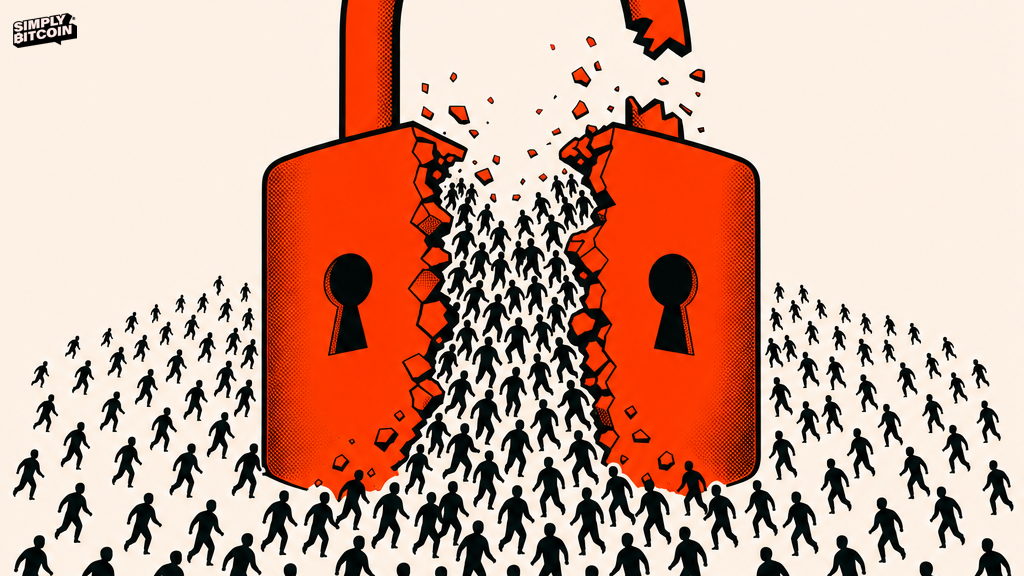
Private records of 147.9 million Americans, along with millions more in Britain and Canada, were compromised in the 2017 Equifax breach. That is not a company losing a customer list. Most of the people affected never chose to do business with Equifax and had no way to opt out, because the company collected and sold their financial records regardless.
The detail that matters is not the size of the number. It is that nearly half the adult population of a country ended up with their most permanent identifying information sitting in one place, protected by one company's patching schedule. The breach was not the failure. The single point was.
THE INVERSION BITCOIN MAKES
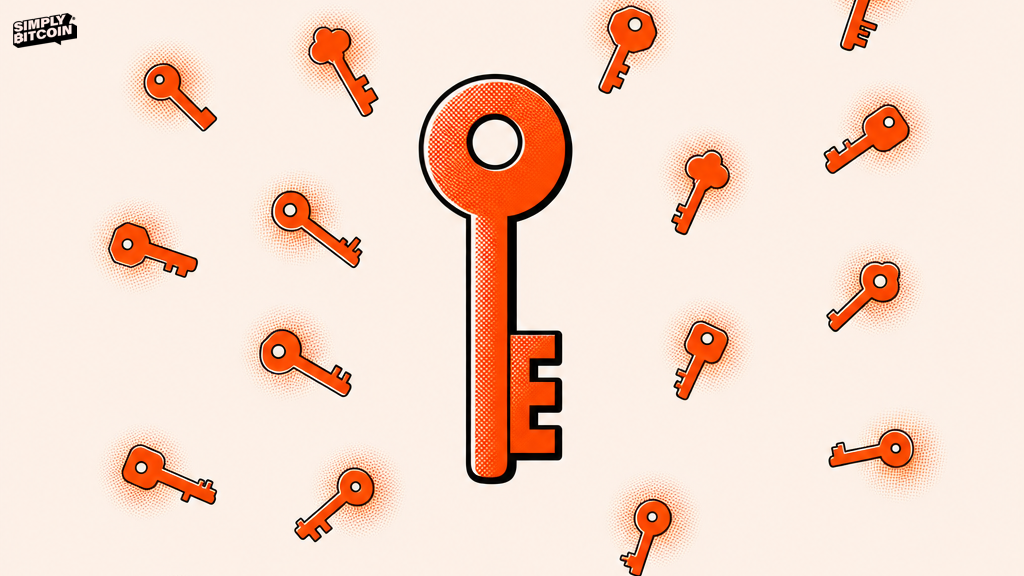
Bitcoin runs on the opposite assumption. The ledger itself, every balance and every transaction, is published in full and verifiable by anyone who wants to check it. There is nothing secret about the data. The only thing that is ever secret is a private key, and that key is never aggregated anywhere on anyone else's behalf by default.
This is the part that sounds backwards until you sit with it. Making the ledger public does not create the target. It removes it. There is no central database of balances worth breaking into, because the balances were never hidden in the first place. The only thing an attacker could ever take is one person's key, which was never stored next to anyone else's.
Self-custody is not a lifestyle preference layered on top of Bitcoin. It is the literal refusal to rebuild the honeypot that every other financial system keeps rebuilding by habit.
THE PART SELF-CUSTODY DOESN'T ADVERTISE
None of this makes self-custody free of cost. It trades an institution's liability for your own responsibility. There is no fraud department to call if you lose the key. No password reset. No settlement fund twelve years later. The system that cannot be breached in bulk is also a system that will not rescue you individually.
That tradeoff is real, and pretending otherwise is its own kind of dishonesty. But it is worth naming plainly what the alternative actually is. The convenience of letting someone else hold your secret always comes bundled with the fact that your secret is now sitting next to someone else's, waiting for whoever finds the one door first.
The question was never whether a system can be made perfectly safe. It is whether the safety comes from a bigger wall around a bigger vault, or from making sure there was never a vault worth finding.


Daily Bitcoin news, analysis and interviews. New shows every single day.
Subscribe on YouTube