Debasement Doesn't Make You Reckless. It Makes Patience Expensive.
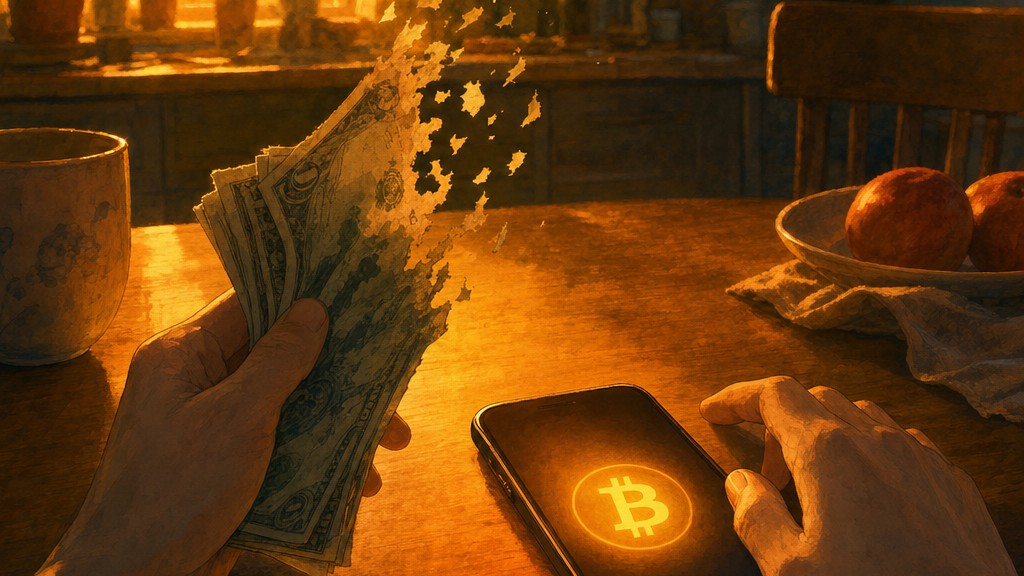
Record numbers of Americans are borrowing against their own portfolios just to stay in the market, and a sportsbook app has turned an ordinary Sunday into a line item in the household budget. The easy read is that people have gotten reckless. The more useful read is about what happens to ordinary behavior once the ground underneath it stops holding still.
THE MATH THAT PUNISHES WAITING
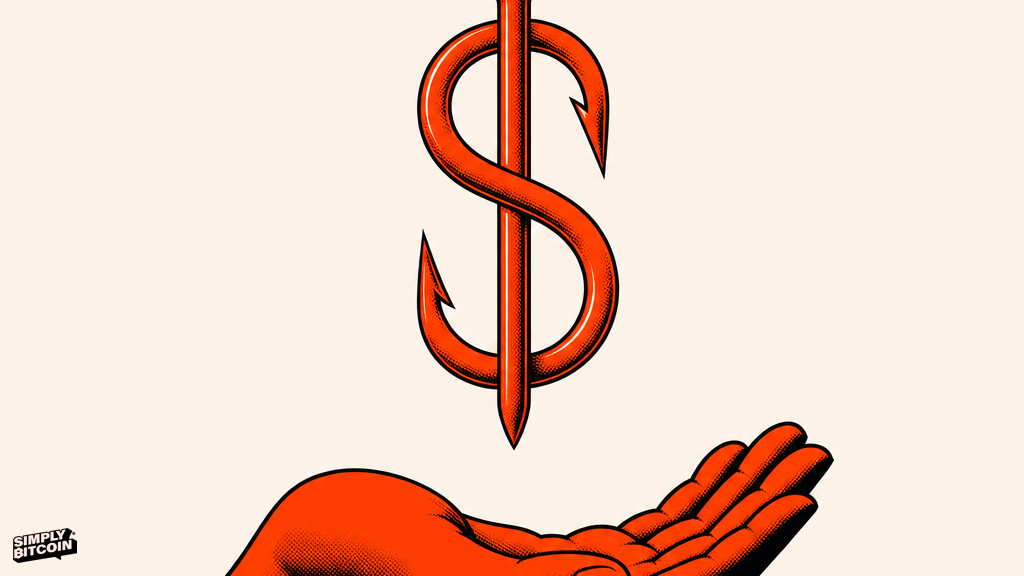
Start with the plainest fact about holding cash. If a currency loses purchasing power every year and the yield on sitting still does not keep pace, waiting is not a neutral choice. It is a guaranteed, quiet loss. A dollar that buys less rent, less of next month's insurance, less of a flight home than it buys today is not idle. It is leaking.
That math changes what counts as rational. Once doing nothing already loses, doing something risky stops looking reckless and starts looking like the only way to stay even.
Picture the worker who did everything the old advice recommended: save steadily, keep a cushion, avoid debt. Rent, groceries, insurance and gas have still outrun that cushion every year it sat untouched in a savings account. Doing everything right can still feel like losing, because in dollar terms, it often is.
Margin debt is the cleanest measure of what that pressure produces. As of October 2026, investors were carrying roughly $1.45 trillion in margin debt, up 22 percent from a year earlier. That is not a parade of degenerate gamblers. It is millions of ordinary decisions, each one responding correctly to the same signal: a currency that punishes patience eventually gets more people to stop being patient.
A GOVERNMENT THAT GAMBLES THE SAME WAY
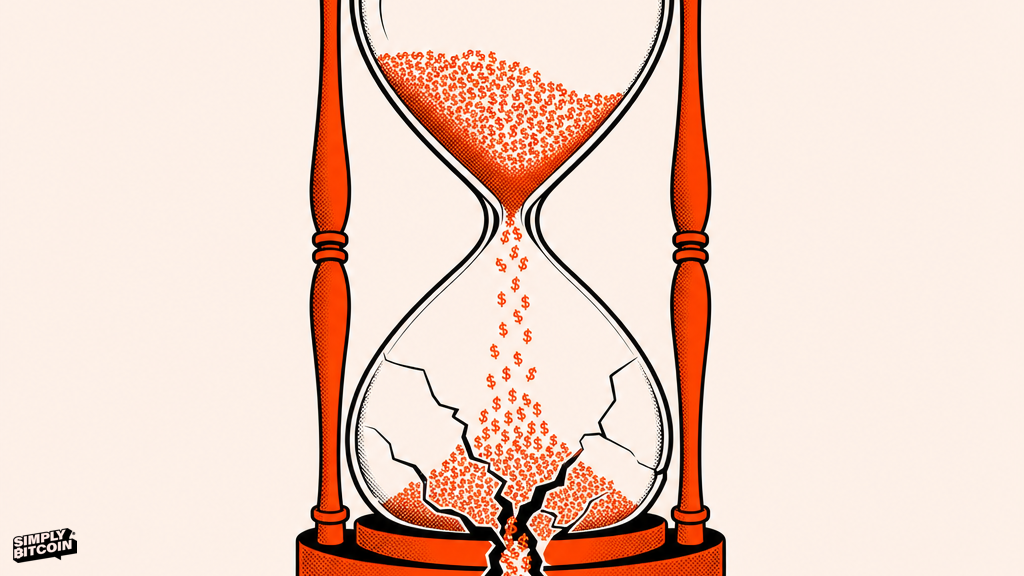
The individual chasing a bigger return did not invent this pattern. The government running the currency got there first, at a scale no household could match. Washington spent a record $1.05 trillion in net interest on the national debt in fiscal 2026, more than the $965 billion it spent on national defense. Interest is now the government's third-largest expense, trailing only Social Security and Medicare.
The response to a bill that size was not to spend less. It was to borrow more. Total federal debt passed $40 trillion during the year, and the way that debt gets serviced without default is the same lever every time: more currency enters the system than existed before.
Each new dollar created to cover that interest bill is also a dollar that makes every dollar already in your pocket worth slightly less. The fix for the government's borrowing problem is made of the same substance that caused it, which means the private saver faces the identical squeeze again next year, and the year after that.
THE INDUSTRY BUILT TO CATCH YOU ON THE WAY DOWN
An entire industry has built its business model around exactly this math. Free bets to open an account, one tap leverage that used to require a broker on the phone: none of it manufactures the need for an edge. It simply profits from a need that debasement already created.
None of this is a new story. People have reached for risk to outrun a weakening currency for as long as currencies have weakened. What changed is the friction. A line at the bank used to slow a bad decision down by a day. A phone now approves it in four taps.
A free bet is not generosity. It is a company that understands a mind already looking for a way to catch up is a mind that keeps coming back. The same is true of an app that makes it effortless to borrow against a portfolio at a moment when sitting in cash already guarantees a loss. The product did not create the desperation. The currency did. The product just found a way to bill for it.
WHAT A FIXED SUPPLY ACTUALLY REMOVES
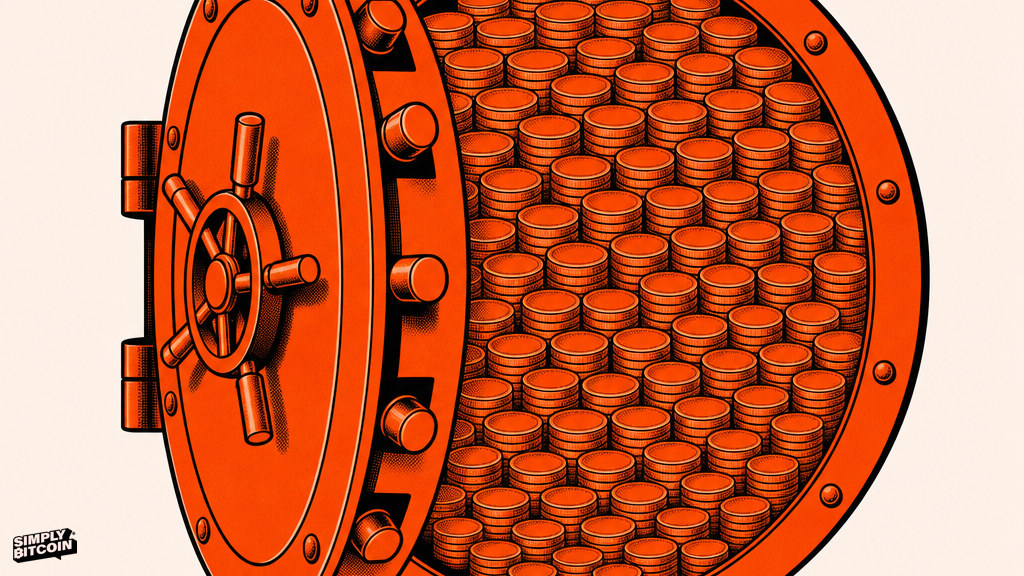
Bitcoin does not remove risk from the world, and it does not make anyone immune to a bad decision. What a fixed supply of 21 million actually removes is narrower and more specific: the structural guarantee that holding loses.
No central bank, legislature, or committee can vote more bitcoin into existence to cover a shortfall. There is no interest bill to outrun by printing, because there is no printer. That does not make bitcoin calm. It is still volatile enough to humble anyone who treats it like a savings account with better branding. But volatility chosen by a buyer is a different animal from a loss imposed on a saver by design. One is a risk you take. The other is a tax you cannot opt out of.
That is the deeper point underneath the fixed supply. A currency run by a legislature will always be available to a legislature with a deficit to cover. A currency nobody can vote on does not have that option, which is exactly why it cannot quietly become the backstop behind someone else's overspending.
THE DIFFERENCE BETWEEN A CHOICE AND A TRAP
There is nothing wrong with taking a real risk on purpose. People should be free to swing for something they actually want. The problem is a monetary system that quietly converts everyone's caution into a losing position, then treats the result as a character flaw.
The margin trader and the retiree who finally buys a speculative stock late in life usually get filed as two different stories, each a personal lapse in judgment. Look again and they are the same person responding to the same signal at two different volumes: a currency that will not hold still long enough to be worth holding. Fix that one input, and a lot of the recklessness built on top of it stops being necessary at all.


Daily Bitcoin news, analysis and interviews. New shows every single day.
Subscribe on YouTube