A Full Node Turns Belief Into Verification

Bitcoin rewards people who stop outsourcing truth.
That is the part most people miss when they first arrive. They learn about 21 million, self-custody, miners, cold storage, and the halving schedule. Underneath all of it sits a deeper idea, one that changes how you relate to money forever.
You do not have to ask permission to know what is true.
A full node is how an ordinary Bitcoiner turns conviction into direct verification. It is the quiet machine in the corner that checks every block, every transaction, every rule, and every coin against the monetary system you chose freely.
It just verifies.

Your Node Is Your Vote
Bitcoin "governance" is not speeches, press releases, or boardroom meetings. It's thousands of independent machines refusing to accept invalid money.
That is what gives Bitcoin its spine.
When you run a full node, you are enforcing the rules from your own home, office, server rack, or basement shelf. You are saying that the supply cap, transaction validity, block structure, and consensus rules are the conditions under which your machine recognizes Bitcoin.
Every full node is a line in the sand.
This is why Bitcoin feels different from every financial system that came before it. Fiat money asks you to trust the institution. Bitcoin lets you verify the institution out of the equation, without credentials, permission, or a special relationship with a bank.
That is power in its cleanest form.

Trustless Money Needs Trustless Users
Bitcoin doesn't ask for blind faith. It invites participation.
Running a node sharpens the way you think because it removes a layer of dependency most people never notice. With a node, you are asking your own machine what happened on the network. You are consulting your own copy of the timechain.
That distinction matters.
It changes the default posture from “someone told me” to “I checked.” Once that clicks, the entire fiat world starts to look fragile. Bank balances become promises in a database. Central bank statements become theater.
Bitcoin gives you the tools to develop monetary judgment from first principles.
A full node is not just hardware. It's a habit. It teaches you to verify before you accept, to check before you repeat, and to hold the line before consensus gets social.
The Rules Are Local Before They Are Global
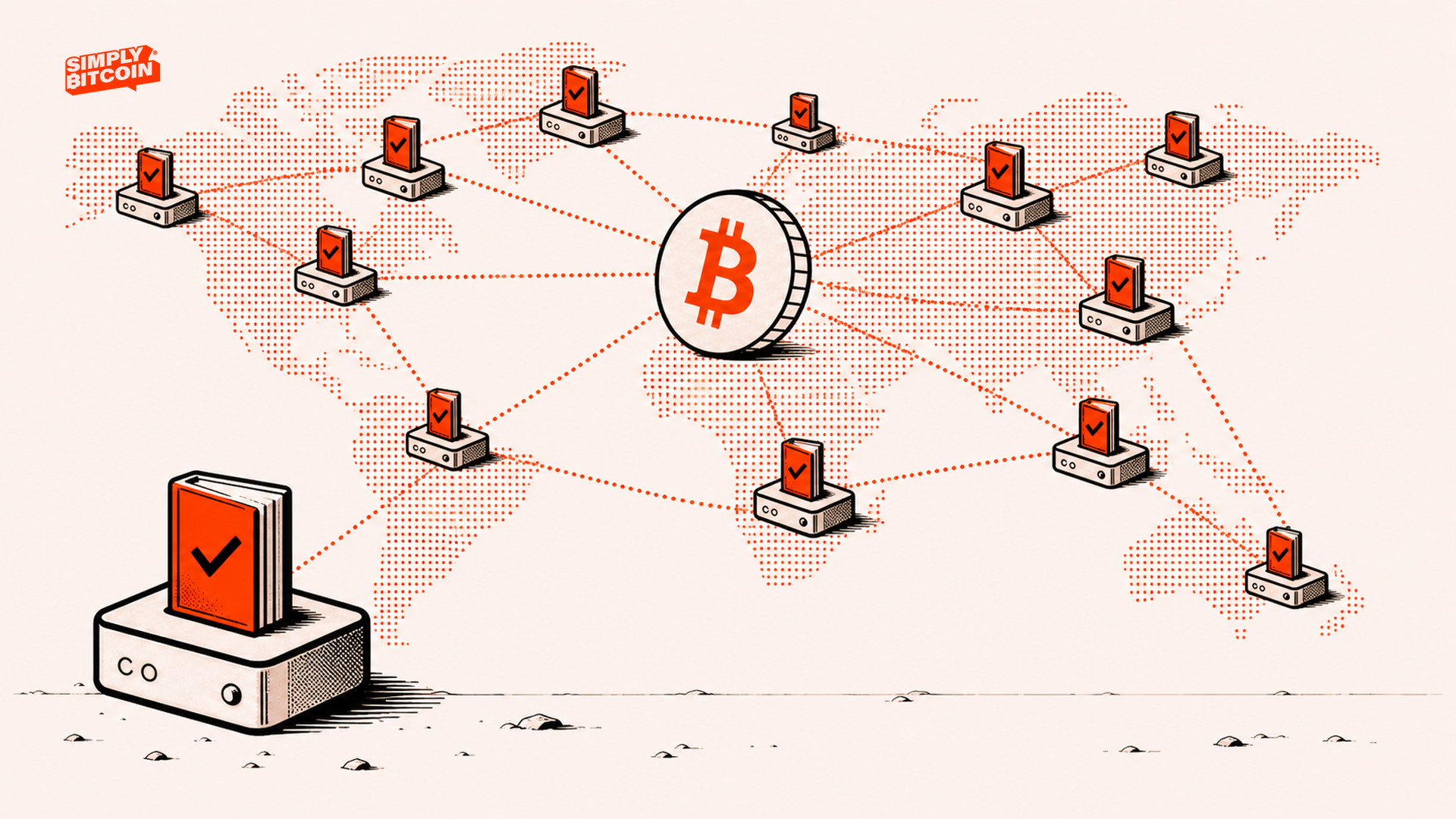
People talk about Bitcoin as a global network, and it is. But the global network only matters because the rules are enforced locally.
Your node does not outsource consensus to a company. It downloads blocks, validates proof of work, checks signatures, confirms supply, and rejects anything that violates the rules you chose to run. That local enforcement is what makes the global network incorruptible.
Bitcoin is global because verification is personal.
This is the opposite of the old monetary order. In fiat, the rules live far away, written in closed rooms and delivered to the public after the fact. In Bitcoin, the rules live on machines operated by people who can read them, run them, and refuse changes that betray them.
That creates a different kind of citizen.
The node runner is not waiting for monetary permission. The node runner is participating in the settlement layer of a new civilization, one block at a time.
Sovereignty Gets Practical
Self-custody gets most of the attention because keys are easy to understand. Hold your own keys, control your own coins. Simple.
A node takes that sovereignty deeper.
Your keys let you spend. Your node lets you know. Together, they make Bitcoin ownership feel complete. You can receive to your own wallet, verify your own transactions, watch your own confirmations, and stop depending on someone else’s view of the network.
The hardware can be small. The setup can be simple. The principle is enormous.
You are no longer a customer looking through someone else’s window. You are standing inside the network with your own copy of the ledger and your own rule enforcement. Bitcoin feels less like an app and more like infrastructure you personally joined.
That is when stacking sats becomes something more than accumulation. It becomes participation.

The Quiet Revolution Runs At Home
The beautiful thing about a node is how unimpressive it looks to the outside world.
No marble building. No trading desk. No suit. Just a small machine, an internet connection, and a person who decided that monetary truth should be independently checked.
That is exactly why it matters.
Bitcoin’s strongest institutions are individuals running software, holding keys, teaching family, saving in better money, and opting into rules no politician can rewrite for them. The full node is one of the purest expressions of that movement because it brings the network home.
It says this house verifies.
That matters now, and it will matter more as the world realizes what Bitcoin has built. The future will not be secured by spectators. It will be secured by people who run the rules, hold the keys, and refuse to hand monetary truth back to the same system Bitcoin made obsolete.