Your Job Needs A Zip Code. Your Bitcoin Never Will.
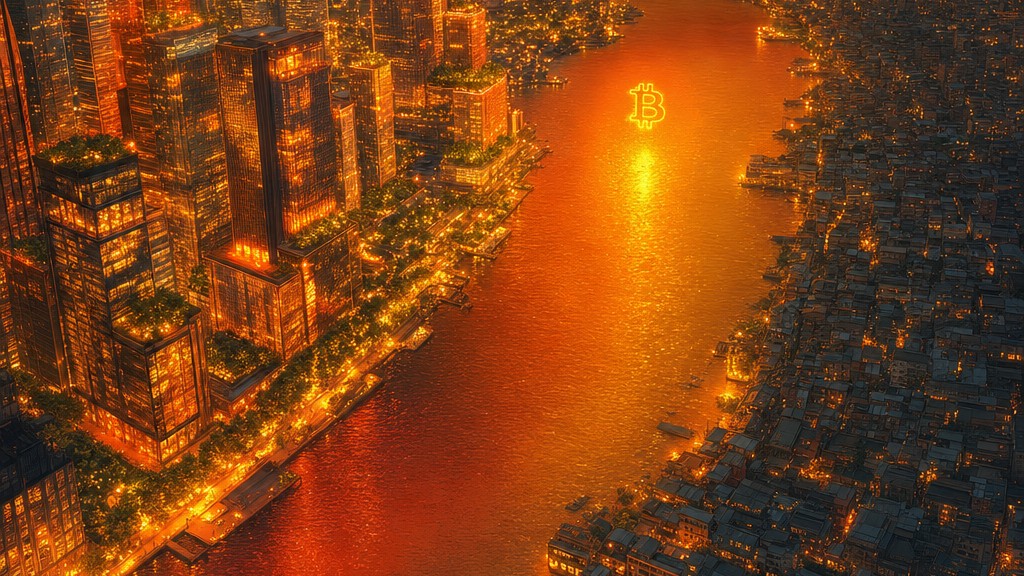
Paris spent a weekend on fire over the cost of living. More than half a million people marched across France, city halls burned, and by the time the smoke cleared the country was counting the damage. One protester told reporters the imbalance of wealth and power had become completely out of control. Underneath the politics, the anger traces back to simple math: a shrinking number of places hold almost all the opportunity, and everyone who cannot afford to stand in one of them gets pushed toward the edge. France is not a special case. It is further along a sorting that is already underway in cities everywhere.
THE CITY THAT SORTS BY WHAT YOU CAN AFFORD TO STAND ON
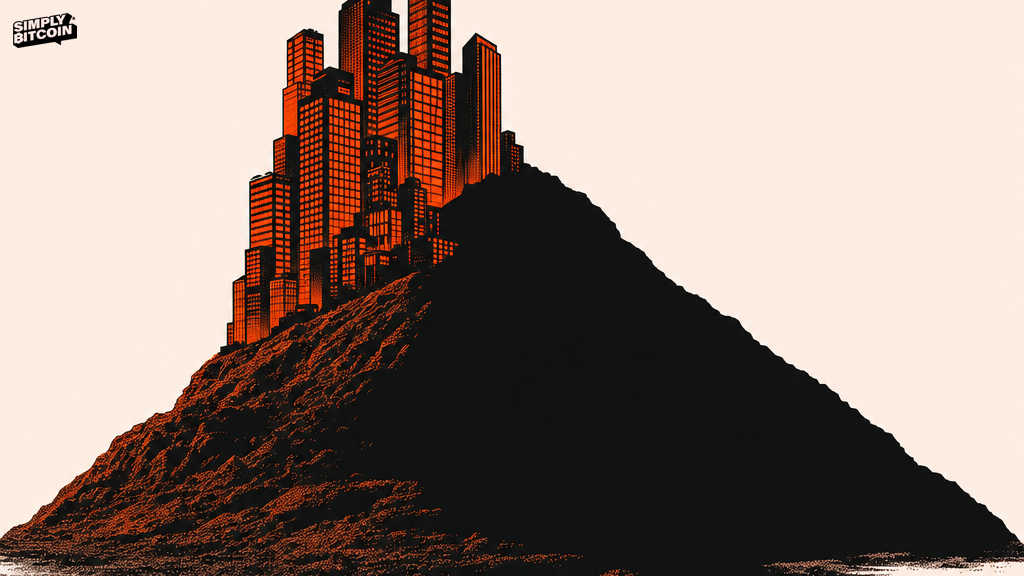
Walk through almost any major Western city today and the same pattern shows up. On one side are highly paid professionals who can afford a $3 million home near the office. On the other is subsidized housing for people doing the lowest paid work the service economy still needs done. In between, where the middle class used to live, there is almost nothing left. Walk the same neighborhoods and you will notice dogs everywhere and almost no children, because owning a home, let alone raising a family, has quietly become a luxury good reserved for whoever can still afford the zip code.
Venture capitalist Marc Andreessen has described the result in blunt terms: a police officer or a firefighter working a city job in a place like Palo Alto can end up commuting three hours each way just to afford a house and a family. The job stayed in the city. The life the job was supposed to buy got pushed somewhere else entirely.
WHY THE KNOWLEDGE ECONOMY HAD TO PICK A FEW ZIP CODES
This did not happen by accident. An agricultural or industrial economy has to spread out, because farmland, rivers, ports, and factories are tied to specific places on a map. A knowledge economy runs on the opposite instinct. Software, finance, and research depend on putting unusually specialized people in the same rooms so they can argue, borrow ideas, and move fast together.
That proximity requirement concentrates growth into a handful of cities almost by design. Everyone outside the knowledge class becomes a renter, literally or figuratively, of whatever space the winners leave behind. The cop and the firefighter are not failing to compete. They are competing for space that was never built with them in mind.
THE SAME SORTING IS COMING FOR CURRENCIES
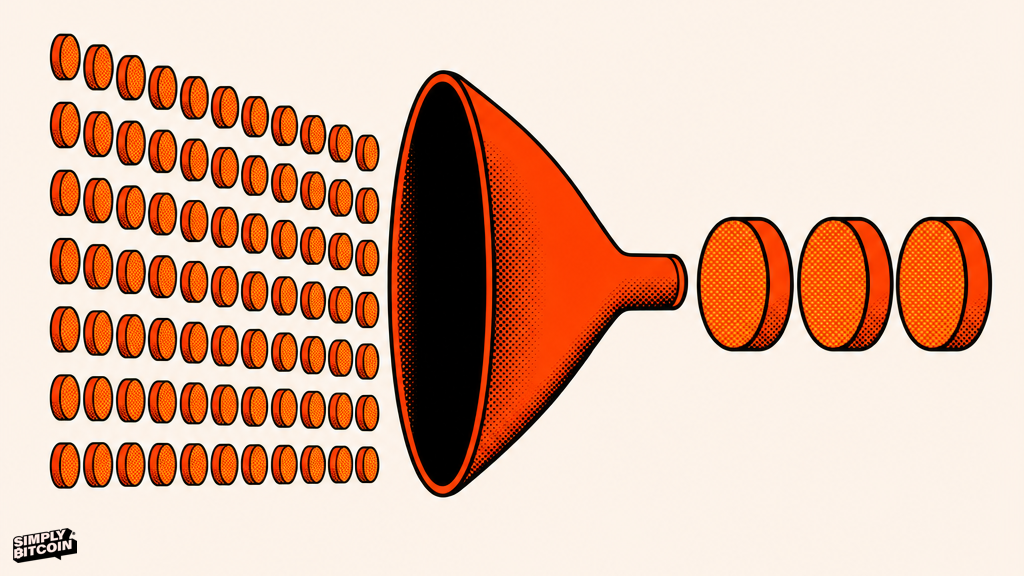
The same logic is now arriving at the level of nations. David Velez, founder and chief executive of the Brazilian bank Nubank, has argued that the roughly 190 currencies in the world today could shrink to something closer to ten within the next decade or two. His reasoning is not exotic. A currency is only worth holding if people trust the government standing behind it, and that trust, like talent in a knowledge economy, is becoming scarce and concentrated in fewer places.
Velez expects the overflow to land in a narrow set of havens: the US dollar, the stablecoins pegged to it, and Bitcoin. Confidence is agglomerating the same way office jobs did, into fewer and fewer addresses, leaving most national currencies to play the role the middle class now plays in the sorted city.
THE WORKERS PROPPING UP THE SORTED CITY ARE NOT SAFE EITHER
The uncomfortable part of this sorting is that even its winners are not secure. The same cities that filled up with highly paid knowledge workers are now watching artificial intelligence move into the exact jobs that pay for the $3 million homes and the tax base that keeps the city running day to day.
This is not a new story. In the late 1960s, investors piled into a group of stocks nicknamed the Nifty Fifty, companies marketed as so dominant that nothing could go wrong. Within a few years most of those stocks lost the majority of their value, because the thing priced in, that nothing would ever go wrong, was never true. The knowledge economy's winners today are being priced the same way, as if the city they built could never lose its tax base.
A city built for two classes, the wealthy and the subsidized, has nothing in the middle to absorb that kind of shock. If a meaningful share of the knowledge economy's income disappears, the city does not lose a few workers. It loses the base that was financing it, which is one reason unrest in a sorted city spreads faster than any government budgets for.
BITCOIN NEVER HAD TO PICK A PLACE
Every system described so far needs a location: a city for talent, a capital for credibility, a jurisdiction for enforcement. Bitcoin was built without that requirement. Self-custody means your claim on your savings is a cryptographic fact rather than a lease that depends on which zip code, which bank branch, or which national treasury happens to still be standing behind it.
The network settles the same way whether the node confirming the transaction sits in a penthouse or in a small town three hours from the nearest job. Nothing about the protocol cares where its holders live, because nothing about it was built around proximity, institutional trust, or a seat near the capital.
WHAT YOU HOLD DOESN'T COMMUTE
A firefighter who drives three hours each way still has to live where the job puts him, in a house he can barely afford, raising a family in a city that was never designed to fit one. His paycheck is pinned to that commute. His pension is pinned to whichever city, currency, and institution are still standing when he needs it.
His Bitcoin, if he holds it directly, is pinned to none of that. It is worth the same thing whether he is sitting in traffic on the way into the city or standing in his own driveway three hours outside it. Everything else in his life got sorted by geography. His money is the one thing that finally did not have to be.


Daily Bitcoin news, analysis and interviews. New shows every single day.
Subscribe on YouTube