You Can Print The Dollar. You Cannot Print A Hip Replacement.

A retiree opens her Social Security statement and sees a number. It reads like money. It isn't. What the government actually promised her is a hip replacement, a course of chemotherapy, six weeks of physical therapy, a pharmacist filling a prescription every month for the rest of her life. Those are real things, made of steel, drugs, and other people's working hours, and no government on earth can print any of them into existence.
THE PROMISE WAS NEVER PRICED IN DOLLARS
Every entitlement program sold to the public as a currency benefit is, underneath, a claim on real resources. Social Security pays a dollar figure, but that figure exists to buy groceries, rent, and heat, all of which are physical goods produced by physical labor. Medicare and Medicaid are even more direct. They promise medical procedures, hospital beds, nurses' time, and manufactured devices, priced in dollars only because dollars are the unit everyone agreed to use.
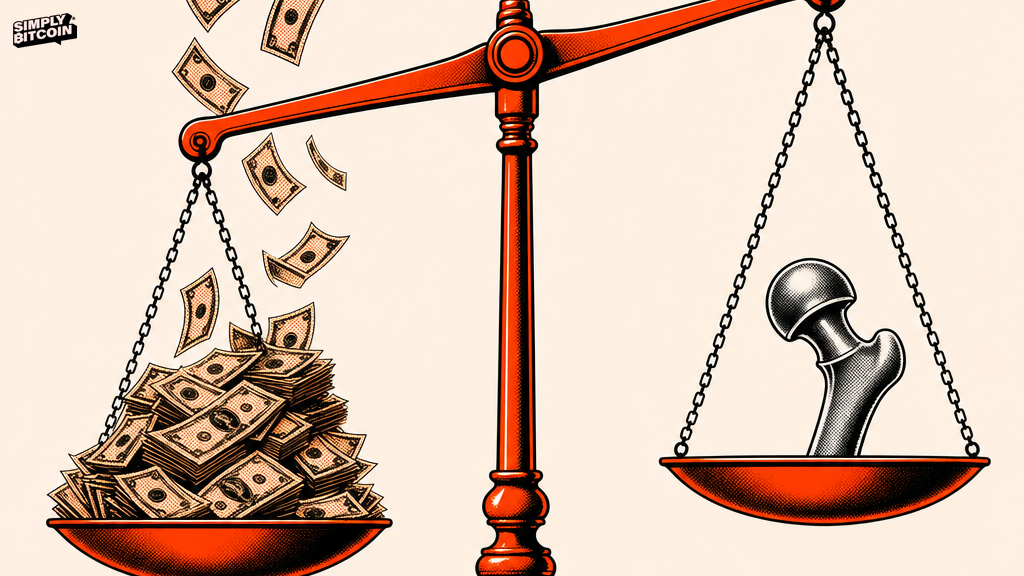
The distinction matters because a currency can be created at will and a hip implant cannot. A government facing a shortfall in a currency-denominated promise has a trivial fix: create more currency. A government facing a shortfall in a promise for real surgical steel and real doctor hours has no such shortcut. It can only get more of those things by paying market participants more to produce them, which is itself inflationary.
THE HIP REPLACEMENT PROBLEM
This is why healthcare costs rise faster than almost anything else the government touches. The promise was never really "we will send you a check." It was "we will provide you the medical care of a modern industrial economy, whatever that costs by the time you need it." When more currency chases the same finite supply of surgeons, hospital beds, and orthopedic hardware, the price of that care climbs, and the government's obligation grows automatically along with it, whether or not tax receipts grow to match.
Wall Street likes to say the United States cannot default because it borrows in its own currency. That is true and almost beside the point. The debt was never the whole obligation. Layered underneath it are tens of trillions of dollars in entitlement promises that the government's own long-term financial reports openly admit are unfunded by a wide margin, a gap no single tax hike or spending freeze is going to close.
THE QUIET DEFAULT
A government that owes real resources but only controls a currency has one tool left: make the currency worth less, so the nominal number is technically paid while the real value behind it shrinks. Nobody has to default in the traditional sense, missing a payment, freezing an account, telling a pensioner the check bounced. The check clears every month. It just buys less than it used to.
Getting your dollars back is not the same as getting your purchasing power back.
That is the entire mechanism of a currency-denominated welfare state facing a resource-denominated obligation. It is not a crisis with a headline and a red screen. It is a slow transfer, executed one percentage point of inflation at a time, from anyone holding the currency to whoever the government has promised real things.
WHY THIS LOOKS LIKE GROWTH, NOT COLLAPSE
This is also why the coming decades will not look like Argentina in the 1980s or Weimar Germany in 1923. There will be no single morning where the system visibly breaks. Interest costs and entitlement spending will keep climbing as a share of revenue, the currency will keep buying a little less every year, and politicians will keep calling the result growth, cost of living, or a rough patch, because a currency crisis that happens gradually never has to be named as one.
The Treasury's own long-term reports put the entitlement funding gap in the tens of trillions of dollars, and independent estimates covering the full scope of Medicare and Social Security shortfalls run well past that. Numbers of that size are not closed by a spending cut or a tax hike anyone will actually vote for. They are closed the way they have always been closed: with a currency that quietly does more of the work than the number on the check admits, year after year, without anyone having to sign off on it.
THE ONE STACK THAT CANNOT BE RAIDED
Every currency-denominated promise anywhere in the system is, in the end, a claim on everyone who holds that currency. A saver does not vote for that claim and does not sign anything agreeing to it. It arrives anyway, in the form of a slightly weaker dollar every single year, spread across everyone equally regardless of whether they will ever see a cent of the entitlement it is funding.
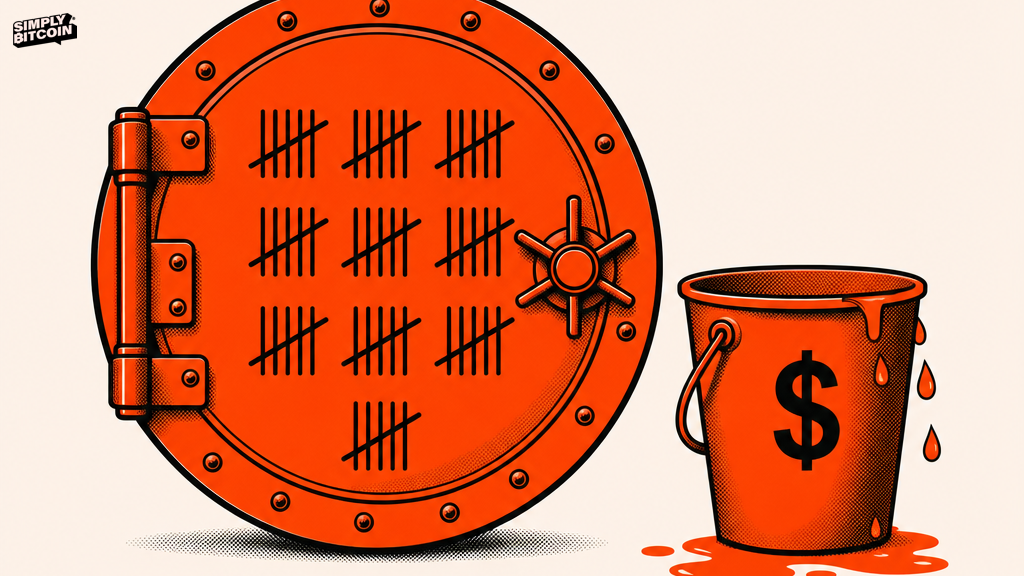
Bitcoin cannot be volunteered for that job. Its supply is fixed at twenty one million, set by code that no congress, central bank, or emergency session can amend to cover somebody else's shortfall. A bitcoin saved today cannot be diluted tomorrow to make an unfunded promise look funded on paper. That is not a slogan. It is the entire design decision that separates the asset from the currency sitting next to it in a bank account.
The retiree with the hip replacement promise is not wrong to expect that her care will arrive. She is wrong, like almost everyone, to think the number on her statement tells her what she is actually owed, or what it will cost the rest of us to deliver it. The obligation is real. The currency measuring it is not. Choosing to hold something that obligation cannot reach is not a bet on collapse. It is the plain recognition that somebody has to pay for a promise made in steel and time, and it will not be whoever is holding twenty one million fixed units instead of a currency built to stretch.