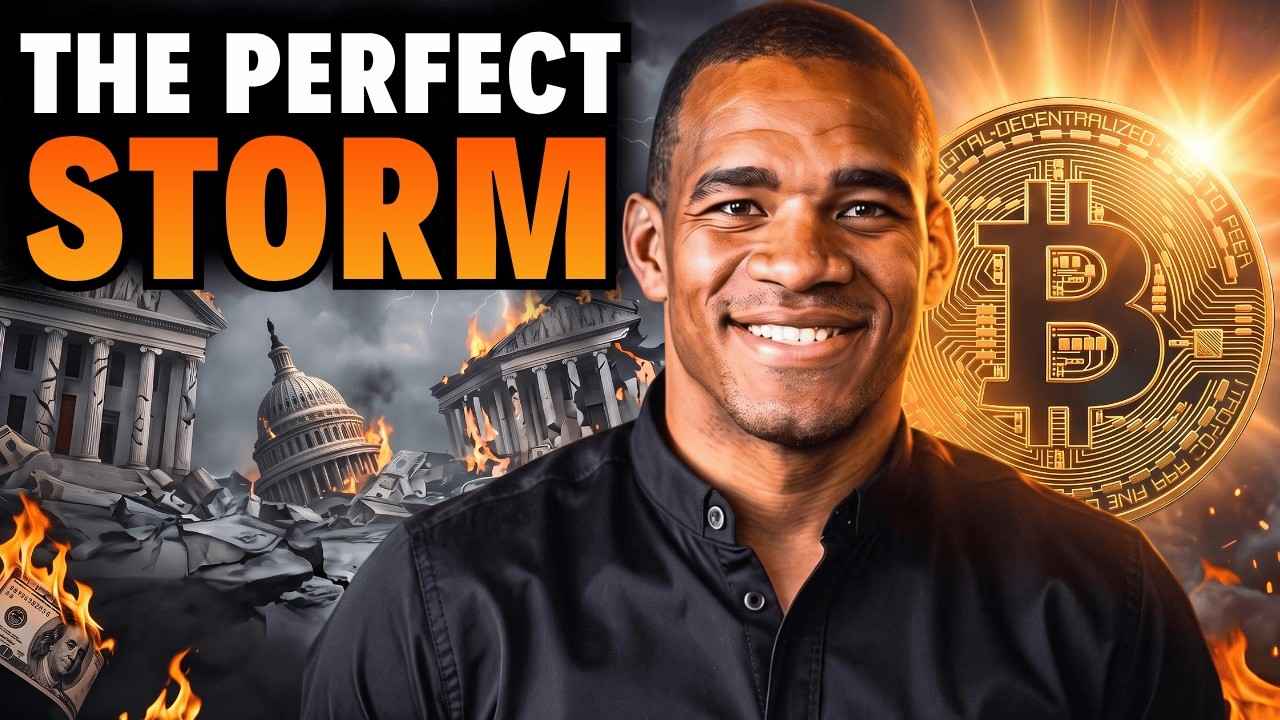
Tony Yazbeck Says Bitcoin's Wallet Attacks Are Bullish, Not a Reason to Run to Wall Street ETFs

In the same Simply Bitcoin Live appearance where he broke down this week's wave of hardware wallet breaches, Tony Yazbeck, founder of the self-custody consultancy The Bitcoin Way, made a harder argument: the attacks are good news, and the real danger is the growing pile of Bitcoin sitting in Wall Street ETFs instead of in people's own hands.
WHY YAZBECK CALLS THE ATTACKS A SIGN BITCOIN IS WINNING
Yazbeck's starting point was a TLDR delivered before he got into specifics: "To me, this is extremely bullish." His reasoning is that attackers only spend this much effort on a target worth attacking. "If it wasn't so valuable, if it wasn't so precious, if it wasn't so scarce, if it wasn't such a threat, nobody would give a shit," he said.
He framed the phishing emails, physical letters and supply-chain tampering not as attacks on Bitcoin itself, which he said is as unstoppable as "the wind blowing," but as attacks on the narrative around it, aimed at keeping newcomers scared of self-custody before they try it.
THE CASE AGAINST LETTING WALL STREET HOLD YOUR BITCOIN
Yazbeck connected the breach headlines directly to a trend the show has flagged before: since the spot Bitcoin ETFs launched, a growing share of new Bitcoin has been flowing into Wall Street products rather than into self-custodied wallets. He said he doesn't think people fleeing to ETFs out of fear are making a safe choice. "This is going to be again, a critical mistake that most people are going to understand after it's too late," he said.
His argument isn't that institutional buying is bad for price. He said Wall Street's involvement is "fair game" and will likely keep pushing the number up regardless. His objection is narrower: an ETF share is a claim on Bitcoin, not Bitcoin, and it carries the same dependency on a third party that self-custody is supposed to eliminate. He drew on his own history for the stakes. Yazbeck lost his savings in Lebanon's financial collapse, watching bank balances he thought were secure get frozen and devalued. "We were also millionaires or billionaires that thought we were untouchable," he said, "that were very touchable from one day to the next."
A PLAN B IS INSURANCE, NOT AN EXIT
Yazbeck also made the case for jurisdictional arbitrage, the practice of building legal residency options outside your home country before you need them. He was careful to frame it as optionality rather than abandonment. "You don't have to hate your country to want to look for a second option," he said, comparing it to home insurance: you don't buy it because you plan to burn your house down.
He pointed to Panama as a location The Bitcoin Way is currently focused on, citing favorable taxation and a growing circular Bitcoin economy, while acknowledging no country is flawless. His broader point was timing. He argued that the window to set up a second residency cheaply is closing as instability spreads, pointing to economic strain he's tracking in France, Italy, Portugal and Spain as evidence the pattern he lived through in Lebanon is not confined to one region.
SELF-CUSTODY AS A SKILL, NOT A PRODUCT
Asked how he responds to people who say self-custody is too hard, Yazbeck rejected the framing outright. He said the mistake is treating it like something you buy once and forget, rather than a skill built through repetition. He described clients in their 50s, 60s, 70s and 80s who started with no technical background and are now running their own nodes and signing transactions independently, calling the process no harder, eventually, than making a cup of coffee.
His closing argument tied the whole conversation together: money, privacy and jurisdiction are the three things a sovereign individual has to control directly, and outsourcing any one of them to a system you don't control defeats the purpose of holding Bitcoin at all.
This story comes from the Simply Bitcoin Live show. Watch the full episode.


Daily Bitcoin news, analysis and interviews. New shows every single day.
Subscribe on YouTube