The Stock Market Surveys Sentiment. Bitcoin Publishes It.

Ask any market how its participants actually feel and you get a guess dressed up as data. A phone survey. A model built on a sample size. A filing that shows up weeks after the trade already happened. Every market runs on secondhand information about itself, except one.
THE SURVEY PROBLEM EVERY MARKET HAS
The University of Michigan calls a few hundred people a month and asks how they feel about the economy, then that number moves markets for a week. The Federal Reserve's household wealth data comes from a survey households fill out themselves, every three years, describing what they think their own assets are worth. Corporate earnings are numbers a company chooses to publish about itself, checked by auditors on the company's own payroll, and occasionally restated after the fact once someone finds the error.
None of that is fraud. It is simply the best anyone can do when the underlying ledger is private. Nobody outside a brokerage and its own compliance department can see what every shareholder actually paid for their shares, or how many of them are sitting on a loss right now, because that information lives inside millions of separate accounts that nobody else is allowed to open.
BITCOIN DOESN'T ASK, IT RECORDS
Bitcoin's ledger is public by design. Every transaction that has ever settled on it sits in the open, timestamped, unchangeable, viewable by anyone with an internet connection and a few minutes. That was never a transparency feature added for good press. It is the mechanism that lets strangers who will never meet agree on who owns what without a bank standing in the middle vouching for the answer.
The side effect is that Bitcoin is the only major asset in the world where you can calculate, to the dollar, what the average holder paid for every unit in existence. Not survey it. Not model it from a sample. Calculate it directly, from the chain itself, updated with every new block.

A NUMBER THAT ONLY EXISTS BECAUSE THE LEDGER IS HONEST
That calculation has a name. It compares Bitcoin's price to the average price every coin currently in circulation last moved at. Below that line, the average holder is underwater. Above it, the average holder is back in profit, and the mood of the entire network tends to shift with it. No exchange floor votes on this number and no committee revises it. It simply is what the chain says it is.
No stock exchange can produce the equivalent figure for its own listed shares, because no stock exchange has a complete public record of every purchase ever made on it. Bitcoin produces the number for free, in real time, because the record was built to be checked rather than taken on faith.
WALL STREET CAN'T SEE ITS OWN BUYERS ON TIME
Institutional stock and bond positions show up in a document called Form 13F, and the SEC gives fund managers up to forty five calendar days after a quarter ends to file it. By the time the public sees what a major fund bought in March, it is the middle of May, and the fund has likely already moved the position again. Large trades that would move a stock's price are often routed through venues that never post the trade to a public tape at all until well after the fact.
Bitcoin has no forty five day window and no venue built to keep a trade out of view. A wallet that has held its coins for years and moved nothing shows up on the chain the instant it does something different. The buyer base is not disclosed on a lag filed with a regulator. It is observable in the same block the change happened in, by anyone, without asking permission.
THE PART THAT DOESN'T ASK YOU TO TRUST ANYONE
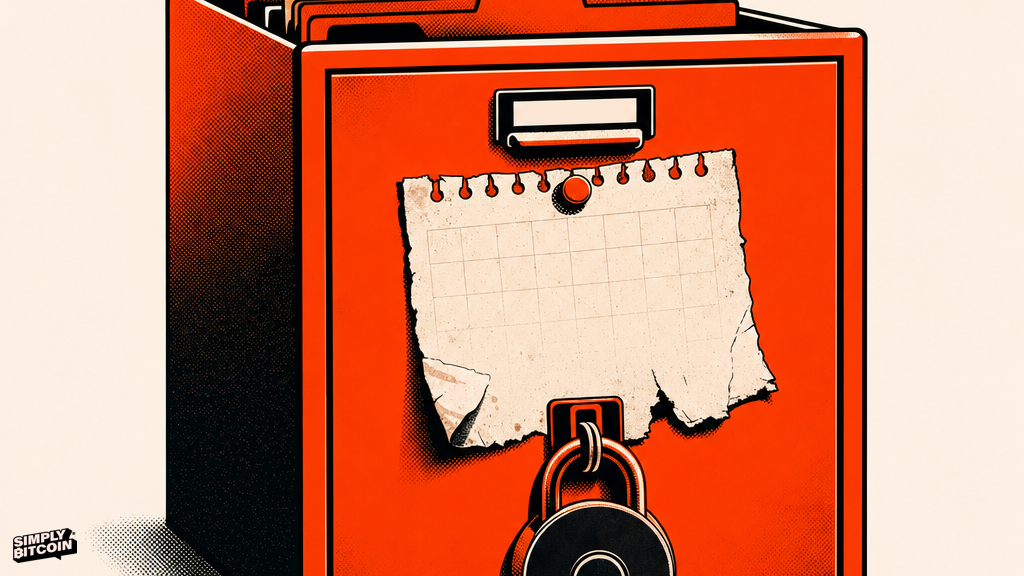
This is where the two systems actually split. Every other market eventually asks you to trust a report: a survey company's methodology, a company's own accountants, a fund's disclosure filed on its own regulatory schedule. Bitcoin asks you to run the math yourself, on data nobody can quietly edit after the fact, because changing one past entry would mean rewriting every block that came after it, across a network of machines spread around the planet that answer to no single office.
That is not a marketing line. It is the actual difference between a market you have to take somebody's word for and a market you can check yourself in ten minutes. Replacing trust with verification is the entire reason this ledger exists. The price data everyone argues about on a given day is just the most visible thing that design happens to produce.
WHAT THAT ACTUALLY BUYS YOU
Almost every number that touches your financial life arrives from somewhere you personally cannot audit. A bank tells you what your dollars are worth. A ratings agency tells you what a bond is worth. A board of directors tells you what a company earned last quarter. You take each of those on the credibility of the institution issuing it, because there is no other way to get the number.
Bitcoin is the one figure in the entire system that does not ask for your trust, because it was never built to need it. That is the case for holding it, before a single price target or headline enters the conversation. Not that it might go up. That it is the only ledger in your financial life you never have to take anyone's word for.