The Pentagon Has A 90-Day Survival Plan. Your Savings Account Doesn't.
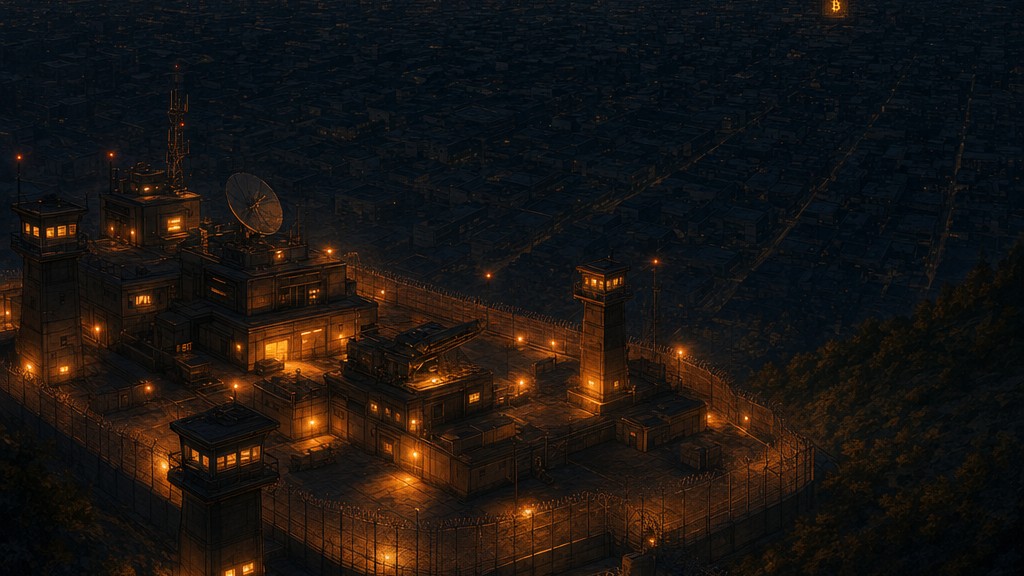
This week, the Pentagon confirmed it is spending years and tens of billions of dollars teaching its own bases how to survive without the power grid. The same week, the largest crypto exchange on earth lost $6.3 billion in an afternoon, and the fix that saved most of it was a handful of companies flipping a switch nobody outside their offices controls. Put those two stories side by side and a simple, uncomfortable question falls out: if the people who run the most hardened institutions in the world no longer trust the grid, the banks, or each other to hold up under pressure, why does your money still depend on all three.
THE WEEK EVERYONE ADMITTED THE GRID CAN'T BE TRUSTED
Late Thursday, attackers drained Binance's hot wallets across ten blockchains in about twenty minutes. Hackers siphoned off $6.3 billion from crypto exchange Binance in the biggest heist that the digital-asset industry has ever faced. Binance suspended deposits and withdrawals and pledged to cover every loss. Within hours, Tether's CEO said his firm had frozen more than 1.5 billion of its stablecoin that may have been related to a potential breach, and Circle's CEO said the company had frozen more than 800 million in USD Coin associated with the incident. Roughly half the stolen funds never moved again, not because the blockchain refused the transaction, but because a small number of companies decided to pull the plug.
That rescue is the headline everyone wanted. It is also the part that should bother you more than the hack itself. The money that got saved only got saved because somebody, somewhere, had the power to freeze it on command. The money that didn't get saved is the part that moved onto a ledger nobody controls.
A FORTRESS FOR THE BASE, A CHECKLIST FOR THE FAMILY
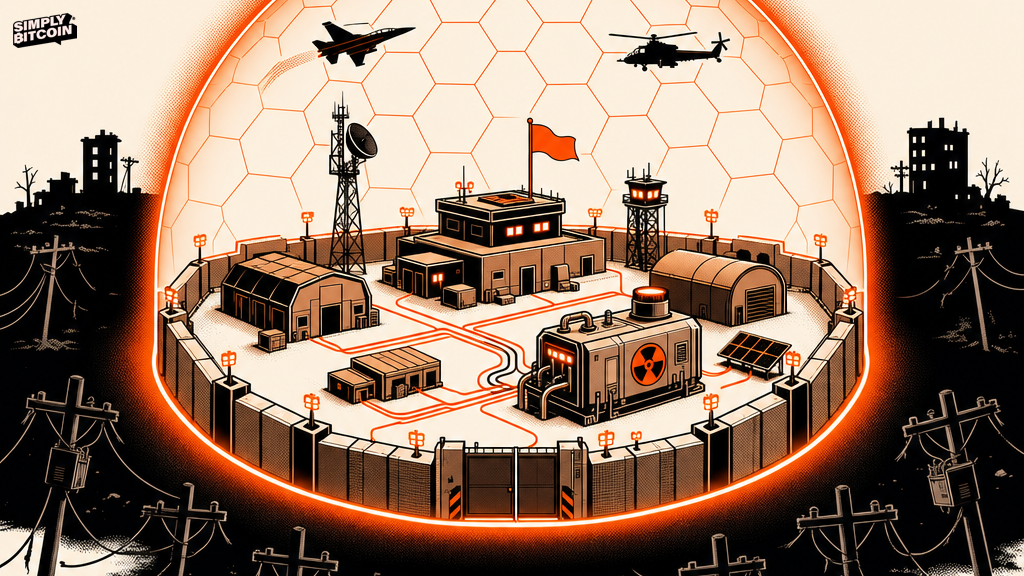
Zoom out and the same week looked even stranger. The Pentagon is rolling out FORTRESS, a program requiring every major domestic base to run completely independent of civilian power, water, and supply chains for at least 90 days. Its chief spokesman explained the thinking plainly: "I realized that a lot of the way we think about homeland defense was built around the antiquated assumption that two oceans would protect us," Parnell said, adding that "that world is gone." The plan calls for portable nuclear reactors, large-scale battery storage and microgrids capable of disconnecting military installations from the civilian electrical grid, because, in his words, "power is combat now. Without electricity, you lose communications, water, logistics, assembly lines and just basic military command structures."
Britain moved in the same direction days earlier. Details of the Pentagon plan emerged days after the British government launched its Be Ready campaign, with a checklist recommending three liters of drinking water per person per day, nonperishable food, flashlights, power banks, a battery-powered radio, and cash in case card payments and ATMs go down. Two governments, in the same week, independently told their own institutions and citizens the same thing: do not assume the systems around you will keep working. Build something that doesn't need them to.
NO ONE BUILT YOU A 90-DAY PLAN FOR MONEY
Here is the gap nobody in Washington or London mentioned. Households were told to stockpile water, food, and physical cash. Nobody suggested a 90-day plan for the money sitting in a bank account, a brokerage, or an exchange, because there isn't one. A bank account is not a thing you hold. It is a promise a institution makes you, backed by its own solvency and, ultimately, by whether the plumbing connecting it to the rest of the system stays up.
The same week made clear that even the agencies built to guard that plumbing cannot guard themselves. Hackers calling themselves Department of Peace published a stolen data set with contact information for more than 41,000 DHS agents, operatives and associates, including more than 21,000 employees with Customs and Border Protection and another 10,000 tied to Immigration and Customs Enforcement. The department whose entire job is securing the homeland could not secure the directory of its own staff. If that agency is a single point of failure, so is every bank, exchange, and payment processor that assumes its own security team will always win.
THE FREEZE IS NOT A BUG, IT'S THE DESIGN
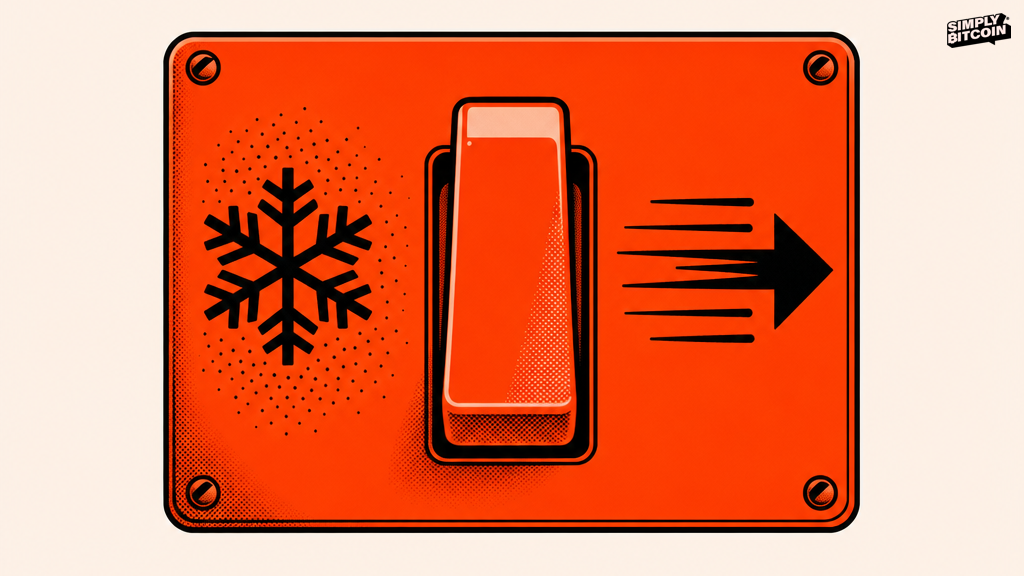
The instinct after a hack like this is relief that someone could freeze the stolen funds. That relief is real, and it is also the whole problem stated out loud. A freeze button that can stop a thief is, by construction, a freeze button. It does not know the difference between a hacker's wallet and yours. The same authority that pulled $2.3 billion back from criminals this week is the authority that decides, on every other day, whether your dollars move at all. You are not banking on a technology. You are banking on the character of whoever is standing next to that switch, forever.
That is not a hypothetical about some future digital dollar. It already happened, this week, to real money, in real time, and it worked exactly as designed. Reversibility is not a side effect of these systems. It is the feature they are sold on, and it requires a permanent, unaccountable hand on the switch to exist at all.
THE ONLY ASSET THAT NEVER NEEDED A BACKUP PLAN
Bitcoin spent the same week doing something almost boring by comparison. Bitcoin fell more than 4% to $77,994.96 on Friday as the hack weighed on crypto markets, while Intel posted its worst-ever single-day drop, according to data dating back to the 1980s, and Alphabet shed about $500 billion in market value, its worst day ever and the second-worst wipeout of value in market history. None of that chaos touched Bitcoin's ledger. The protocol did not pause, nobody froze a block, and no engineer's compromised laptop could reach it, because there was no company standing between the asset and the person who actually holds the key.
That is the real reason self-custody matters, and it has nothing to do with price. A Bitcoin wallet you control does not need 90 days of stockpiled fuel, a backup microgrid, or a dedicated program office to keep functioning when everything around it breaks. It already runs without the grid of trust the Pentagon is spending billions to simulate for its bases and that your bank has never once had to simulate for you, because it has never had to survive without the thing it depends on. Bitcoin was built as if that failure were the baseline, not the emergency.
Governments are now telling their most hardened institutions, and their own citizens, to stop assuming the system holds. The honest version of that advice applied to money is simple: stop holding your savings in a form that only works as long as someone else's promise does, and start holding the one form of money that was designed, from the first block, to need nothing from anyone.


Daily Bitcoin news, analysis and interviews. New shows every single day.
Subscribe on YouTube