The Panic Was Free. The Proof Never Is.
Bitcoin slid under $80,000 the same weekend global stock markets were reported to have shed roughly $10 trillion in value from their yearly highs. Headlines called it a bloodbath, a reset, a collapse. Within hours the same storyline had been typed, voiced, and reposted by accounts that had never looked at a balance sheet, because none of them needed to.
That gap, between how fast the panic spread and how little it cost to spread it, is the real story of a weekend like this one. It is also the reason proof of work exists at all.
FEAR GOT A LOT CHEAPER TO MAKE
For most of history, manufacturing a convincing panic took effort. A rumor needed a crowd. A forged document needed a printer. A bank run needed people standing in an actual line outside an actual building. Fear had a production cost.
That cost is now close to zero. A chatbot can write a thousand versions of the same alarming headline before a human finishes reading the first one. A bot network can push a liquidation number across a hundred accounts in the time it takes a chart to refresh. The content is often indistinguishable from reporting, and increasingly it does not need a human to write it, check it, or even believe it.
None of this makes the underlying move fake. Markets did fall. Leveraged positions did get wiped out. The point is narrower: the volume of frightening content about an event stopped being any kind of signal about the size of the event a while ago.
A MARKET THAT PRICES WORDS WILL PRICE WHATEVER WORDS SAY
Equity and crypto prices have always been, in part, a running vote on a story. What changed is who gets a vote. When the cost of producing a plausible, urgent, shareable claim drops to nearly nothing, the story can be manufactured faster than the facts underneath it can be checked.
A liquidation engine does not read context. It reads price and margin. When enough content convinces enough traders to hit sell inside the same ten minutes, the engine closes leveraged positions automatically, which pushes price down further, which produces more frightening content about the price falling. The loop needs no conspiracy and no single author. It only needs cheap, fast, plausible words and a few hundred million dollars of leverage willing to believe them for ten minutes.

ONE LEDGER STILL CHARGES BY THE JOULE
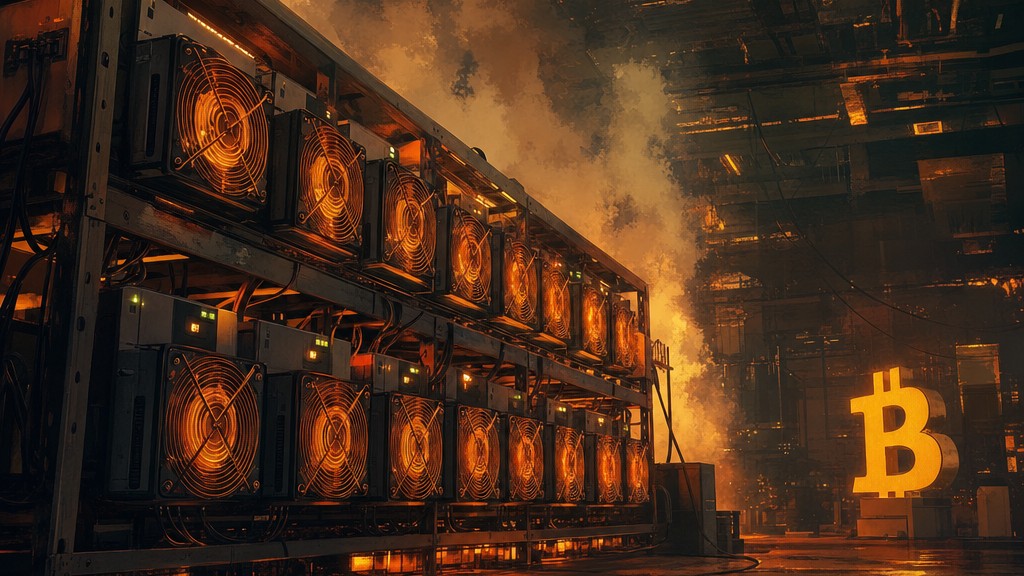
Bitcoin mining is unglamorous specifically because it refuses to get cheaper the way content did. Producing the next valid block still costs real electricity, real hardware, and real time, no matter how the price is moving or how many accounts are typing about it.
The difficulty adjustment does not read headlines. It looks only at how fast blocks were actually found over roughly the last two weeks and resets the target so the next ones take about ten minutes again. A weekend of panic has never once moved that number.
This is not an argument that computation itself is free elsewhere. Training and running the models that produce the panic also burns real electricity, sometimes an enormous amount of it. But that energy buys speed and volume of speech. It does not buy a vote on whether the next Bitcoin block is valid. Those are two different products built from the same raw input.
YOU CANNOT TALK A HASH INTO EXISTING
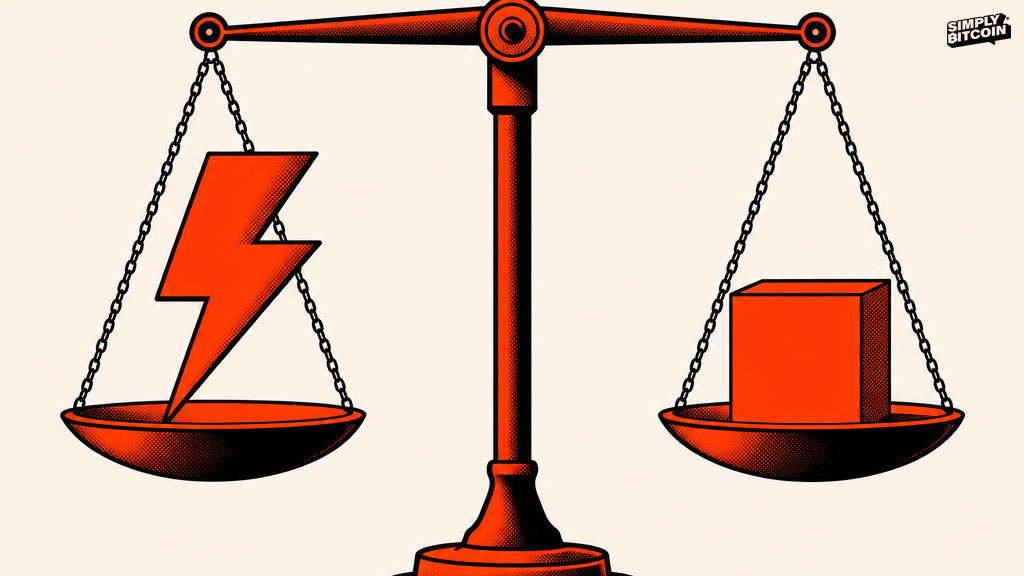
This is the part that gets lost during a panic week. Writing a sentence that says Bitcoin is finished costs nothing. Finding a block that extends the real chain costs a specific, measurable amount of energy that the entire network can verify without trusting the miner who found it. One of those is speech. The other is work. They are not the same kind of claim, even when they show up in the same feed within minutes of each other.
That distinction is the whole point of proof of work. It was never meant to make Bitcoin immune to fear, selloffs, or bad weeks. It was built so that the one thing a bot farm or a few hundred thousand panicking accounts cannot fake is the cost of producing the next block. Everything else about a market can be synthesized now. That number cannot.
THE CRASH AND THE COST ARE NOT THE SAME CHART
A reader watching their portfolio during a weekend like this one is not wrong to feel something. Watching a number drop while a feed screams collapse is an old, physical kind of fear, and no amount of explaining proof of work makes a liquidation hurt less in the moment.
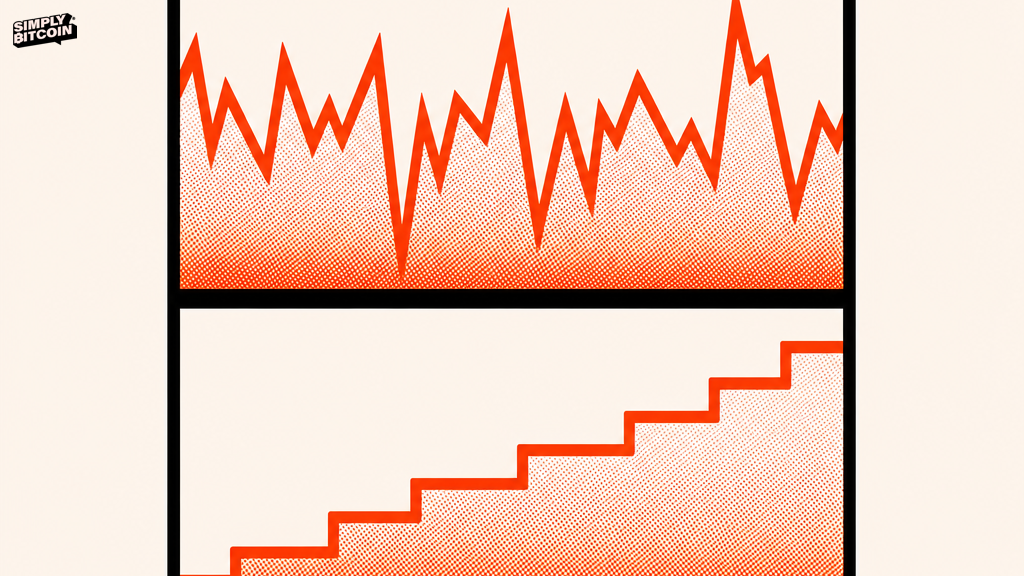
But the decision that actually matters, sell now or do not, rests on a different question than the one the headlines are answering. The headlines are answering how frightening this can be made to sound. The chain is answering what it actually cost, in electricity, to keep the ledger honest over the last two weeks. Those two answers move on completely different schedules, and only one of them was produced for free.
THE PRICE PANICS. THE PROOF DOESN'T.
Every cycle produces a weekend like this one: a real drawdown, dressed up by a flood of content that cost its authors nothing to produce and cost readers a weekend of fear to sit through. The drawdown is real. Most of what gets said about it is evidence of nothing except how cheap words have become.
Bitcoin's security was never built to argue with that noise. It was built to keep charging the same price in electricity for the next block no matter how loud the noise gets. That is a strange kind of comfort to offer a frightened reader, but it is the one kind that the same machines producing the fear cannot also manufacture.


Daily Bitcoin news, analysis and interviews. New shows every single day.
Subscribe on YouTube