
The Grid Took Seventy Years. Bitcoin Inherited The Wires.
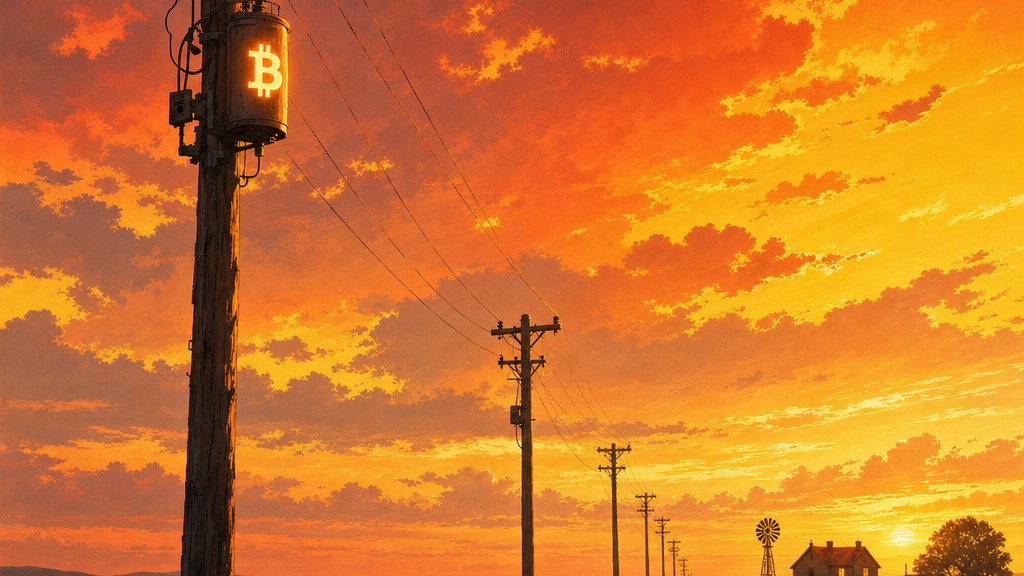
Every generation waits for the moment a new technology changes everything overnight. It never works that way. Infrastructure that reshapes a society moves on a curve: slow and invisible for years, then suddenly everywhere. Sound money is on that curve right now, and the history of the electrical grid tells you almost exactly what to expect from it.
THE GRID TOOK SEVENTY YEARS TO REACH EVERYONE
Thomas Edison switched on the first commercial power station on Pearl Street in lower Manhattan in 1882, lighting a few blocks for a few dozen customers. By 1920, only thirty five percent of American households had electricity. Farms lagged even further behind: as late as 1922, only about three percent of the country's roughly six million farms had power. Congress did not step in with the Rural Electrification Administration until 1935. It took until 1949 for ninety percent of American households to finally have a working connection. Call it sixty seven years from the first switch to near universal adoption. Round it to seventy.
THE INVENTION WAS NEVER THE HARD PART
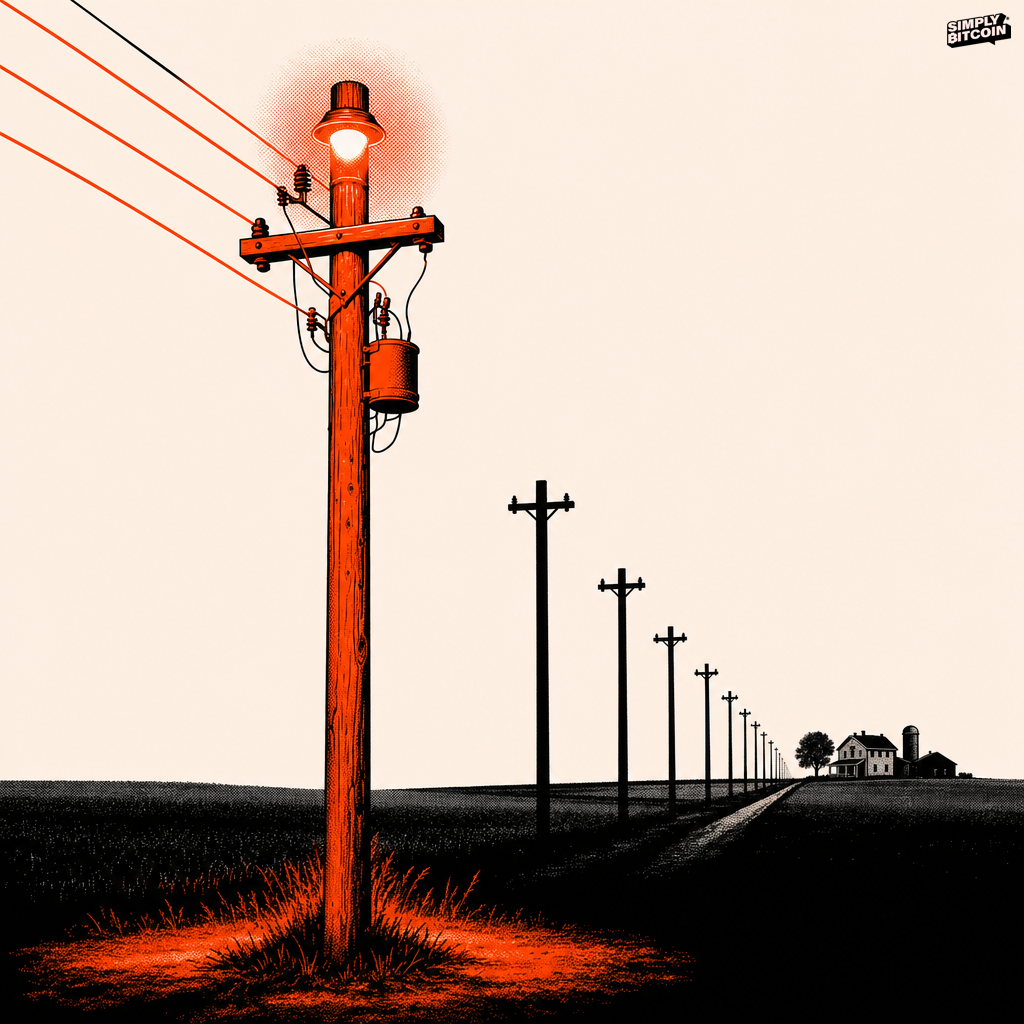
The light bulb worked years before most of the country had a socket to put it in. The delay was never the technology. It was everything the technology depended on: poles, copper, transformers, financing, right of way, and the plain trust that the new thing running through your walls would not burn your house down. Adoption is not a decision people make once, after a demonstration. It is a slow replacement of one entire physical and financial network with another, farm by farm, town by town.
MONEY IS A NETWORK, NOT JUST A NUMBER
The dollar's dominance is the same kind of network, just older and better defended. It is not dominant because it holds value. Every dollar printed since 1971 is proof that it does not. It is dominant because payroll runs on it, taxes are owed in it, contracts are written in it, and every bank, merchant, and government terminal on the planet is already wired to accept it. Displacing that network was never going to be a single announcement. It was always going to be a slow migration, exactly like the grid.
BITCOIN DID NOT HAVE TO BUILD ITS OWN WIRES
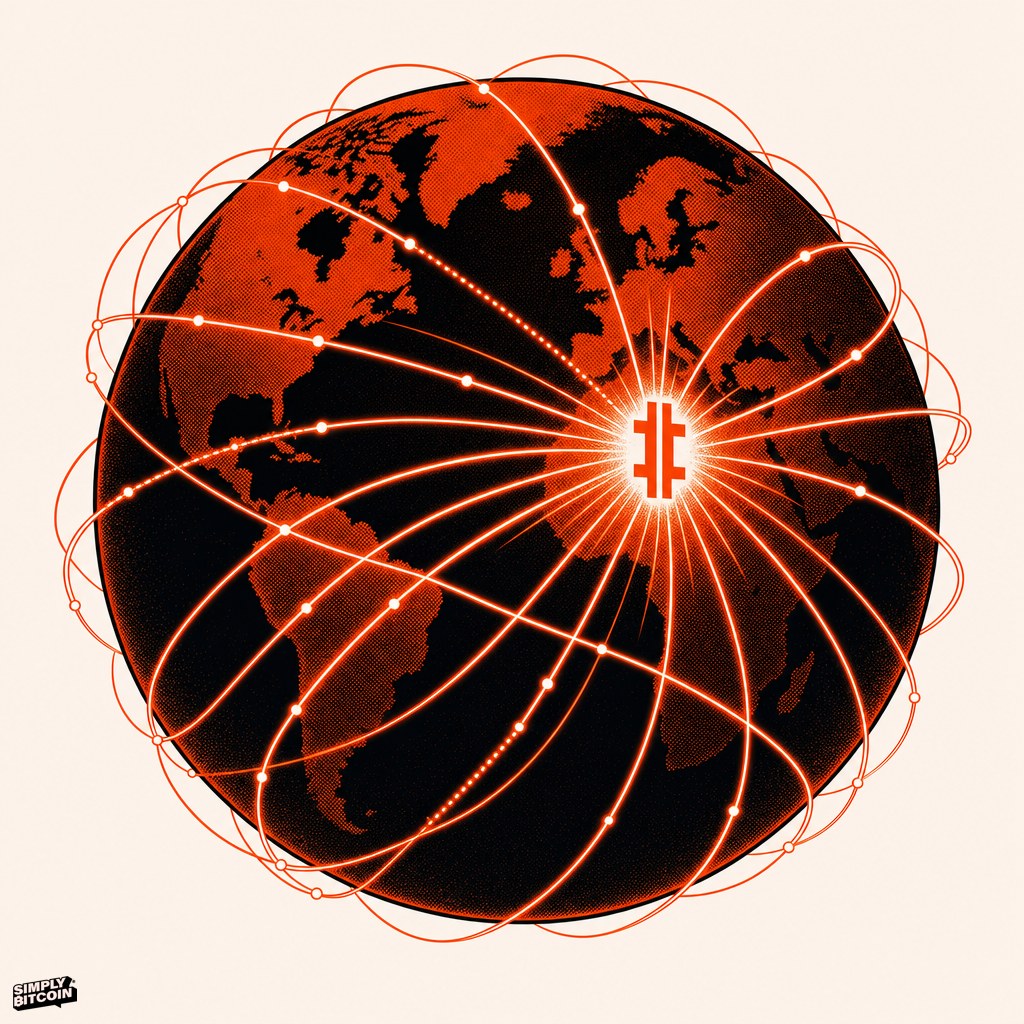
Here is the difference that actually matters. Edison's network had to invent the poles, the copper, the transformers, and the financing model from nothing, and it still took decades to reach rural America. Bitcoin launched in 2009 onto a planet that already had the wires: the internet, global telecommunications, instant messaging, and financial rails that could move information anywhere on earth in seconds. Nobody had to string a single new cable for Bitcoin to travel on. The hard infrastructure was already built, for other reasons, by other people, decades earlier. Bitcoin only had to become the thing that infrastructure carried.
THE CURVE BENDS FASTER, IT DOES NOT DISAPPEAR
That is why a monetary network can move through its adoption curve in years rather than the generations it took the grid and the dollar to entrench themselves. It does not mean the curve vanishes. Replacing an incumbent monetary system is still measured in years, not news cycles, and impatience with the pace is not an argument against the outcome. It means the seventy year electrification story is not the timeline to expect from here. It is the slow version of the same story, running on borrowed infrastructure at a faster clock speed.
The households that waited until 1949 for a wire to finally reach their farm did not get a better deal for waiting. They paid more, for longer, for less. The same choice is sitting in front of everyone still holding cash today. The wires are already up. The only variable left is how long you make yourself wait before you plug in.