
The Device Was Genuine. The Secret Wasn't.
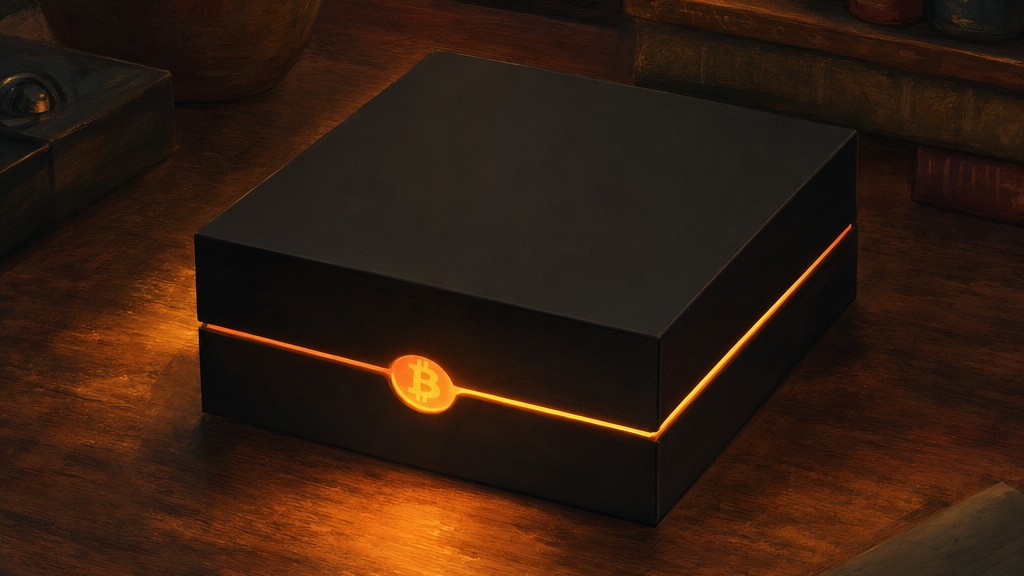
A year after Bitcoin's worst single day, a different kind of attack just rattled self-custody, and price had nothing to do with it. On October 10, 2026, exactly one year later, Ledger confirmed that a customer's wallet, bought through an authorized reseller, contained a hidden hardware implant built to steal the one secret a hardware wallet exists to protect.
The reseller is CryptoBilis, authorized to sell Ledger devices across Malaysia, the Philippines and Indonesia. Reported losses tied to the incident span a wide and still unsettled range, from the low seventies of millions of dollars to more than ninety three million, across hundreds of wallets on Bitcoin, Ethereum and Tron.
THE PROMISE OF THE BOX
Self-custody exists to delete one specific kind of trust: trusting a bank or an exchange to hold your Bitcoin honestly. A hardware wallet is where that promise becomes physical. The secret recovery phrase is supposed to be created and shown only on its own small screen, never on a phone or laptop that malware can reach.
Unbox the device, watch 24 words appear on a screen nobody else has touched, write them on paper, and the keys stay yours no matter what happens to any exchange, any bank, or any government afterward. That is the entire pitch, and for most buyers it collapses to one quiet, unexamined assumption: that the screen is telling the truth.
THE MOMENT THE PROMISE BROKE
Former Mt. Gox CEO Mark Karpelès pulled apart a device bought in Malaysia and found a second circuit board hidden in the padding behind the screen, carrying a microcontroller, an antenna, and a cellular chip.
A hardware wallet's entire security model rests on the seed phrase never leaving the device in readable form, surfacing in exactly one place: the screen, during first-time setup, for the few seconds it takes a person to write down 24 words. The implant targeted exactly that moment.
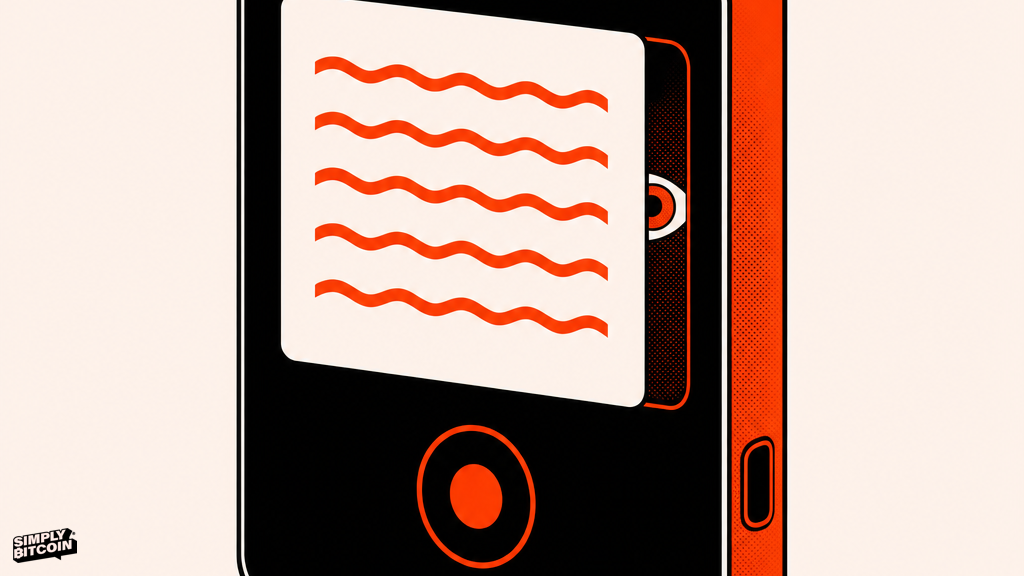
Investigators described a chip roughly two millimeters across, wired directly into the screen's own data lines, built to copy the words as they appeared and send them out over a hidden cellular link, a SIM card and antenna packed into the space where screen padding should be.
GENUINE IS NOT THE SAME AS SAFE
The module left the device's main secure chip completely alone, which is exactly why Ledger's own authenticity check could still return a pass while the implant quietly watched the screen.
Ledger calls that check Genuine Check. It confirms the device carries an authentic security chip. It was never built to catch a second, unauthorized board hidden somewhere else inside the case, a limitation the company itself acknowledges. A device can clear that check while a hidden component still watches everything the screen ever displays.
Authenticity is a claim about where a chip came from. Safety is a claim about whether anyone tampered with everything built around it. The two sound like the same guarantee. CryptoBilis customers just paid the difference between them.
WHERE THE TRUST ACTUALLY WENT
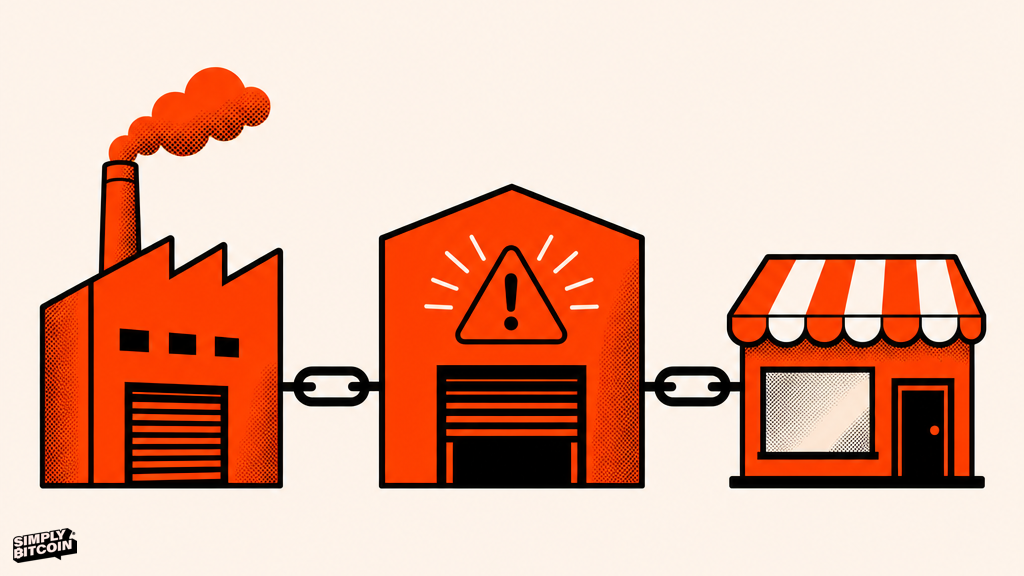
Self-custody does not delete trust. It relocates it. A bank asks you to trust a balance sheet, a regulator, and a promise that your dollars will still be sitting there tomorrow. A hardware wallet asks you to trust something earlier and far less visible: a factory floor, a shipping container, a regional warehouse, and a reseller carrying the word "authorized" on its storefront.
Ledger has not confirmed its own factory or firmware was touched. Suspicion centers on the distribution stretch after the device left Ledger's hands, inside an authorized channel the company itself recommends, including official storefronts on major marketplaces.
Ledger's advice to anyone who bought through that reseller in the last 90 days is blunt: do not power on a device that has not been set up yet, and if it is already active, move the funds to a new device with a freshly generated seed. Notice what that advice concedes. The fix for a compromised supply chain is never a software patch. It is starting over with hardware nobody tampered with and a secret nobody has ever seen.
There is a bitter irony in who is doing the dismantling. Karpelès ran the exchange whose 2014 collapse taught an entire generation of Bitcoiners why holding your own keys matters in the first place. Now he is the one cracking open plastic cases looking for the next unseen point of failure, because the lesson never promised to stay in one place.
FIVE OUT OF SIX WEREN'T EVEN ABOUT THE MATH
This is not the only hardware wallet incident of 2026, and the pattern matters more than any single case. Earlier in the year, a firmware flaw in Coldcard wallets let attackers reconstruct seed phrases mathematically through a predictable random number generator, without ever touching the physical device, costing users more than 111 million dollars.
Across this year's hardware wallet incidents, most did not come through a flaw in the cryptography at all. They came through a reseller, a fulfillment provider, a shop plugin, an email provider, a sales partner: the people and systems standing between a manufacturer's factory and a buyer's desk.
The elliptic curve math behind a Bitcoin private key has not failed once this year. Everything that failed sat outside the math, in a step nobody thinks to verify because the industry trained everyone to check the chip and stop there.
Self-custody was never the promise that trust disappears. It was the promise that you get to choose where it lives, and verify the one link that actually matters instead of a hundred that do not. A private key you never watched get created, on a device you never verified yourself, was never only yours to begin with.