The Check Got Bigger. The Share Got Smaller.
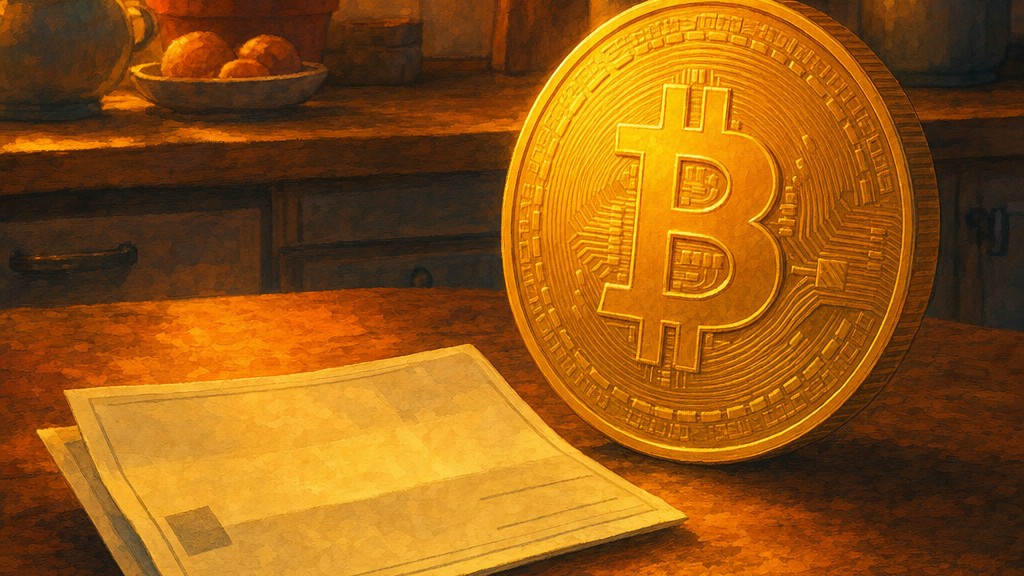
In March 2020 the federal government sent most adults a $1,200 check to soften a pandemic lockdown. In November 2025, Trump pledged on social media that eligible adults would receive "at least $2,000" more, funded by tariff revenue, with a payout suggested for sometime before the 2026 midterms. The second number is bigger. Priced against an asset with a fixed supply, it buys a smaller claim than the first one did.
THE FIRST CHECK, PRICED HONESTLY
The CARES Act check landed in bank accounts in mid-April 2020 at $1,200 per eligible adult. Bitcoin was trading around $6,900 that week, still recovering from the March crash. Priced in the one asset whose issuance schedule nobody in Washington controls, that check was worth roughly 0.17 bitcoin.
The pattern did not wait until 2025 to show up. Two more rounds followed within a year: $600 in December 2020 and $1,400 in March 2021. Add all three together and the headline total nearly tripled, from $1,200 to $3,200. Priced at the bitcoin rate on each payment date, the combined claim rose from about 0.17 bitcoin to roughly 0.22 bitcoin, a fraction of the increase in the dollar figure, because bitcoin's price had already climbed well ahead of the second and third rounds.
This was not the first time Washington reached for a rebate check. 2008 had one too, before bitcoin existed to price it against. What is different now is that for every check since 2020, there has been a fixed ruler sitting right next to the moving one.
THE NEXT CHECK, PRICED THE SAME WAY
Run the same math on the number floated for 2026. Whatever the final figure turns out to be, start with the one the president has repeated himself: at least $2,000. Bitcoin has traded in the $80,000s for most of this autumn. At $2,000 a check and bitcoin near $85,000, that payment buys about 0.024 bitcoin, roughly a seventh of what the original $1,200 check bought five years earlier.
And that may be the best case. By early 2026, economists were pointing out that a universal version of the payment would cost far more than the tariff revenue the government has actually collected, which is one reason the timeline kept slipping from this year to next. If the final check shrinks, or never arrives, the ratio gets worse, not better.
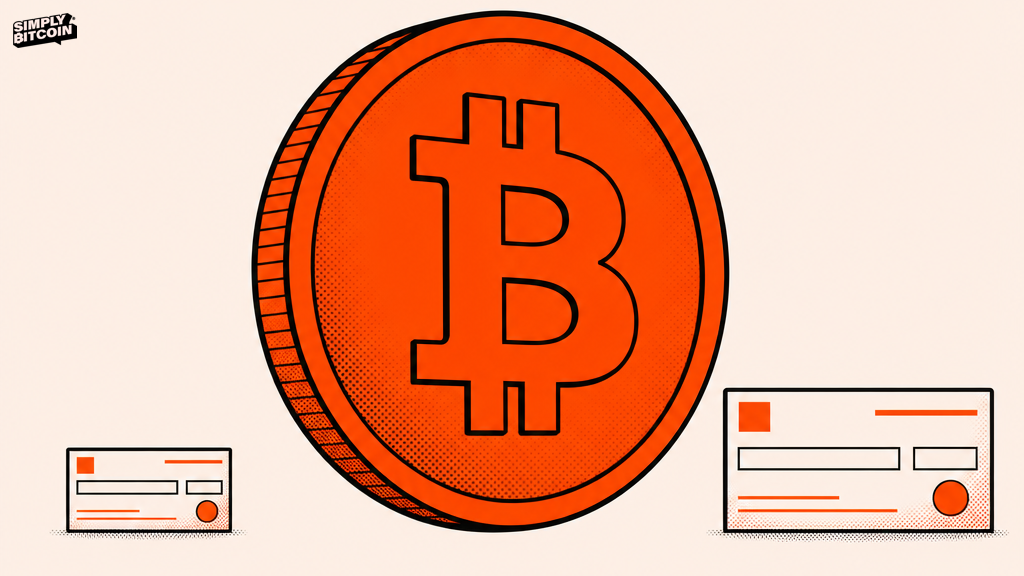
The nominal number grew by less than double. The real claim on a fixed-supply asset shrank by a factor of seven. Both of those cannot be good news at the same time.
WHY THE DENOMINATOR NEVER MOVES
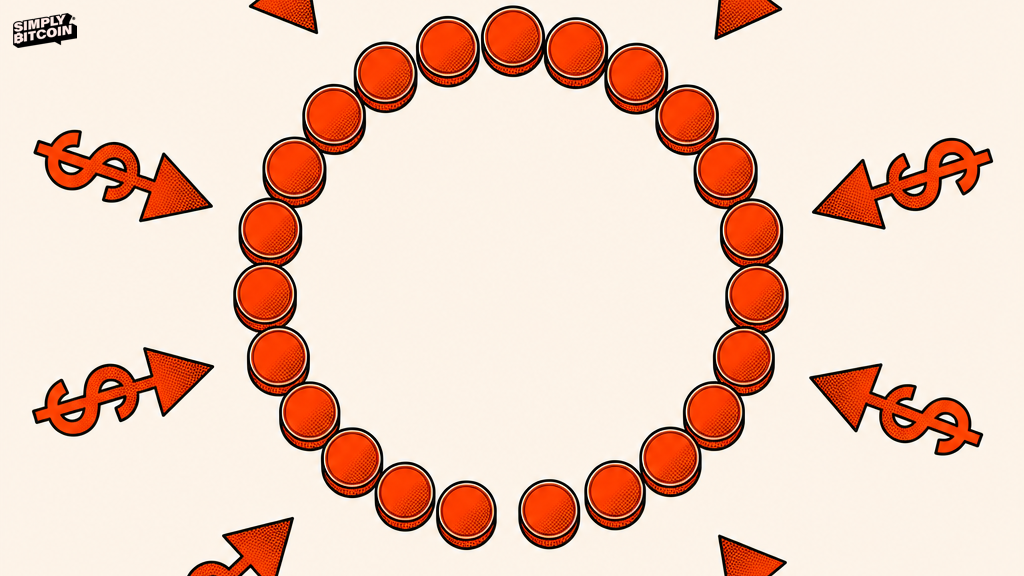
Bitcoin's issuance schedule is public and indifferent to anyone's budget crisis. Twenty-one million coins, a shrinking block reward, a cap that does not move for a war, a pandemic, or an election cycle. When the numerator, the dollars a government hands out, grows faster than the denominator, the coins that exist, every dollar buys a smaller slice no matter how large the figure printed on the check.
This is not a Bitcoin opinion. It is arithmetic. A fixed denominator turns any growing numerator into a ratio that can only shrink. The government can authorize a bigger check. It cannot authorize a bigger slice of twenty-one million.
A BIGGER NUMBER IS NOT GENEROSITY
The instinct is to read a larger check as a larger gift. Measured against a fixed-supply asset, the story flips. The check had to grow because the currency funding it had already shrunk. A government does not raise the relief number because it suddenly cares more about the people receiving it. It raises the number because the last number stopped covering what it used to cover.
Call it generosity inflation. Every successive round of relief needs a bigger sticker price to produce a smaller real result, and the size of the sticker is the confession. A $2,000 figure in 2026 is not proof that Washington found more generosity than it had in 2020. It is proof of how much ground the dollar lost in between.
None of this means a family should refuse the check when it lands. Rent is due regardless of what the number says about the currency behind it. The point is not to shame anyone for cashing a government payment. The point is to stop mistaking the size of the payment for proof the money behind it is sound.
WHO FEELS THE SHRINKING CLAIM FIRST
The people cashing these checks are rarely the people who already own bitcoin. They are living close enough to the edge that a single check changes their month, not sitting on a portfolio with room to wait out a drawdown. They are not making a trade. They are spending the money the week it lands, exactly as the check was designed for them to do.
That is precisely why the shrinking ratio matters more for them, not less. A household with savings can watch a dollar balance lose ground and shrug it off. A household living check to check has no cushion against a currency that needs a bigger number every single round just to stand still. The debasement is not abstract to the people with the least room to absorb it.
THE NEXT CHECK WILL BE BIGGER STILL
Whatever comes after the $2,000 proposal, assume it will be larger. Assume the one after that will be larger again. The pattern does not require a prediction about politics. It only requires a currency whose supply can always expand, measured against an asset whose supply cannot.
A check that arrives bigger than the last one is not evidence that the system is working. It is the system's own receipt, printed in public, showing exactly how much of itself it already spent.