No President Can Call The Difficulty Adjustment
On September 16, 2026, Federal Reserve chair Kevin Warsh raised the benchmark interest rate for the first time in more than three years, to a range of 3.75 to 4 percent. He did it while the sitting president was under pressure from US President Donald Trump to cut interest rates, publicly and repeatedly, in the opposite direction. Warsh raised anyway, and the committee backed him unanimously.
That single fact is worth sitting with, because it is rarer than it looks. A government official, appointed by the same president pushing him the other way, made a call that his boss did not want, on a mechanism that answers to a committee, a term limit, and eventually a reappointment fight. He held. This time.
EVERY COMMITTEE HAS A PRESSURE POINT
The Fed is not corrupt and Warsh is not compromised. That is precisely the point being missed. Even a chairman acting in total good faith is still a human sitting inside a structure that a president can call, that Congress can subpoena, that a reappointment clock can discipline, and that an election seven weeks out can bend around. The FOMC's own September vote came back 12-0 to increase its key interest rate by a quarter percentage point. Unanimous is not the same as unreachable. It just means the pressure hadn't split the room yet.
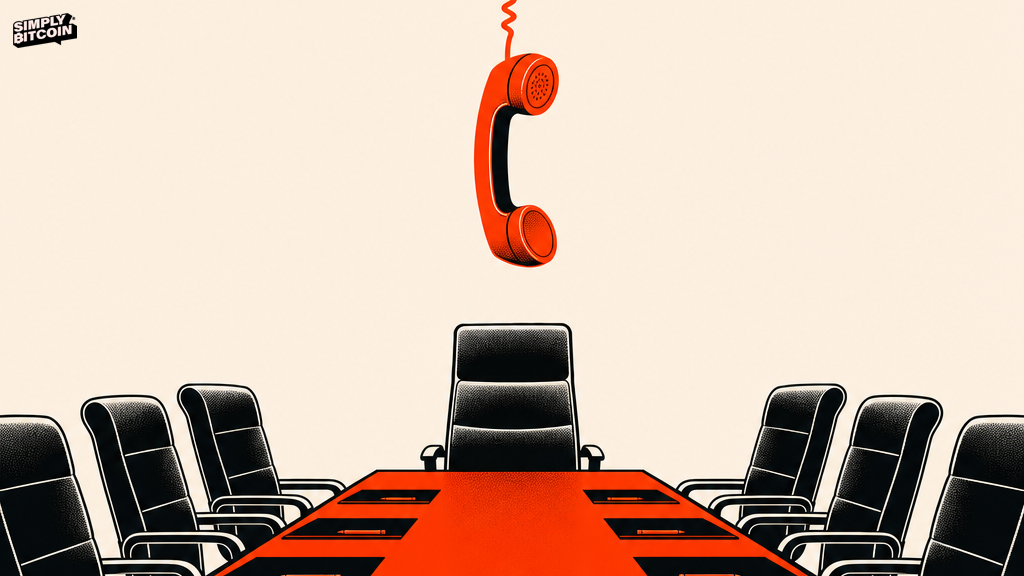
Every human-run system has a pressure point, because every human-run system has humans in it. You do not need a conspiracy for this to matter. You just need a phone that rings, a term that expires, and a decision that can be delayed, softened, or timed around a calendar that has nothing to do with the economics.
THE ADJUSTMENT NOBODY CAN CALL
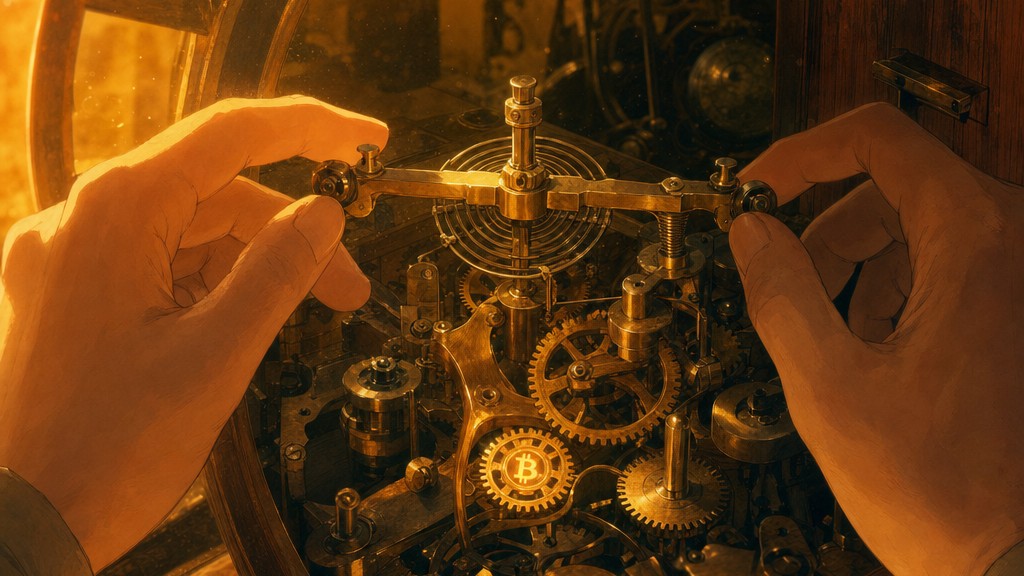
Bitcoin has its own version of a rate decision, and it fires roughly every two weeks whether anyone is watching or not. Every 2,016 blocks, the network looks at how fast those blocks actually got mined and resets the mining difficulty so the next stretch comes back in line with a ten minute average. That is the whole mechanism. No meeting, no press conference, no dissenting vote, no chair to lobby.
Nobody can call ahead and ask for a softer adjustment. Nobody can time it around a midterm. There is no version of this where a head of state posts that the difficulty should be lower and fast, because there is no office to post it to. The adjustment does not take the call. It does not have a number.

WHAT HAPPENS WHEN THE MACHINE LOSES MONEY
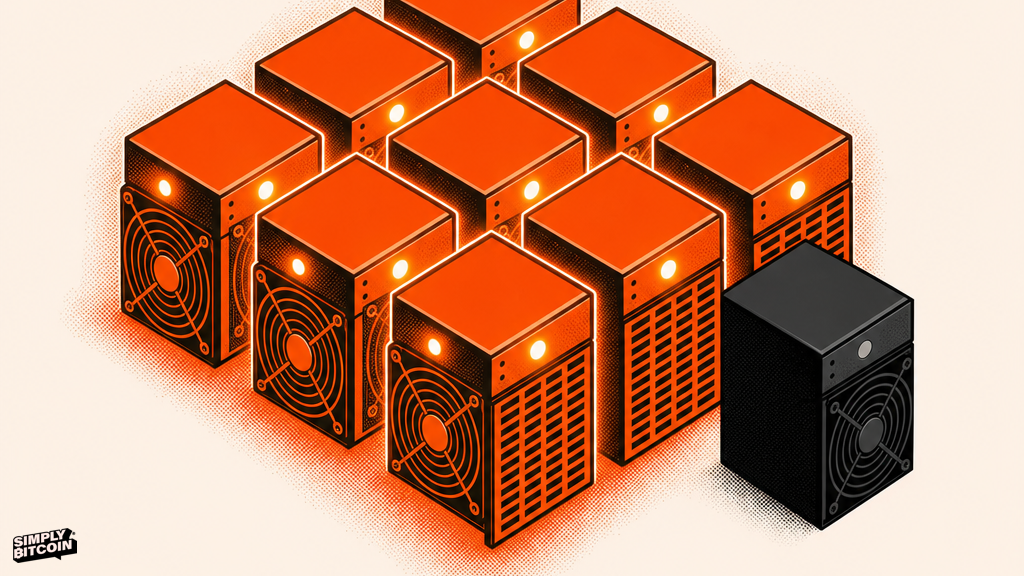
Here is where the comparison gets sharper instead of softer. When miners lose money, some of them shut off their rigs, because the electricity bill doesn't care about their conviction. That looks like a crisis if you're watching hash rate fall on a chart. It isn't one. The network measures the slower block production and simply lowers the difficulty at the next adjustment, which makes mining profitable again for whoever is left running. The machine does not need a bailout, a facility, or a statement of support. It re-prices itself and keeps producing a block roughly every ten minutes regardless of who dropped out.
Compare that to what happens when a government's own borrowing costs rise. Higher rates are supposed to cool an overheating economy. But when the government itself is the largest borrower in the room, a higher rate also enlarges its own interest bill, which has to get financed with more borrowing, which pushes yields higher still. The fix for the problem becomes an input into the problem. There is no equivalent auto-correction. There is only the next meeting, and the next vote, and the same pressure point waiting on the other end of the phone.
PRESSURE VERSUS PROCEDURE
The distinction underneath all of this isn't optimism versus pessimism about any one Fed chair. It's the difference between a rule that fires the same way every single time and a decision that has to be remade, under new pressure, on a new calendar, by whoever holds the office next. Warsh held the line on September 16. Maybe he holds it again at the next meeting. Maybe a different chair, facing a different election, doesn't. That uncertainty isn't a flaw in Warsh. It's a structural feature of any system where a person, not a formula, sits at the center of the decision.
Bitcoin's difficulty adjustment has never had a good week or a bad week in that sense. It has only had blocks, counted, and a reset applied on schedule. It cannot be lobbied into leniency during a downturn or talked into caution during a boom, because it was never built to listen to either argument.
NO ONE IS CALLING BITCOIN
What makes a monetary rule trustworthy isn't that the people running it are good. Warsh may well be exactly the disciplined chairman his defenders describe. It's that the rule doesn't require them to be good, or brave, or unreachable, because there's no line for the pressure to travel down in the first place. That is the entire difference between a rate set by a room and a difficulty set by math.
Bitcoin's version of a rate decision has already happened, thousands of times, on a schedule nobody can move. No president has ever gotten through, because there was never a number to dial.