
The House Didn't Get More Expensive. The Ruler Shrank.

A pound of ground beef cost $3.60 in 2017. Today it runs closer to $6.80. Same cow, same store, same shelf. The only thing that moved is what a dollar can buy, and that one fact explains more of the affordability crisis than any villain you have been handed.
THE RAISE THAT WASN'T ENOUGH
Over the last twenty years, the median American paycheck rose from roughly $660 a week to $1,251 a week. Call it a ninety percent raise. Over that same stretch, the median asking price on a house rose past one hundred percent, and rent climbed even further.
A ninety percent raise should feel like winning. Instead it felt like falling behind, because the things you were racing against were never standing still either. Nobody loses that race to avocado toast.
NOBODY EVER CHECKS THE UNIT
Rent, groceries, tuition, and housing do not have much in common as goods. They have everything in common as prices. All four are quoted in the same currency, and that currency is not a fixed unit of measurement. It is a shrinking one.
Since 2006, the median new home price in the United States rose about seventy four percent. Over the same period, the money supply grew roughly two hundred and thirty three percent. Measured in dollars, the house got more expensive. Measured against the money supply itself, it got about forty eight percent cheaper.
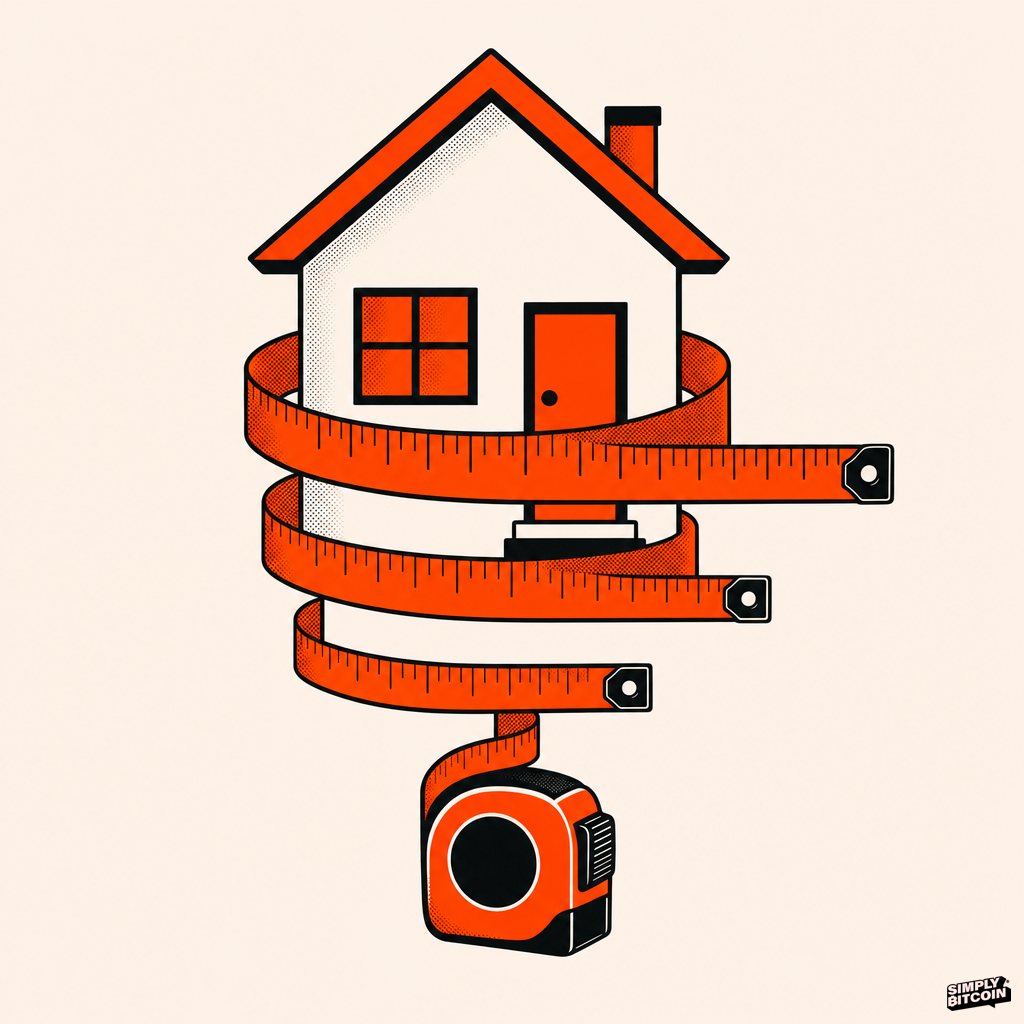
The house did not get harder to afford because it became more valuable. It got harder to afford because the ruler measuring it kept getting shorter, and almost nobody was told to check the ruler.
THE SAME ACRE, A DIFFERENT DOLLAR
Michael Saylor, whose company holds roughly four percent of all the Bitcoin that will ever exist, put a number on this in a conversation with Steven Bartlett on Diary of a CEO. He described the deed to his own oceanfront property in Miami Beach: an acre that sold for around $10,000 about a hundred years ago now sells for eight figures.
The land did not multiply. The house did not get better plumbing that justifies the gap. What changed sits in the denominator, not the property.
the currency, the dollar, the money, lost about seven percent of its economic value every year for one hundred years running
Saylor's point was blunt: that is the best a major currency has ever managed. Most others lose their value even faster and collapse within decades. A slow bleed is still a bleed.
ABUNDANCE MAKES THE SCARCE THINGS SCARCER
Elon Musk has argued that AI and robotics are about to deliver an age of abundance so complete that money stops mattering, because machines will produce more than anyone could consume. Saylor's answer to that, in the same conversation, is worth sitting with: consumer goods can become abundant, but scarce and desirable goods never do.
He is describing something that already happened once. The last hundred years delivered clean water, antibiotics, and every book ever written for the price of a monthly subscription, exactly the abundance Musk is describing. In that same century, the things that got harder to buy were land, shelter, and the ability to raise a family on one income. Abundance makes the cheap stuff cheaper and the scarce stuff more expensive, every single time.
The AI buildout itself is being financed the same way the last boom was. New debt taken on by the largest technology builders has climbed toward a third of what they spend, up from under a tenth a couple of years ago. If the bet pays off, scarce things get scarcer as capital chases them harder. If it does not, the shortfall gets printed. Either road ends at the same place: more claims chasing the same fixed supply of what nobody can make more of.
OWN WHAT NOTHING CAN MAKE MORE OF
Saylor's rule for the AI era is one line: do not invest in anything a factory, a robot, or a model can produce an infinite amount of. Run that rule down the list of things people are usually told to buy instead.
Commercial real estate wants capital, tax expertise, and the right jurisdiction before it works. Starting a company that survives takes the better part of a decade. Picking stocks requires being right, repeatedly. Even the safe recommendation, the index fund, is deceptive: priced in dollars the S&P looks strong over the last twenty years, but priced against the money supply that funded the run, the real gain shrinks to a couple of percent a year.
Every option on that list was built for someone who already had capital, credentials, or time most people do not have. There is exactly one asset a person with a phone and a small amount of money can own outright, that no factory, no robot, and no central bank can ever produce more of.
THE ONLY RULER THAT DOESN'T SHRINK
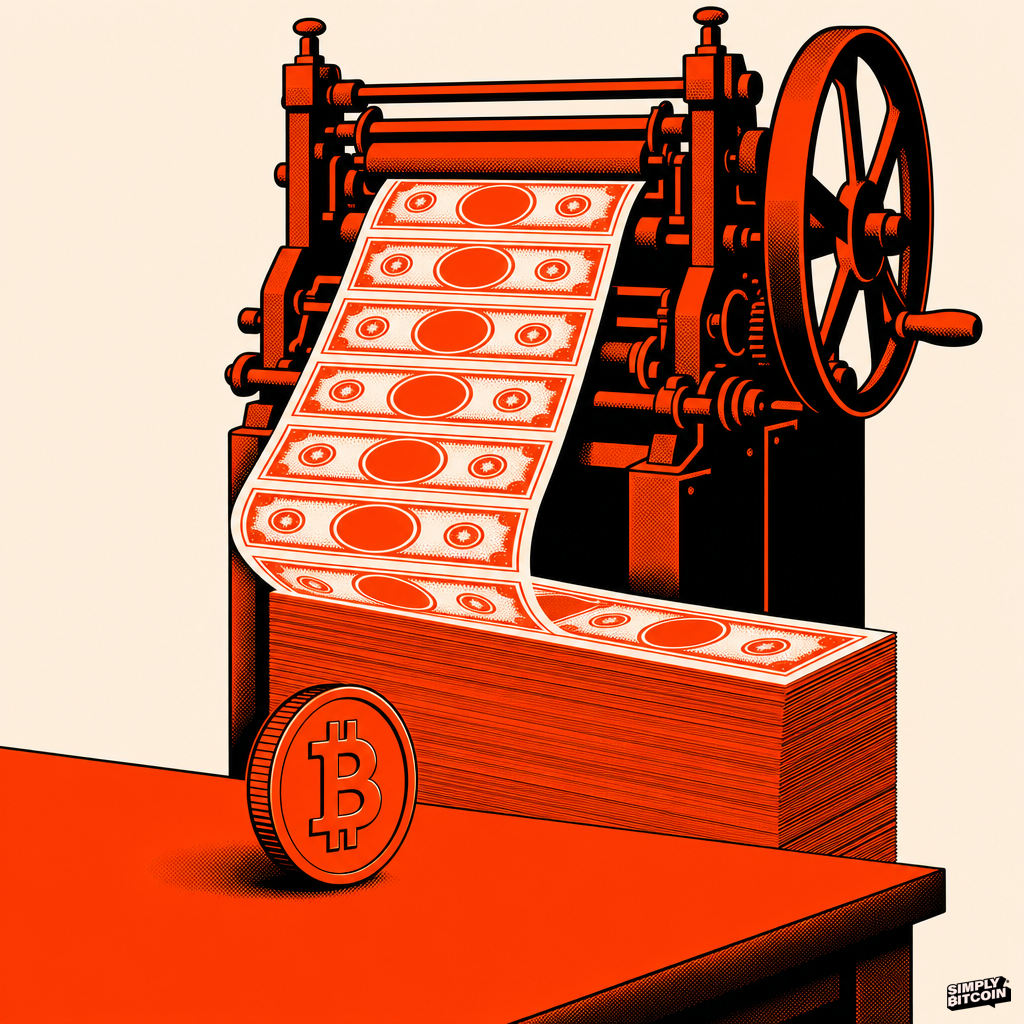
None of this requires a villain. The national debt went from about $2 billion in 1900 to nearly $40 trillion now, and interest, Social Security, and Medicare already consume more than the government collects in tax. There are only four ways to close that gap, and three of them are politically impossible. The fourth is to make the money worth less, on purpose, and call it policy.
That is not a conspiracy. It is arithmetic that has already been run once and is being run again. Bitcoin's answer to a shrinking ruler is a fixed one: twenty one million coins, no exceptions, no committee that can vote to make more. You do not need to out-earn the printer. You just need to hold something it cannot touch.