Fiat Needs You To Spend It. Bitcoin Just Needs You To Hold It.

In Dallas this week, Donald Trump told a packed arena that if Republicans keep the House and Senate, every adult citizen gets a $5,000 check. The room lost its mind. What most coverage buried in paragraph six is the condition he attached to it before the applause even died down.
THE CATCH NOBODY MENTIONED
The pitch itself was framed like a corporate payout. "Because of our tremendous strength and success economically, I will issue a dividend to every adult citizen in the United States of America for $5,000," Trump said, comparing it to "a successful company will do a cash distribution to its shareholders."
Then came the part that mattered more than the number. "The only caveat I have is that the dividend that we're making must be spent in the United States of America," the president said, adding that he didn't want people "going to Canada to spend the money," or "to China to Germany." Spend it here, on things, fast. That's not a suggestion. It's the only term attached to the entire offer.
MONEY THAT ONLY WORKS IF IT MOVES
Think about what that condition actually admits. A real dividend doesn't come with instructions. Nobody hands you a payout from a stock you own and tells you where you're allowed to spend it. The fact that this one does tells you the check isn't really for you. It's for the number that gets reported on the news the week after it lands: consumer spending, retail sales, a line on a chart that needs to move up.
That's the whole mechanism behind a stimulus check. The money only does its job if it changes hands immediately, inside the domestic economy, on goods and services. Sitting in a savings account does nothing for that number. Neither does buying something that isn't a good or a service at all.
WHY YOUR SAVINGS ARE THE THREAT
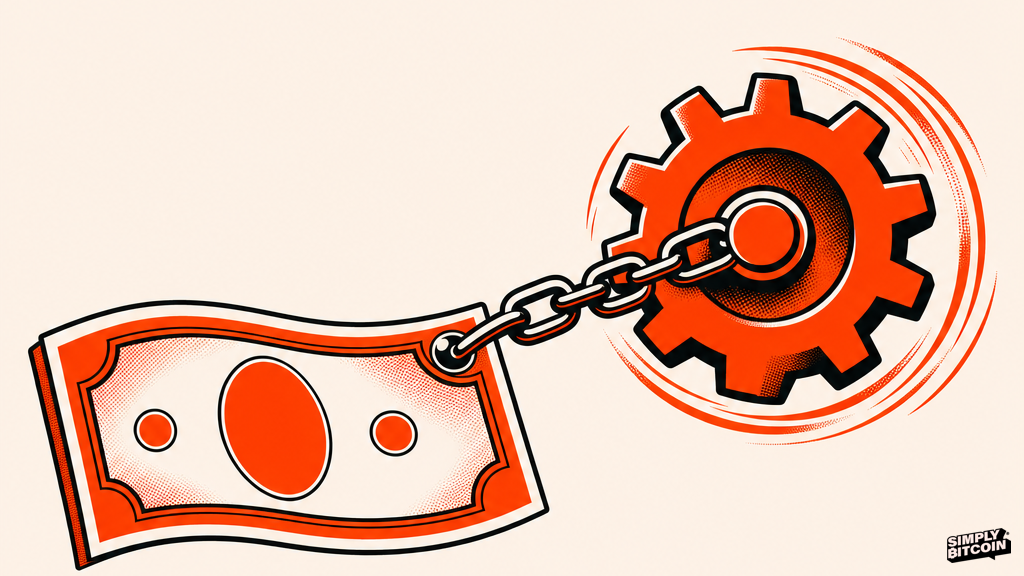
This is the part that should bother you more than the price tag. A system that needs newly printed money to be spent immediately is a system that cannot afford for you to hold it. Holding removes the dollar from the loop the stimulus is supposed to create. Worse, from the state's perspective, is what happens if you take that $5,000 and buy a scarce asset instead of a television. That money doesn't disappear, but it stops being fuel for anyone's GDP print. It becomes yours, permanently, in a way that a purchase never is.
Even inside Trump's own party, the inflationary math didn't go unnoticed. Florida governor Ron DeSantis, who ran against Trump in the 2024 primary, argued the opposite approach made more sense: "If you are getting surplus revenue, you should cut people's tax and return it to the people," he told reporters. Even that critique still assumes the money gets spent. Nobody in Dallas or Miami was making the case for saving it.
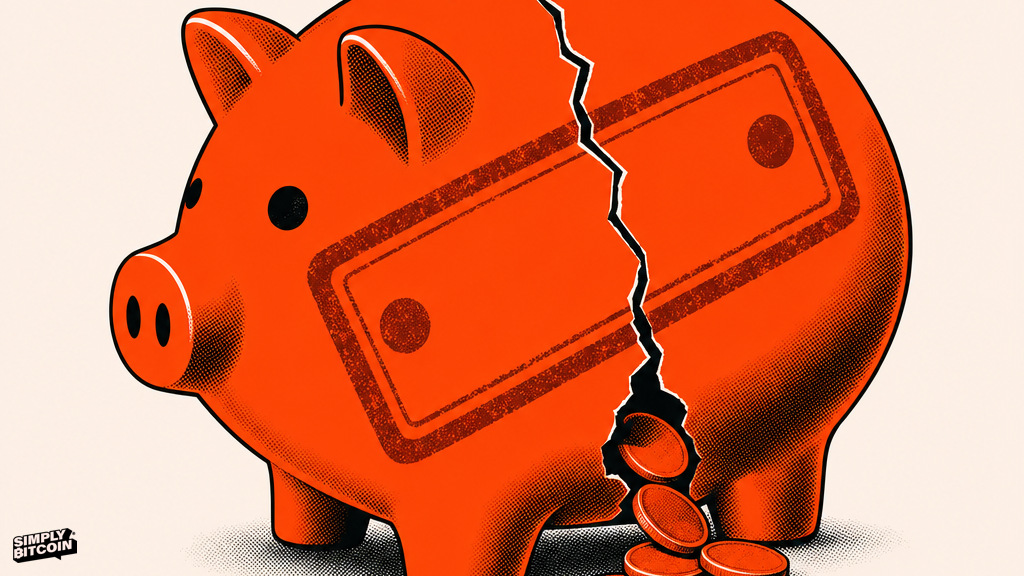
THE ASSET THAT DOESN'T NEED YOU TO SPEND IT
Bitcoin has no version of this clause. There is no provision on where you can hold it, how fast you have to move it, or what it needs from you to keep functioning. It works exactly the same whether one person holds it for thirty years or ten million people transact with it every hour. Nothing about its design depends on your behavior at all. That's the difference between a currency that needs a nation of spenders to justify its own printing, and a currency that was built to be scarce first and useful second.
No man should work for what another man can print.
Jack Mallers said that line, and it lands harder against a $5,000 dividend than it does against almost anything else. The dividend is not wealth. It's a claim on future goods, conjured the same week the national debt crossed forty trillion dollars. The only thing that makes it feel like a gift is the fact that you didn't have to work for it. The only thing that makes it worth less every year you hold it as cash is the same printer that created it in the first place.
WHAT $1,200 ALREADY PROVED
This isn't theoretical. The government sent out a $1,200 stimulus check in April of 2020 with no spending condition attached. Most of it got spent, because that's what it was designed for and because holding dollars has never rewarded anyone for waiting. The people who bought Bitcoin with it instead are sitting on something closer to thirteen or fourteen thousand dollars today, even after this week's pullback below eighty thousand a coin. Same government, same printer, same $1,200. Two completely different outcomes, decided entirely by what the recipient did with it in the first ninety days.
Nobody knows what $5,000 becomes by 2028, and anyone who tells you an exact number is guessing. What isn't a guess is the pattern: the state needs this check spent to work, and it built that requirement into the offer itself. Bitcoin has never needed anything from you. That's not a marketing line. It's the entire reason one of these is called a dividend and the other is called money.