Every Hack This Month Needed A Login. Bitcoin's Ledger Never Had One.

In the same eight days, hackers cranked grocery store freezers to 50 degrees Celsius across six European countries, the Pentagon opened an investigation into freezer failures at six US military bases, and an attacker drained $6.3 billion from Binance, the largest exchange hack ever recorded. Three different targets, three different industries, and one quiet thread running underneath all of them: every single attack needed something to log into.
THE COMMON DENOMINATOR WASN'T CODE, IT WAS A LOGIN
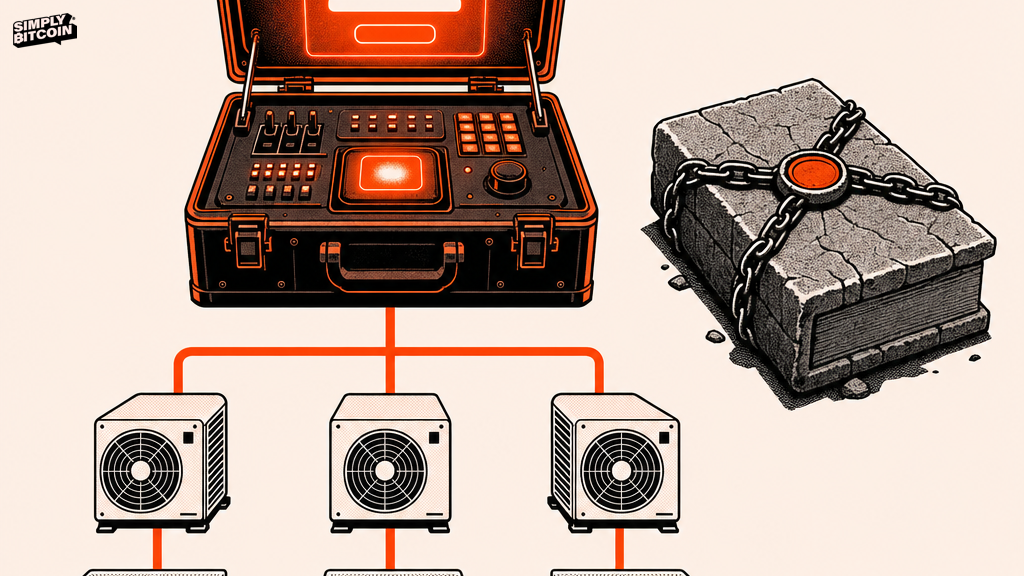
The European freezer hacks hit refrigeration controllers that ran their own tiny web servers, reachable over the open internet. Investigators found many of them secured with nothing stronger than "admin" as the username and the current date as the password. The Binance hack traced back to one engineer's compromised laptop, which gave an attacker a path into the exchange's wallet-signing system. Neither attack cracked a cipher. Both attacks found a door with a weak lock and walked through it.
That is the part worth sitting with. A supermarket's cold chain and the world's largest crypto exchange both turned out to have the same kind of weak point: a credential, sitting on a network, waiting to be guessed or stolen.
AI DIDN'T INVENT THE ATTACK, IT JUST MADE IT CHEAP
None of this required a genius. It required someone willing to scan for open control panels at scale, which is precisely the kind of repetitive probing that automation is good at and getting better at by the month. The investor Lyn Alden has made the same point in her own analysis of crypto security heading into this year: AI is lowering the cost of finding and exploiting weaknesses across complex systems, which means more things that used to be too tedious to attack are now worth attacking.
That is not a reason to assume everything digital is suddenly doomed. It is a reason to ask a sharper question than "is this hackable." Almost everything is hackable in theory. The question that matters is how large the target actually is, how many doors it has, and how expensive each one is to defend.
COMPLEXITY IS A SURFACE, AND BITCOIN KEEPS REFUSING TO GROW ONE
A refrigeration controller with a built-in web server, remote firmware updates, and a convenient admin login has more features than a dumb thermostat ever did. Every one of those features is also a place an attacker can probe. A hot wallet with instant withdrawals, API access, and automated signing has more features than a piece of paper with a number on it. Every one of those features is a place an attacker can probe there too. Features and attack surface grow together. That is not a flaw in any particular company's engineering. It is what happens whenever a system adds the capability to do more.
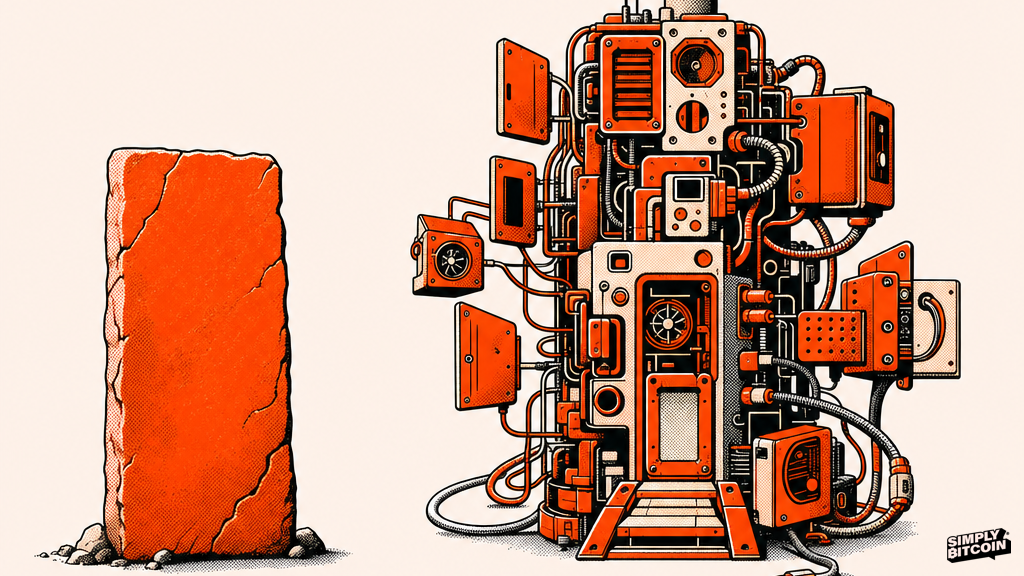
Alden's point lands here specifically: the more complex a system, the wider its attack surface, and Bitcoin's relative simplicity is the advantage that follows from staying narrow on purpose. Bitcoin has spent eighteen years refusing to be that kind of system. No admin backend. No remote firmware push. No convenience feature bolted on because a product team wanted a smoother user experience. Every change to the protocol itself has to survive years of public argument among node operators who have no obligation to adopt anything they don't trust, which is precisely why so few changes ever ship.
THE NETWORK HAS NO ADMIN PANEL TO FIND
Binance's hot wallet could be drained because somewhere, there was a system capable of authorizing a transaction on an engineer's say-so. The freezer controllers could be cooked because somewhere, there was a panel that trusted whoever typed the right string. Bitcoin's consensus layer has neither of those things to find, because there is no privileged account that can authorize anything on the network's behalf. Every node independently checks every rule on every block. Security does not come from guarding a password. It comes from thousands of parties each doing the same arithmetic and refusing to agree with a block that breaks the rules.
That design has already been tested by the single largest incentive to break it that has ever existed. Satoshi's original coins, more than a million bitcoin, have sat untouched in their original addresses for over fifteen years. Nobody needed to guess a password to get at them, because there is no password. There is only a private key, and the arithmetic protecting that key has outlasted every theory anyone has floated about how to crack it.

SLOW WAS NEVER THE BUG
For years, Bitcoin got mocked for exactly the trait that is doing the protecting right now: it moves slowly, it resists new features, and it treats every proposed change as a potential liability until proven otherwise. That instinct looked like stubbornness during a decade when every other piece of software was racing to ship faster and add more. It looks like foresight during a month when an AI-accelerated attack wave is sweeping through anything that has a login, a control panel, or a convenience feature built on top of the thing it was actually meant to do.
The freezers needed a password because someone decided a cooling unit should also be a remote-manageable smart device. The exchange needed trust in an engineer's laptop because someone decided withdrawals should be instant and automated. Bitcoin needed neither, because it never agreed to be anything more than a ledger that anyone can verify and no one can quietly edit. The attack surface you don't build is the one that never has to be defended.


Daily Bitcoin news, analysis and interviews. New shows every single day.
Subscribe on YouTube