Every Crash Sorts You By Why You Bought
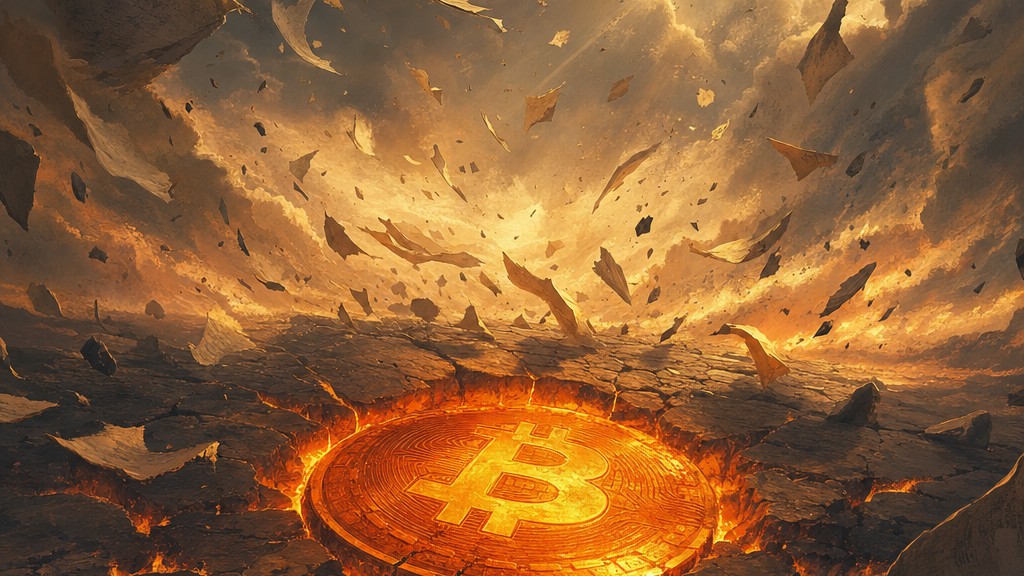
Bitcoin can lose half its value in a weekend and still be exactly what it was the week before. That sounds like denial until you look at what actually changes in a crash. The price moves. The protocol does not. Every steep drawdown in Bitcoin's history has run the same experiment on the people holding the asset, not on the asset itself.
THE DRAWDOWN NEVER TESTS THE ASSET
A falling stock price can mean a company lost a customer, broke a product, or hired the wrong executive. The stock is a claim on a business, and a business can get worse. Bitcoin has no executive to lose and no product to break. Its only promise is that no more than 21 million coins will ever exist, and that promise does not weaken because the price fell.
What a crash actually measures is something else entirely: how many people were holding the price, and how many were holding the reason.
THE SELLING COMES FROM ONE PLACE
Onchain data makes this visible in nearly every cycle. When a sharp drawdown hits, the coins that move overwhelmingly belong to the most recent buyers, the ones who bought near a local top chasing a rally that had already run most of its distance. Coins that have sat untouched for years barely budge.
That is not because long-term holders are smarter in some mystical sense. It is because they already paid their emotional cost on an earlier crash and decided, deliberately, what the asset was for before this one ever started.
PRICE OWNERS HAVE NOTHING UNDERNEATH THE CHART
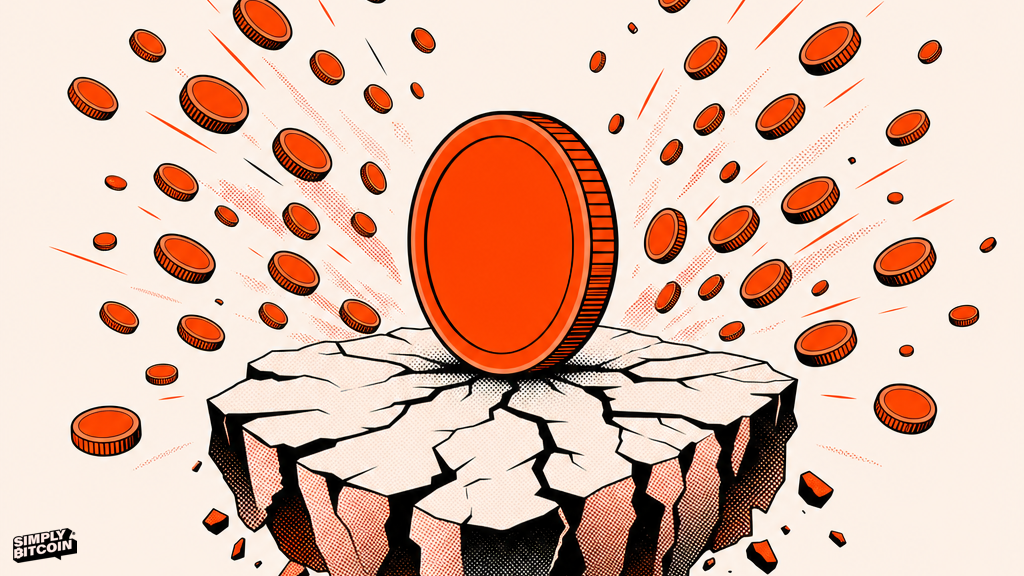
This explains the panic better than any chart does. A person who bought Bitcoin because the number was going up has no foundation once the number stops going up. The price was the entire argument, so when the price reverses, the argument reverses with it. There is nothing underneath to fall back on.
A person who bought Bitcoin because they understood what a hard cap on supply does to a currency that cannot stop printing has a different relationship to the same red candle. The thesis was never about one week's number. It was about a mathematical ceiling that a falling price does not raise, and a spending habit that a falling price does not fix either.
THE SUPPLY CAP DOES NOT KNOW WHAT YOU PAID
This is the detail that gets lost every single time the price drops. The 21 million cap does not consult the order book. It does not care whether the last buyer paid near a cycle high or a cycle low. It is enforced by thousands of computers running the same rule regardless of sentiment, and no amount of panic selling moves the issuance schedule by a single satoshi.
Compare that to the asset on the other side of every trade. A currency's supply is a policy choice, revisited constantly by people whose job depends on being able to make more of it when the politics demand it. A falling Bitcoin price does not touch the 21 million cap. A weakening economy reliably touches the money supply, and it touches it in the direction that makes existing currency worth less.
THE FLOOR RISES WHILE THE SURFACE SCARES PEOPLE
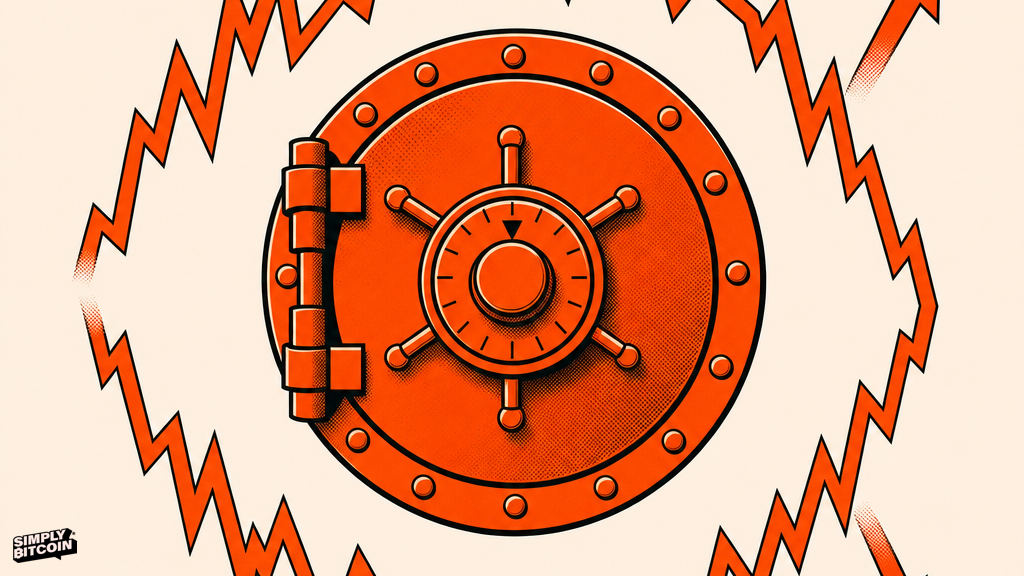
There is a quieter number underneath every crash that gets almost no attention, because it is boring. It is the average price the entire network has paid for every coin currently in circulation, smoothed out across cycles. That number has climbed in nearly every year of Bitcoin's existence, through every crash, including the ones that felt terminal at the time.
The surface price is loud, fast, and built to scare whoever is watching it hour by hour. The floor underneath it is slow, dull, and has never behaved the same way. Long-term holders are not sitting through the chaos because they enjoy the pain. They are measuring something the headlines never bother to show.
A crash does not lower the floor. It just tells you who was only ever watching the ceiling.
THE PATTERN HAS A RECEIPT
This is not a theory. In March 2020, Bitcoin fell from around 8,000 dollars to under 4,000 dollars in two days as markets everywhere panicked at once. Governments responded the way they always respond to a crisis that size: rates cut to zero, printing with no stated ceiling. Within about twenty months, Bitcoin had climbed past 69,000 dollars.
That recovery did not happen because the March panic was fake. It happened because the response to the panic repriced the one asset that could not be printed alongside everything that could. Nobody holding through that crash for the reason needed to call the exact bottom. They only needed to be right that a government carrying that much debt chooses more currency over less, every time the choice is forced.

WHAT SURVIVES THE SORTING
Every cycle runs this same sort. The people who bought a price get shaken loose somewhere on the way down, often at a loss, often right before the move they were waiting for. The people who bought a reason sit through the same candle without having to make a decision at all, because they already made it before they ever clicked buy.
The next crash, whenever it comes, will not test whether 21 million is still the cap. That part was decided in 2009 and has been enforced every ten minutes since. It will test the only variable that was ever actually in question: whether you were holding a price the whole time, or something that never needed one to be true.


Daily Bitcoin news, analysis and interviews. New shows every single day.
Subscribe on YouTube