Cheap Money Doesn't Disappear. It Finds A New Printer.

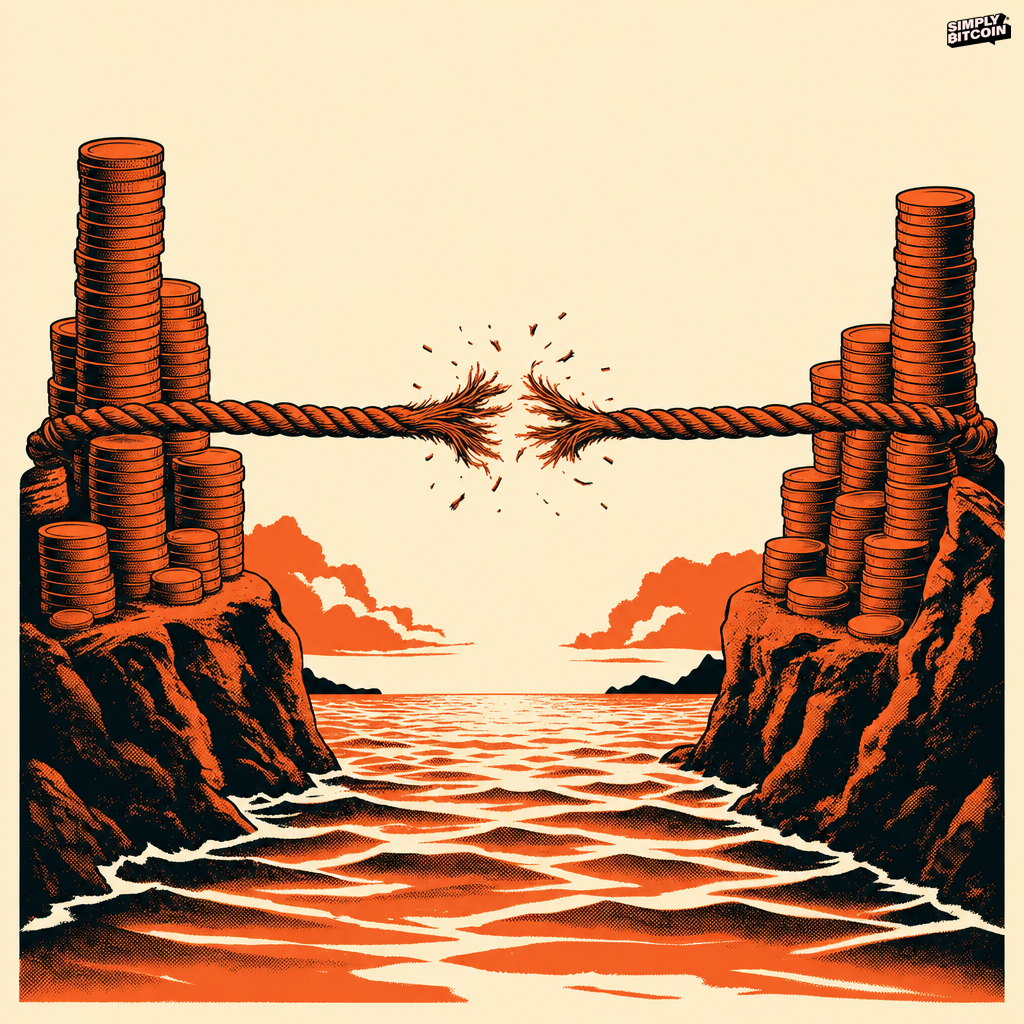
For thirty years the cheapest money on earth had one address. It sat in Tokyo, it cost almost nothing to borrow, and the entire planet built its riskiest bets on top of it. That faucet just proved, twice in two years, that it can slam shut in an afternoon.
THE FAUCET THAT FUNDED THE WORLD
The mechanic was simple. Borrow yen at close to zero percent, convert it to dollars, and buy whatever was working: American stocks, treasuries, real estate, tech. Traders called it the carry trade. In practice it meant Japan quietly financed decades of the world's risk appetite without most of the people benefiting from it ever knowing its name.
A country does not hand out free money forever without a cost. Japan kept its own rates pinned near zero for so long that it exported its cheap capital abroad while importing the inflation that cheap capital always eventually produces at home. The subsidy flowed out. The bill stayed in.
THE DAY THE FAUCET SLAMMED SHUT
On July 31, 2024, the Bank of Japan raised its benchmark rate from around 0.1% to 0.25%, immediately putting pressure on carry trades funded by the yen. Days later, a soft US jobs report hit at the worst possible moment, and the unwind that followed was not gradual.
The Nikkei 225 posted its worst single session since Black Monday in 1987, a decline that erased approximately 113 trillion yen, around 790 billion dollars, and wiped out all gains for the year. The damage did not stay in Tokyo. The S&P 500 fell hard in the same window, and Bitcoin was not spared either, tumbling below 50,000 dollars as leveraged positions were forced to unwind everywhere at once.
THE SUBSIDY WAS NEVER FREE
This is the part that gets lost in the charts. A carry trade is not a market inefficiency waiting to be arbitraged away. It is a government choosing to subsidize the rest of the world's risk appetite at the expense of its own citizens' purchasing power, for as long as it can stomach the tradeoff.
Every government eventually stops being able to stomach it. Rates that stayed near zero for three decades did not move because a spreadsheet said so. They moved because the cost of holding them down finally became more painful than the cost of raising them. That is not a Japan story. It is the story of every cheap money regime that has ever existed.
EVERY GOVERNMENT FACES THE SAME FORK
When a cheap money era ends, there are only two roads. One is real austerity: let overleveraged positions default, let asset prices find their honest level, let the pain land where the risk was actually taken. The other is intervention: print, cut, backstop, and keep the system standing by diluting the currency underneath it.
History does not need a citation to make this point. Every modern central bank facing a real systemic threat has picked the second road, every time, regardless of what it is called in the press release. The debate always looks serious. The outcome is never in doubt.

SCARCITY IS THE ONLY THING A PRINTER CANNOT FIX
This is why the yen carry trade unwind matters far beyond Japan. It is a live demonstration of what happens to every currency built on the assumption that the subsidy never ends. The lever only moves one direction, and it always lands on more supply, never less.
Bitcoin was built as the one asset where that lever does not exist. Its supply does not bend to a policy meeting, a jobs report, or a government that suddenly needs its own balance sheet back. Every intervention that rescues a fiat system by diluting it is, by definition, a vote for the one form of money that cannot be diluted at all.
The yen carry trade will not be the last subsidy to end this way. Some other cheap money machine, in some other capital, is already being built on the same assumption that it can run forever. It cannot. That is the whole point, and it is the reason the asset with a hard number written into its code keeps winning long after the printer everyone was relying on runs out of room.