BlackRock Slashes Bitcoin ETF Minimum to $1 Million Days After Coldcard Hack
BlackRock is making it easier than ever to hand the firm your Bitcoin, and it is happening in the same week the industry is still reeling from the largest hardware wallet exploit in history.
THE MINIMUM DROPS AGAIN
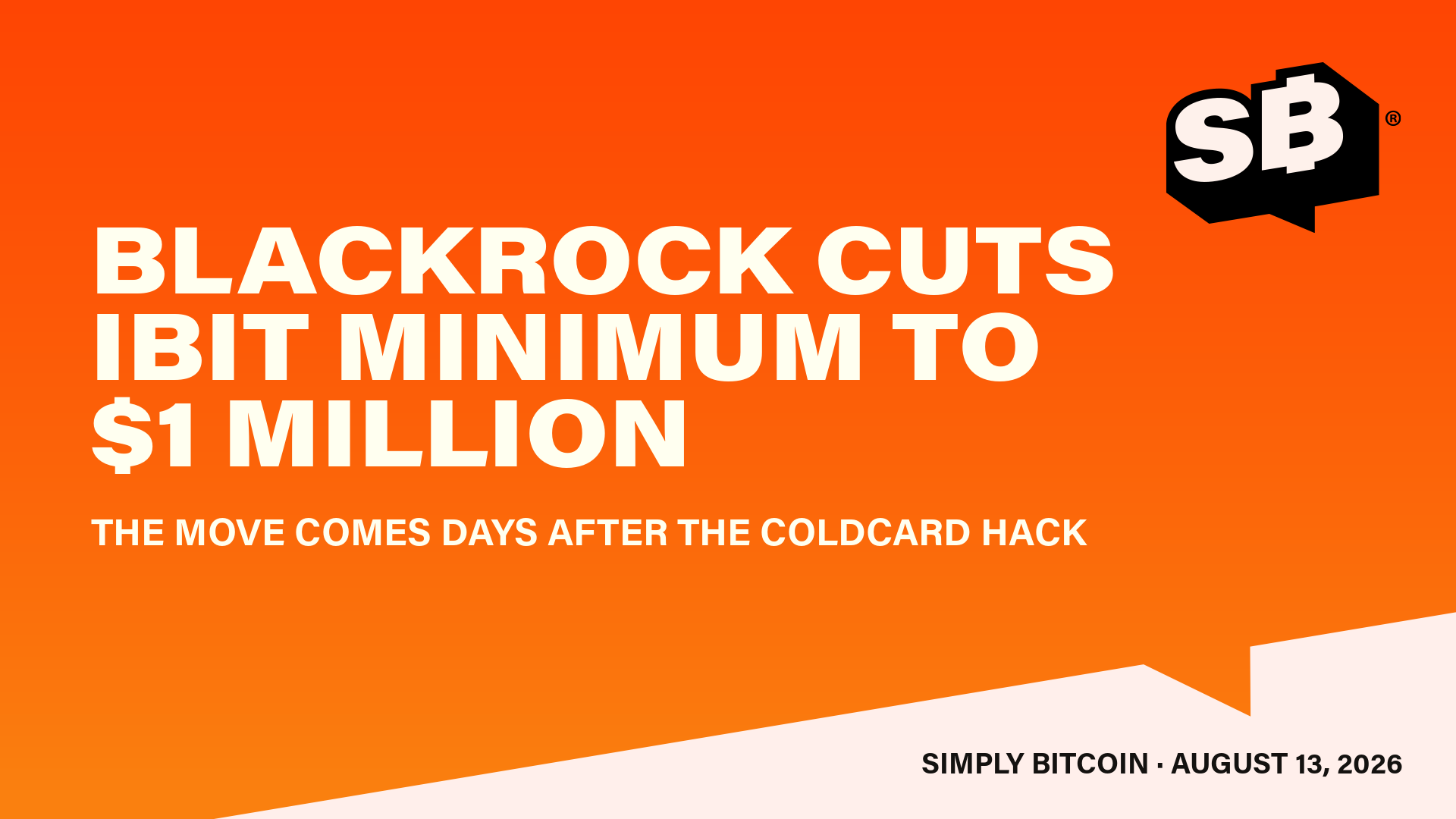
BlackRock's Robbie Mitchnick, the firm's head of digital assets, confirmed on Bloomberg Television's ETF IQ on August 10 that the in-kind conversion minimum for the iShares Bitcoin Trust had been cut from $25 million to $1 million. Bloomberg's Eric Balchunas posted the clip afterward.
"Bitcoiners can do in-kind exchanges of BTC for IBIT for $1 million minimum now. It used to be $25 million," Mitchnick said during Bloomberg TV's ETF IQ on 10 August 2026.
BlackRock has stated that its long-term objective is the complete elimination of the in-kind minimum. An in-kind conversion lets a holder hand actual Bitcoin to an authorized participant and receive IBIT shares in return instead of triggering a taxable cash sale, which is why the mechanism matters far beyond its administrative plumbing.
THE COLDCARD BACKDROP
The timing is not incidental. Beginning July 30, 2026, attackers exploited a five-year-old firmware flaw in Coinkite's Coldcard hardware wallet that traces to a March 2021 firmware release and a build configuration error that caused seed generation to fall back on a weak software random number generator rather than the device's hardware-based source of entropy, collapsing effective key strength from a designed 128 bits down to as little as 40 bits on older devices. Tracking firms have moved the loss estimate several times as new waves of theft were identified, with TRM Labs putting the running toll at close to USD 116 million drained from more than 5,200 addresses.
On the show, the hosts said BlackRock's own IBIT currently holds roughly 811,000 Bitcoin, a figure the hosts attributed to their own tracking rather than a cited filing, so treat that specific number as an on-air estimate rather than a confirmed count.
WHY BITCOINERS ARE UNEASY
The show's hosts argued the sequence looks like an opportunistic pitch: a hardware wallet fails, and the world's largest asset manager immediately makes it cheaper to move Bitcoin into its custody. They pointed to BlackRock's history of using its index-fund ownership stakes across Fortune 500 companies to push policy outcomes, including CEO Larry Fink's past ESG advocacy, as a precedent for concern about what a large enough Bitcoin position could eventually be used to influence, from protocol forks to future regulatory posture.
The hosts said a well-known Bitcoin commentator known online as British Hodl has claimed credit for pushing BlackRock toward the lower threshold, saying he contacted the firm directly after the Coldcard exploit to argue for a reduced minimum. Simply Bitcoin has not independently verified the private conversation described, and it is relayed here as recounted on the show rather than as confirmed fact.
THE CASE FOR SELF-CUSTODY ANYWAY
The hosts were blunt about where they land: sending Bitcoin to BlackRock is not the answer to a hardware wallet bug, even if the tax treatment and reputational comfort make the ETF tempting for some holders. Their view is that convenience is winning out over sovereignty for a large share of the market, particularly among older investors accustomed to traditional custodians, but that the fix for a self-custody failure is better self-custody tooling, not surrendering custody altogether.
This story comes from the Simply Bitcoin Live show. Watch the full episode.