
Bitcoin Has No Word For Unrealized

A chain split ended in less than a day this week. Ninety six billion dollars in bond losses have been sitting on insurer balance sheets for a full quarter and nobody has had to admit they are final yet. Both are disagreements about what something is worth. Only one of them was forced to a conclusion.
TWO CRISES, ONE WEEK
Bitcoin split into two competing chains this week when a subset of nodes began enforcing a rule the rest of the network refused to follow. At the same time, Japan's four largest life insurers were sitting on a mounting pile of paper losses from bonds that were supposed to be the safe part of the portfolio.
Two systems, two disagreements about value. One of them had an answer before the week was over. The other still does not, and by design, may never have to.
THE FORK THAT SETTLED ITSELF
At block 961,632, nodes enforcing the new rule split off from the chain everyone else was building. For a few hours nobody knew which version of Bitcoin the network actually wanted. Then the hash power spoke. The BIP-110 minority chain holds just 0.15% of total hashpower, with only two blocks mined since the split, while the rest of the network, roughly 99.85% of hashing power, remains firmly on the main chain.
That was the entire dispute, settled. The minority chain mined just two blocks, trailing the main Bitcoin chain by 80+ blocks. No appeal, no extension, no committee reviewing the vote. The market cast it and the market closed it.
THE LOSS THAT ISN'T A LOSS UNTIL THEY SAY SO
Compare that to what is happening on the other side of the Pacific. Japan's four largest life insurers, Nippon Life, Dai-ichi Life, Sumitomo Life, and Meiji Yasuda, reported combined unrealized losses of ¥15.13 trillion, ninety six billion dollars, on domestic government bonds as of the end of June 2026, up roughly seven percent from the previous quarter.
That number is real. The bonds are worth less than the insurers paid for them, in the same way a losing chain is worth less than the winning one. But there is a word doing a lot of quiet work in that sentence: unrealized. The loss only becomes real on paper the moment someone is forced to sell.
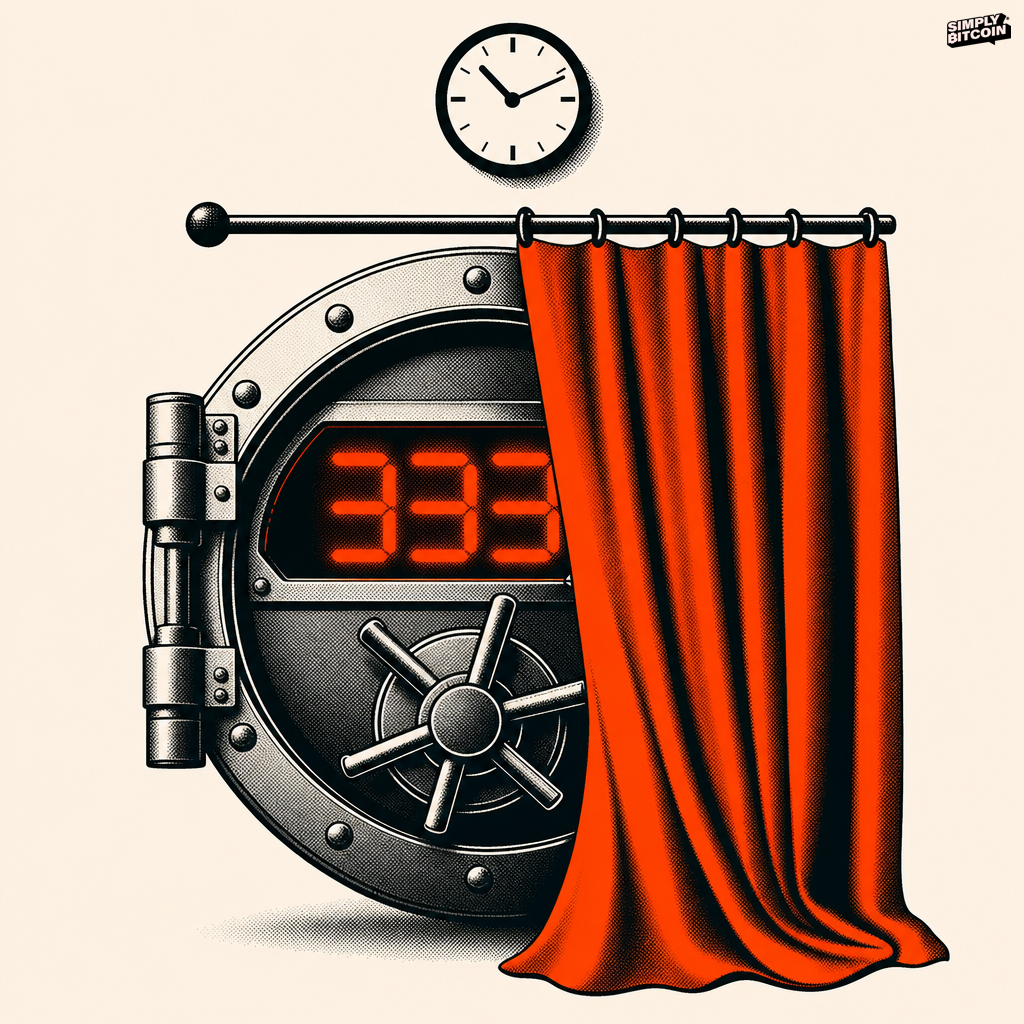
WHY BITCOIN HAS NO WORD FOR UNREALIZED
Bitcoin does not have an accounting category for a loss that hasn't happened yet. Every block either extends the chain the network has chosen or it doesn't. There is no interim status where a rejected block gets to sit on a balance sheet marked pending while everyone waits to see if the market changes its mind.
The BIP-110 chain wasn't unrealized. It was rejected, in public, block by block, in front of anyone running a node. There was no quarter to wait out and no forbearance period to apply for.
THE FORBEARANCE MACHINE
The legacy financial system runs on the opposite premise: that a loss isn't a loss until an institution is forced to admit it. Insurers can hold bonds to maturity and never mark the loss as long as they never have to sell. Regulators can grant forbearance. Central banks can adjust the rules of what counts as capital. The clock on admitting you were wrong can be extended almost indefinitely, as long as you're big enough to ask.
That is not an accident of Japan's system specifically. It is the operating principle of every fiat balance sheet: the reckoning is negotiable, and negotiable means it gets deferred, and deferred means someone downstream eventually eats it who never agreed to the trade.
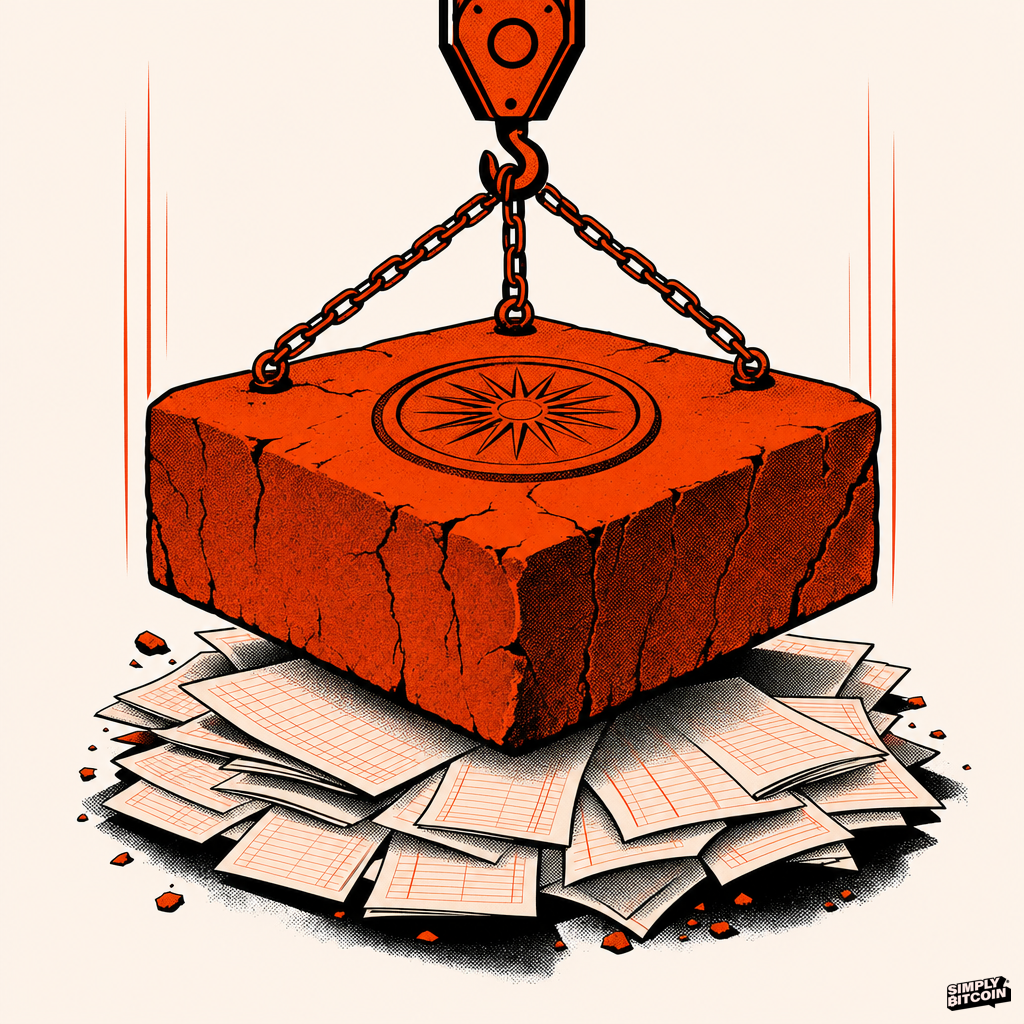
THE BLOCK CLOSES THE BOOK
Bitcoin's fork and Japan's bond losses both started as a disagreement about value under stress. One of them produced a verdict in hours because the network has no mechanism for delay built into it. The other is still sitting there, technically fine, structurally not, because the system it runs on was built to postpone the verdict rather than deliver one.
A ledger that closes every ten minutes cannot lie to you about what happened. A ledger that gets to decide when a loss becomes real can lie to you for years.