Bitcoin Can't Be Rushed. That's What Protects It.
This week felt like every lock on earth got tested at once. AI found a hole in software that millions of websites run on. Banks found AI agents moving around inside customer accounts. Someone asked a billionaire investor on a podcast if Bitcoin is next, and he said it goes to zero. Strip away the noise and one honest question is left standing. When something finally learns to break in everywhere, does it matter which lock you built.
THE LOCK EVERYONE NAMED WAS THE WRONG ONE
Chamath Palihapatiya told Peter Diamandis on the Moonshots podcast that Bitcoin is capped and eventually gets hacked to zero. His reasoning leaned on AI breaking SHA-256 and draining Satoshi's wallet. That is a real cryptographic function, pointed at the wrong job. SHA-256 is what miners use to secure the chain. What actually protects a Bitcoin holder's ability to spend their own coins is a separate signature scheme, the elliptic curve math behind every wallet on earth. A billionaire technology investor naming the wrong lock is not a small slip. It tells you the fear came first and the explanation got built around it afterward.
It gets more pointed. Chamath also said he no longer holds Bitcoin directly. Years ago he moved his coins into Digital Currency Group and took equity instead, trading self-custody for a paper claim on a company. He has called that decision a way of removing his storage risk and security risk. He did not remove it. He relocated it to a balance sheet he does not control, in the same week American banks are finding AI agents walking around inside the accounts they are supposed to be guarding.
WHAT AI ACTUALLY FOUND WHEN SOMEONE POINTED IT AT THE CODE
Rob Hamilton runs AnchorWatch and leads a volunteer effort called the Bitcoin Red Team that has spent months pointing AI models at Bitcoin's own codebase, specifically including libsecp256k1, the signature library every hardware wallet and every custody company imports to handle Bitcoin's cryptography. Hamilton has said plainly that the library is resilient. Small cleanups turned up. Nothing close to a break. The same holds for Bitcoin Core itself.
That distinction matters more than the headline. The Red Team's broader scans of hundreds of Bitcoin-adjacent repositories have turned up real, sometimes serious bugs, and those bugs sit in wallets, exchanges, and surrounding software, not in Bitcoin's own base layer. Seventeen years of the most adversarial attention software can get, now including frontier AI specifically hunting for a way in, and the core signature math has not broken. The companies and products built around Bitcoin are where the actual holes keep showing up.
THE RISK THAT IS REAL, AND WHY IT ISN'T A HACK
The honest long-term threat to Bitcoin is quantum computing, and it is worth taking seriously precisely because it is not theater. Roughly 30 percent of all Bitcoin sits in addresses where the public key is already visible on-chain, mostly old coins and unused addresses, including a large share tied to Satoshi's own early mining rewards. If a quantum computer powerful enough to break elliptic curve cryptography is ever built, those exposed keys would be the first coins at risk.
Nobody has built that machine. Nobody knows if or when one will exist that is anywhere close to big enough. Stanford cryptographer Dan Boneh was asked directly whether Bitcoin will solve its quantum exposure before it becomes a real problem.
"It's insane to say that Bitcoin will not solve the quantum problem," Boneh said.
His confidence was not vague optimism. Post-quantum signature schemes already exist. The open questions are tactical, which specific approach and which migration path, not whether a fix is possible.
THE SLOWNESS EVERYONE MOCKS IS THE THING DOING THE WORK
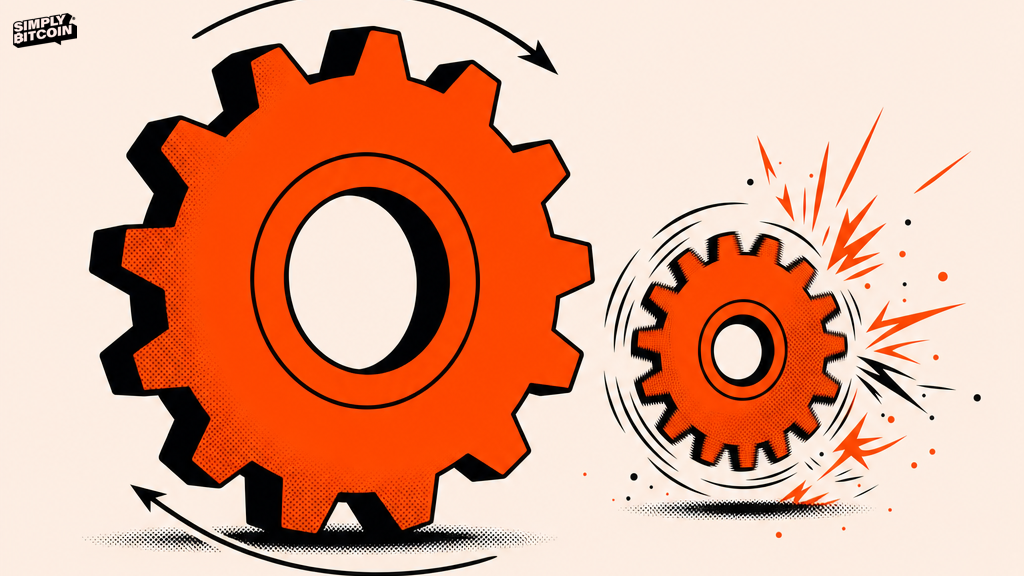
Boneh added one caution that got buried under his confidence: rushing a quantum fix is more likely to cause a catastrophic bug than a quantum computer is to show up and need one. That line is the whole argument in a single sentence. The danger was never only the hypothetical machine. It is what a panicked, hastily shipped patch could do to a system holding trillions of dollars, pushed through before anyone had time to check it properly.
Chamath, without meaning to, described exactly what stops that from happening. He mocked the Bitcoin community as a group that cannot agree where to meet, let alone what time the meeting starts. He meant it as an insult about dysfunction. It is actually a description of why Bitcoin is hard to rush into a mistake. Nobody can unilaterally ship a change to Bitcoin's rules. Every meaningful upgrade requires the people running nodes, writing wallets, and holding coins to choose it, together, on their own timeline. That friction is slow by design. It is also exactly what prevents one scared developer, one panicked company, or one government under pressure from forcing through an untested fix the moment a headline gets loud enough.
A MAN WHO SOLD HIS KEYS DESCRIBED THE THING HE SOLD
An hour before Chamath called Bitcoin cooked, the same conversation had him explaining why fiat currency eventually becomes worthless and why a currency backed by measurable effort and energy is a more honest store of value than a decision made by a bureaucrat. He was describing proof of work. He just did not recognize it as the thing he was simultaneously predicting would go to zero. He was an early Bitcoin investor back in 2013. This is not a knowledge gap. It is the much more human problem of being right early and finding it difficult to sit with being wrong now.
None of this means nothing can ever go wrong. It means the danger this week was never the one getting the headlines. The protocol held under direct, funded attack. The exposed coins are real but their risk is years away and already has a known path to a fix. The actual threat is the same one it always was: moving your keys somewhere you cannot see them, and trusting that whoever holds them now will still be trustworthy later. Bitcoin's code did not need to be rescued this week. The people deciding how fast to change it are the ones worth watching.


Daily Bitcoin news, analysis and interviews. New shows every single day.
Subscribe on YouTube