
A Smaller Drawdown Isn't Less Fear. It's Less Float.

Every time Bitcoin's price falls hard, the question people ask is how far it will go. The usual way to measure the answer is a percentage: this one dropped 50 percent, that one dropped 80 percent, this cycle was calmer than the last. That comparison feels precise. It is actually hiding the most interesting number in the whole chart.
THE COMPARISON THAT LOOKS SMALL AND ISN'T
Start with 100 dollars. A 50 percent decline leaves 50. An 80 percent decline leaves 20. Those two outcomes look like they sit 30 points apart on the same ruler. They don't.
To get from 50 down to 20, the price has to fall another 60 percent on top of the first leg. That second leg is proportionally bigger than the first one, not smaller. A bear market that stops at 50 percent hasn't covered most of the distance to an old style 80 percent collapse. It has covered less than half the damage, because percentage losses compound against whatever is left, and what's left keeps getting smaller.
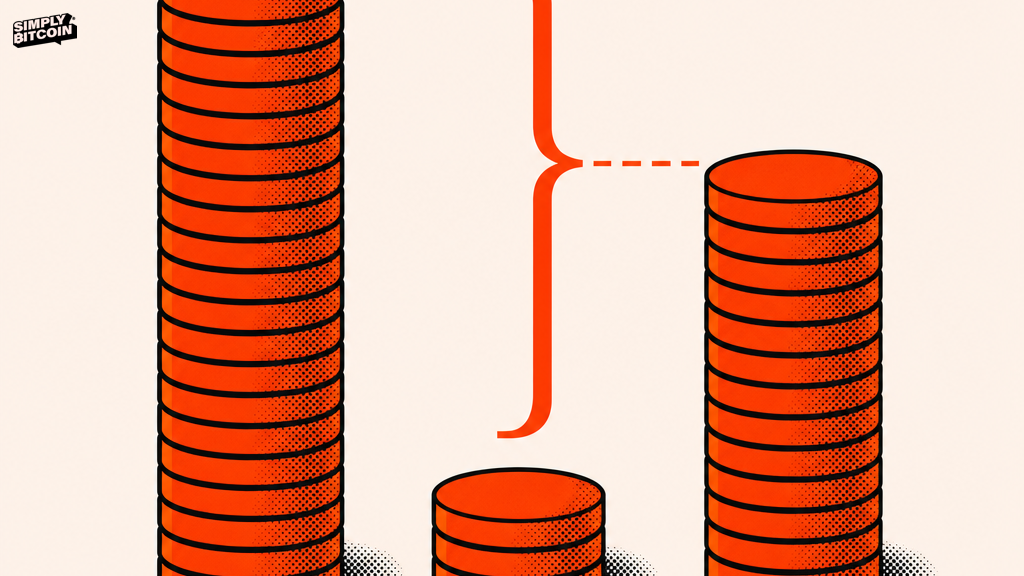
This is why a bear market that "only" cuts the price in half deserves more attention than the round number suggests. The missing leg wasn't a small gap. It was the harder half of the crash.
WHAT ANDY CONSTAN NOTICED
Andy Constan spent his career inside Salomon Brothers, Bridgewater, and Brevan Howard, three firms not known for crypto enthusiasm. He still prefers gold. But when asked about Bitcoin's most recent bear market stopping well short of its historical depth, he made the same point the math makes: the difference between a 50 percent drawdown and an 80 percent drawdown isn't a modest gap. It's a whole extra leg of selling that simply never showed up.
A skeptic noticing the size of a gap that didn't get filled is a different kind of signal than a believer announcing a new era. He wasn't arguing the bottom is in forever. He was pointing at the shape of the decline and admitting the shape had changed.
WHY THE FLOAT SHRANK INSTEAD OF THE FEAR
The obvious explanation is that holders got braver. The more useful explanation is that there are fewer coins left that can physically hit an order book during a panic.
Bitcoin's supply can't respond to a crisis. A mining company can't open a new vein the way a gold miner can when prices spike, and a central bank can't issue more of it the way a government issues more bonds. The only variable left is how much of the existing 21 million coins is actually sitting somewhere willing to sell at a given price, and that number has one direction to move as more of it lands in cold storage with no plan to ever come back out.
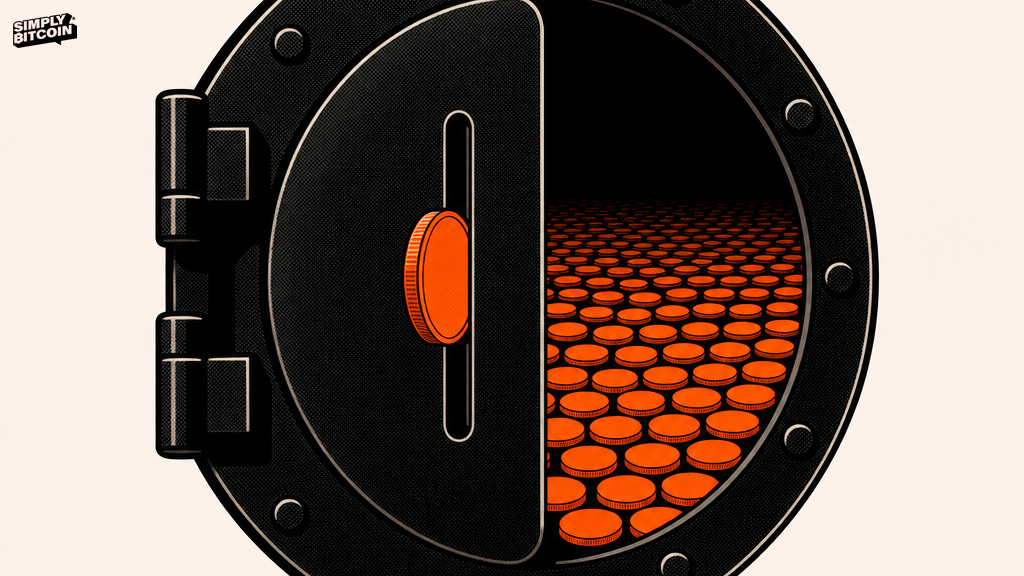
Every coin that moves from an exchange balance into a hardware wallet with no intention of selling is a coin permanently subtracted from the next panic's ammunition. Self custody isn't just a security practice. It's the mechanism that makes the float shrink for good instead of temporarily.
THE OFFER BOOK ISN'T WHAT IT USED TO BE
Picture a forced seller during a crash trying to find someone to take the other side. In an earlier cycle, a much larger share of outstanding coins sat on exchanges or in short term hands, ready to be sold into exactly that kind of fear. Today a thinner slice of the supply is reachable at any price, because the rest has already been moved somewhere its owner has no reason to touch.
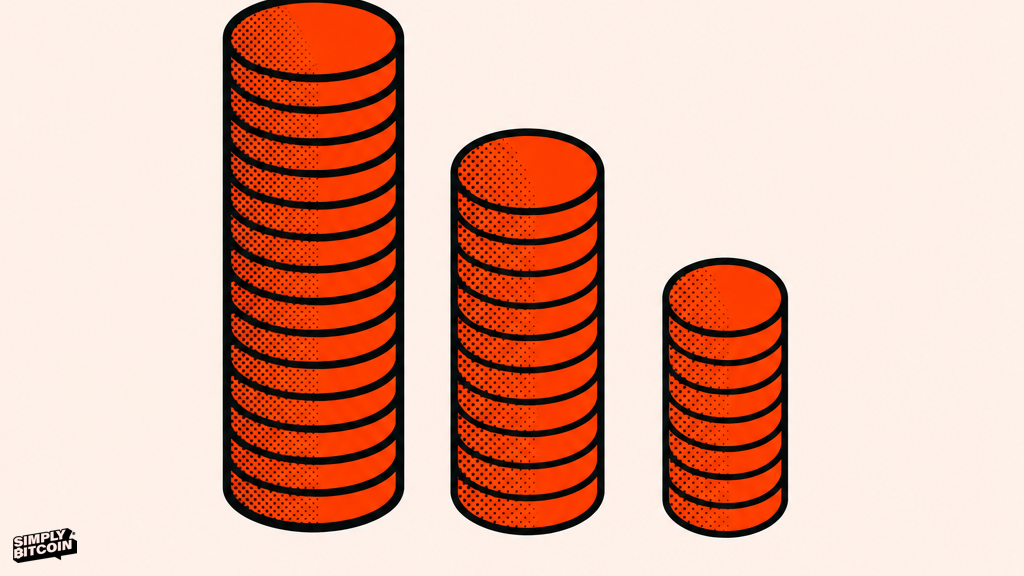
A smaller reachable float means a panic runs out of coins to dump before it runs out of fear to express. The crash doesn't need the seller to calm down. It just needs the seller to run out of supply, and that happens sooner when the float was smaller to begin with.
WHAT THIS DOES AND DOES NOT PROMISE
None of this means dollar denominated crashes get gentler. A 50 percent move on a much higher price is still a brutal number to live through, and a large enough unwind in leveraged derivatives or a forced liquidation cascade can still test a floor nobody expected to be tested. The float shrinking doesn't cancel volatility.
What it changes is the ceiling on how far a decline can mechanically travel without finding a buyer, because fewer of the existing coins are available to be sold into it in the first place. That ceiling has been quietly dropping for over a decade, one self custodied wallet at a time, and it will keep dropping as long as the people holding Bitcoin keep treating it as something to own rather than something to trade.
A market that runs out of willing sellers before it runs out of scared ones doesn't need the fear to end. It just needs the float to already be gone.