A Failed Vote Can Be Refiled. A Confirmed Block Cannot.

On Tuesday, the Senate needed 60 votes to open debate on a bill written to give crypto its rulebook. It got 50, with 49 against, eleven short. Zero Democrats crossed over. Four Republicans voted no. The bill died on the floor, and Bitcoin fell from the high seventies to under $75,000 within the hour. Cable anchors stood over the drop with the sad face on.
None of that is the part worth keeping. The part worth keeping is what one senator did on his way out of the room.
A VOTE IS BUILT TO BE UNDONE
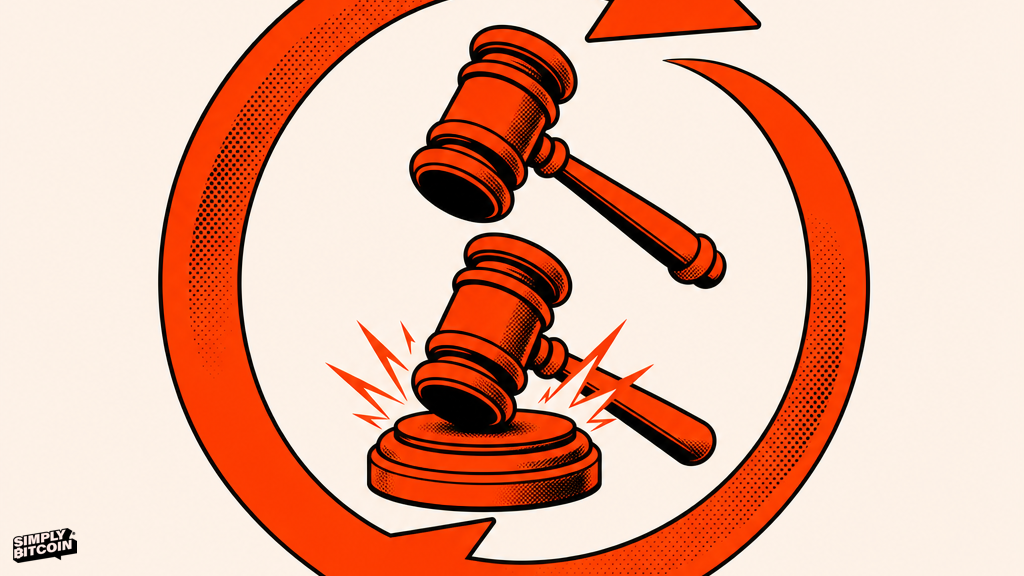
Senator Thom Tillis had voted yes. When it became clear the motion was going to fail anyway, he switched his vote to no. Not because he opposed the bill. Because Senate rules let a member on the prevailing side of a vote file a motion to reconsider it later. He voted against the thing he supports so he could bring the thing he supports back from the dead.
This is not a scandal. It is how the process is designed to work, and it worked exactly this way four months earlier. The GENIUS Act failed cloture 48 to 49 on May 8. Eleven days later, with sixteen Democrats flipping, it passed cloture 66 to 32 and became law that summer. Same chamber, same bill, opposite outcome, eleven days apart. A failed vote in Washington is not a verdict. It is a snapshot of a coalition that has not finished negotiating yet.
THE MANEUVER THAT PROVES THE POINT
Strip away the parliamentary vocabulary and the mechanism is simple: nothing the Senate decides is actually final. A no can become a yes with the right amendments, the right election, the right afternoon. A yes can be clawed back the same way. The entire structure exists so that outcomes stay negotiable indefinitely, because the people writing the rules are also the people who might need to rewrite them next term. That is not a flaw in the system. That is the system.
It is also exactly why a rulebook written by Congress can never be the thing that makes Bitcoin legitimate. A legal framework that can be reconsidered, refiled, and reversed on a future Tuesday was never going to be the foundation under a currency that promises you nobody gets to change the terms after you have already committed your savings to it.
WHAT A BLOCK ACTUALLY SETTLES
Compare that to what happens on the other ledger. A Bitcoin block gets confirmed roughly every ten minutes, has since January 2009, and did not pause for the vote, the market reaction, or the FOMC meeting that followed it the next day. There is no motion to reconsider a confirmed block. There is no procedural maneuver that lets a miner, a senator, or an exchange bring a settled transaction back onto the floor for another vote. Proof of work does not ask for a second opinion. Each new block buried on top of the last makes reversing it more expensive than the last, until reversing it stops being a legal question and becomes a physics question.
That is the actual distinction between the two systems sitting side by side this week. One produces outcomes that are permanently up for renegotiation. The other produces outcomes that stop being negotiable the moment they are confirmed.
FINALITY IS THE FEATURE, NOT THE FLAW
People treat legislative reversibility as a virtue, and in lawmaking it often is. Laws should be revisable as circumstances change. But money is not a law. Money is the thing you use to plan a decade, and a decade cannot be planned on a foundation that a future session of Congress, a future regulator, or a future financial crisis is free to redraw. Every dollar in a savings account already lives inside a system where the rules on deposits, capital requirements, and bailouts get rewritten whenever the people holding the pen decide the last version did not serve them well enough.
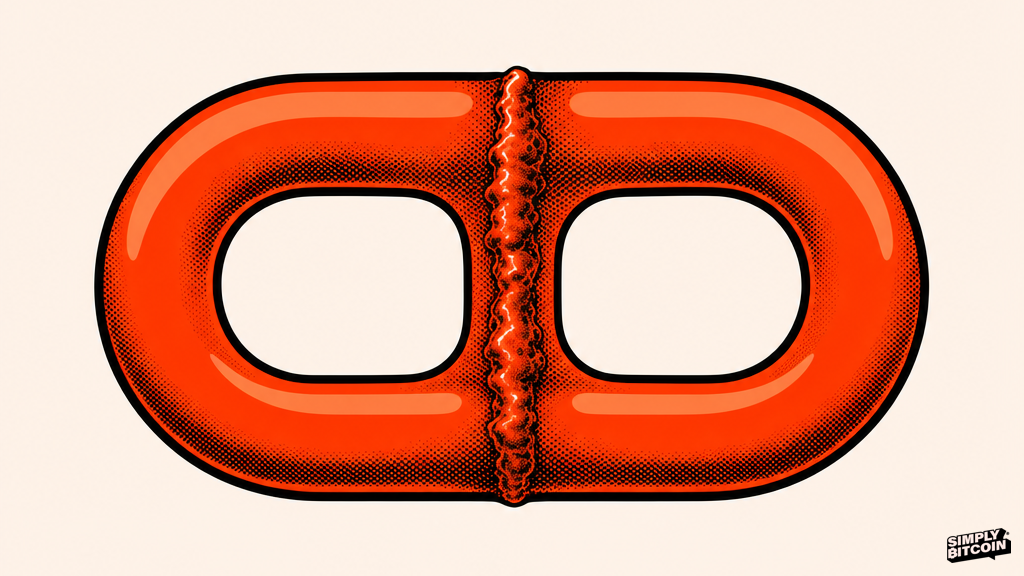
Bitcoin's entire design argument is that settlement should not be a live negotiation. Once a block is buried deep enough, the record is the record. You do not get to lobby it, litigate it, or file a motion to reconsider it after the fact. That inflexibility is not a limitation on the system. It is the entire reason to use it.
THE PRICE NEVER NEEDED THE VOTE
The market that fell below $75,000 in the hour after cloture failed was not casting a vote on Bitcoin's design. It was liquidating leverage that had bet a Tuesday afternoon procedural outcome would break its way. Traders holding fifty-times positions on a Senate cloture vote got liquidated at scale within twenty minutes. Nothing about the protocol changed in that window. The block interval held. The difficulty adjustment held. The 21 million cap held. What moved was price, which is downstream of sentiment and leverage, not upstream of the thing the ledger actually settles.
WHAT SURVIVES THE THEATER
Congress can bring the Clarity Act back next month, next year, or not at all. It can pass a weaker version, a stronger version, or table it until after the midterms the way Senator Lummis has already warned is possible. Every one of those outcomes is a live option precisely because nothing in that chamber ever fully closes. That is what a system built on continuous renegotiation looks like from the inside, and it is not unique to crypto. It is how the entire fiat rulebook has always worked, on interest rates, on deposit insurance, on who gets bailed out and who does not.
Bitcoin was built to sit outside that loop entirely. It does not need a cloture vote to keep producing blocks, and it did not get one before it started. The ledger does not have a motion to reconsider, because it was never designed to ask anyone's permission to be final in the first place.