
Your Bank Account Needs Your Inertia. Bitcoin Never Did.

A checking account pays you next to nothing on purpose. The bank is not being stingy by accident. It is counting on the fact that most people will not bother moving their money to chase a better rate, and that laziness is worth more to the bank than any loyalty program it advertises.
Apollo's chief economist put a name on what happens when that laziness disappears. An AI agent that can compare rates and move cash on command does not forget, and it carries no loyalty to a bank it was never introduced to. Multiply that agent by every household that turns one on, and banks face something they have never had to plan for: a run that starts with nobody angry.
THE SUBSIDY NOBODY VOTED FOR
Torsten Slok, chief economist at Apollo Global Management, framed the risk as a blunt question in a research note: is an agentic bank run coming. His answer starts with a number most depositors never bother to look up. The national average on a checking account pays around a tenth of a percent, while a handful of fintech accounts pay between 3.3 and 5 percent for doing almost nothing differently with the same dollar.
That gap has always existed. What kept it from mattering is that moving money between accounts takes effort, and most people have better things to do with their afternoon than optimize a savings account. Banks built an entire lending business on that gap. Cheap deposits fund loans, and cheap deposits exist because switching accounts is annoying enough that most people never do it.
AN AGENT DOESN'T NEED TO PANIC TO CAUSE A RUN
Slok's warning is that an AI agent removes the annoyance, not the money. Told to manage a household's cash, an assistant has no reason to leave ten thousand dollars earning ten dollars a year when it could earn a hundred somewhere else. It simply moves it, the same way it would reroute around a delayed flight.
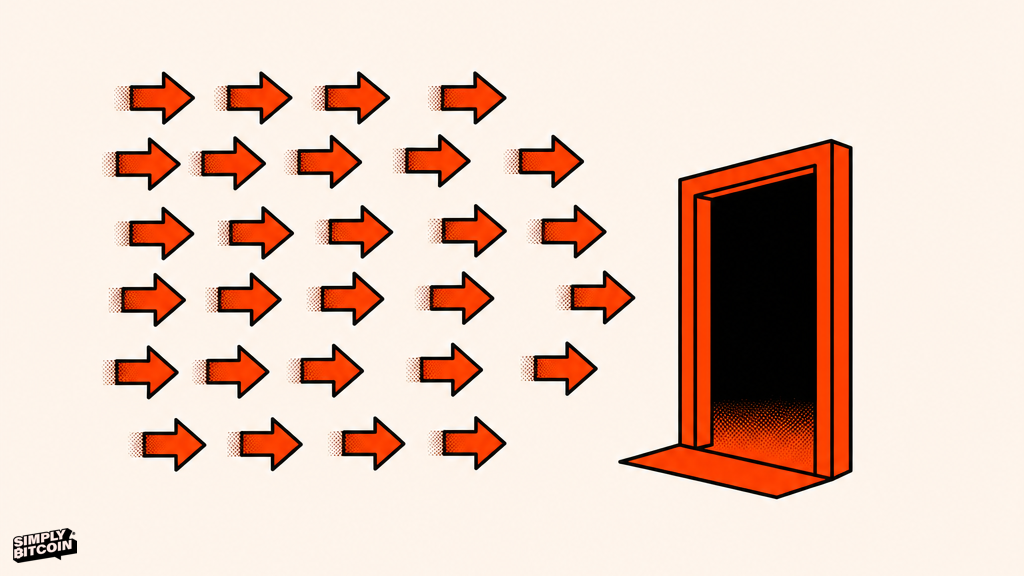
The unsettling part is what happens when millions of agents, built on similar models and fed the same rate data, reach the same conclusion at the same moment without ever exchanging a word. Nobody spreads a rumor. Nobody stands in a line outside a branch. The Bank of England raised a related warning in a 2025 financial stability report, noting that AI systems trained on similar assumptions can take correlated positions and act alike under stress. The agents were never scared. They were only doing their job, all at once.
THE RUN GETS FASTER EVERY TIME IT HAPPENS
Bank runs have a track record of shrinking. The collapse of the major institutions in 2008 unfolded over months, argued over in hearings while losses piled up in slow motion. By 2023, depositors pulled $42 billion out of Silicon Valley Bank in a single day, most of it through a phone app rather than a teller window, and the bank was gone in under 48 hours.
An agentic version of that run does not need panic to spread, and panic was the real speed limit in every earlier version. It only needs a rate table to update, or a widely used model to get tuned the same way at the same time. That removes the last thing that ever slowed a bank run down: the time it takes a person to decide to be afraid.
YOUR DEPOSIT WAS ALREADY SOMEONE ELSE'S ASSET
Slok's note exposes something older than artificial intelligence: what a deposit has always been. The number on a banking app is not currency sitting in a vault with your name on it. It is a claim, an IOU the bank owes you, backed by loans it already made to other people using your money and a sliver of reserve in case you ask for it back.
The FDIC insures the first $250,000 of that claim precisely because regulators have always known the bank cannot honor every claim at once. Deposit insurance is a patch on the promise, not proof the promise was ever fully backed in the first place.
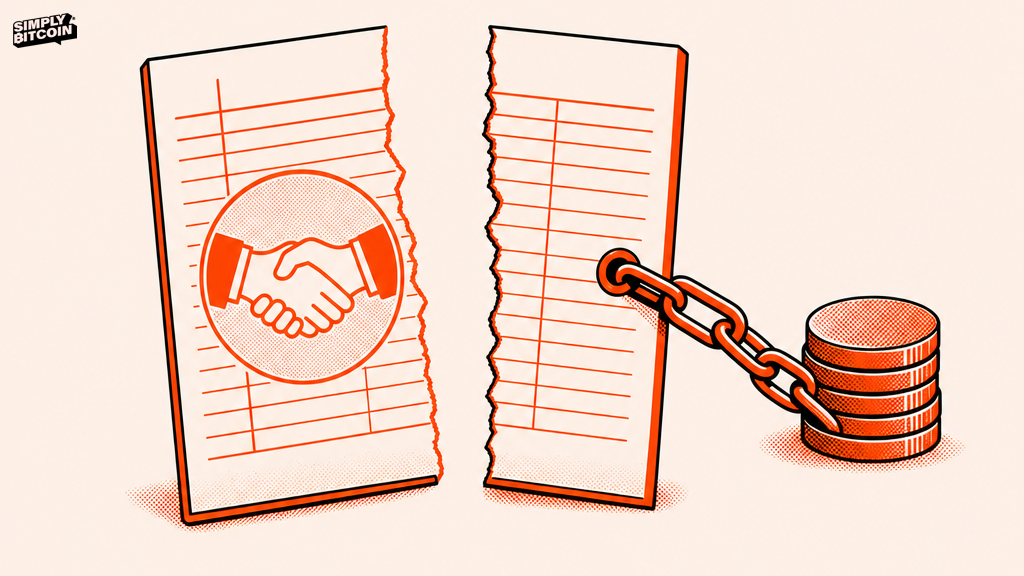
That arrangement has never needed to work perfectly. It has only ever needed enough claim holders to stay put long enough for the bank to remain solvent. An agent optimizing for yield has no memory of a relationship and no idea it was ever supposed to be the patient money underwriting somebody else's loan.
NOTHING CAN SWEEP A HOLDING THAT ISN'T A CLAIM
Bitcoin held in your own keys never enters that arrangement. It is not a promise a bank lent out on your behalf. It does not sit in a pool that depends on other people's inertia to stay funded. There is no rate table for an agent to check, because there is no institution standing between you and the asset for the agent to negotiate with in the first place.
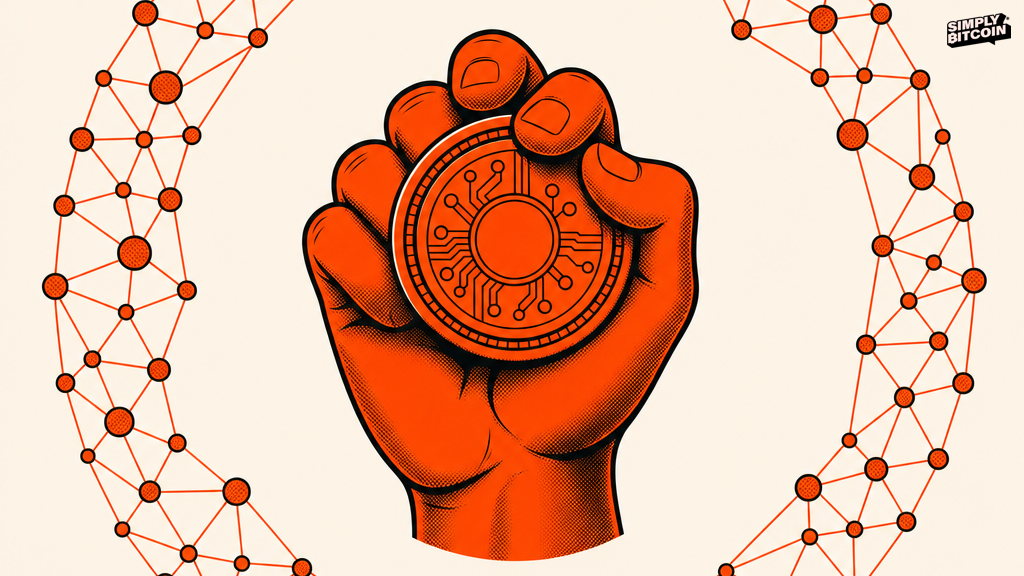
That is the actual difference an agentic bank run puts on display. The run is a risk that belongs to money living on someone else's balance sheet. It cannot happen to money that already lives in your own hands, because there is no claim to call in and no line to join. A bank needed your inertia to keep its lending machine running. Bitcoin, held the way it was built to be held, never asked you for that in the first place.