You Don't Own Bitcoin. Your Exchange Does.

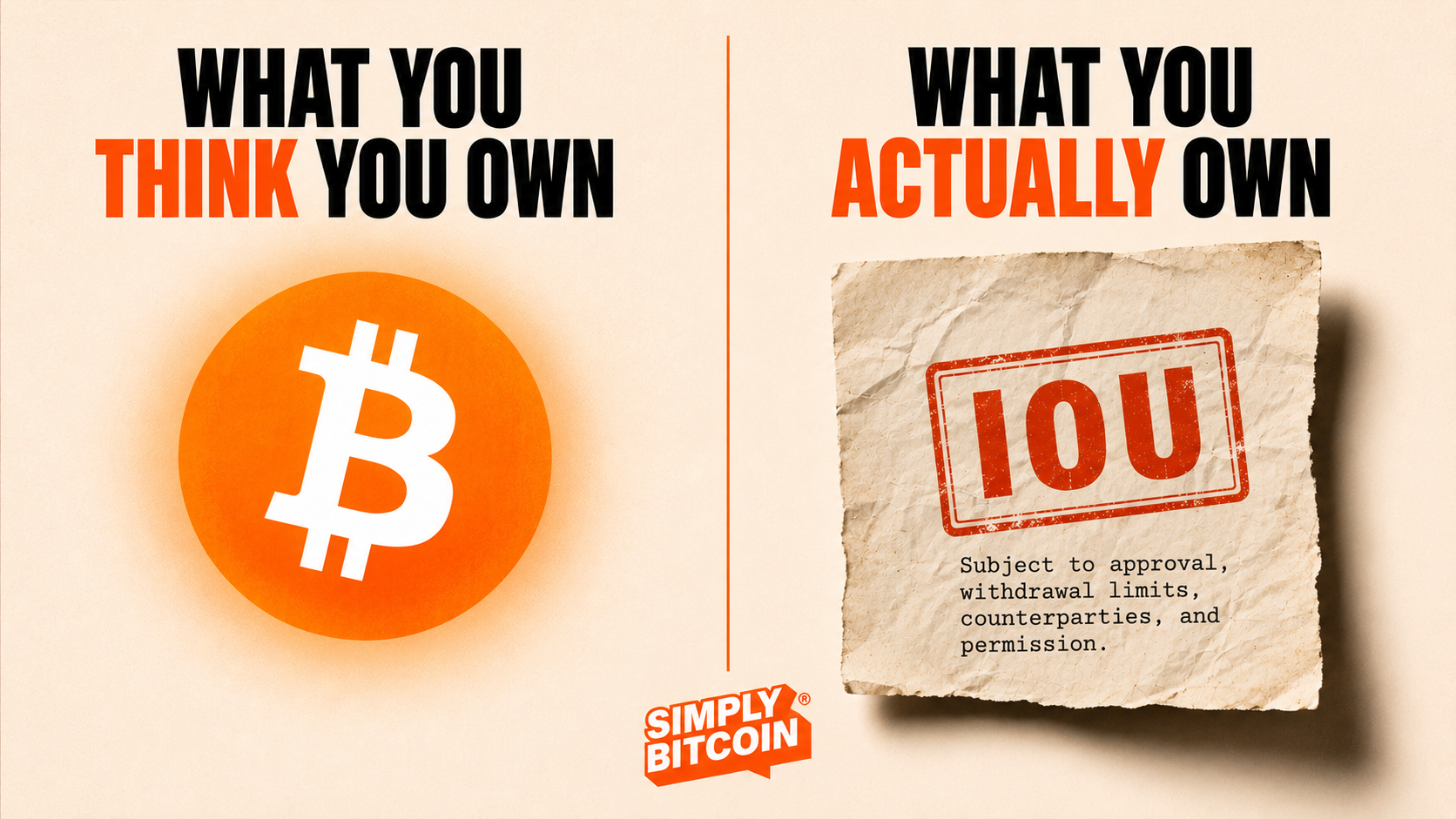
If your Bitcoin is sitting on Coinbase, Kraken, or any other exchange right now, let's be honest about what you actually have.
A number on a screen.
That's it. A database entry. A promise. An IOU from a company with its own lawyers, its own creditors, and its own problems. You don't hold Bitcoin. You hold a claim on Bitcoin. Those are not the same thing.
WHAT "NOT YOUR KEYS" ACTUALLY MEANS
The phrase gets repeated so often it stopped landing. "Not your keys, not your coins." Bitcoiners say it like a mantra. New people hear it and nod. Then they go back to leaving their stack on an exchange.
So let's make it concrete.
When you buy Bitcoin on an exchange, the exchange holds the actual Bitcoin in wallets they control. They write a number into their database that says you own X amount. That database entry is your "Bitcoin." If the exchange freezes withdrawals, that number means nothing. If they get hacked, that number means nothing. If they go insolvent, you become an unsecured creditor standing in line behind everyone else.
This is not speculation. This is what happened.
THE EXCHANGE GRAVEYARD IS REAL
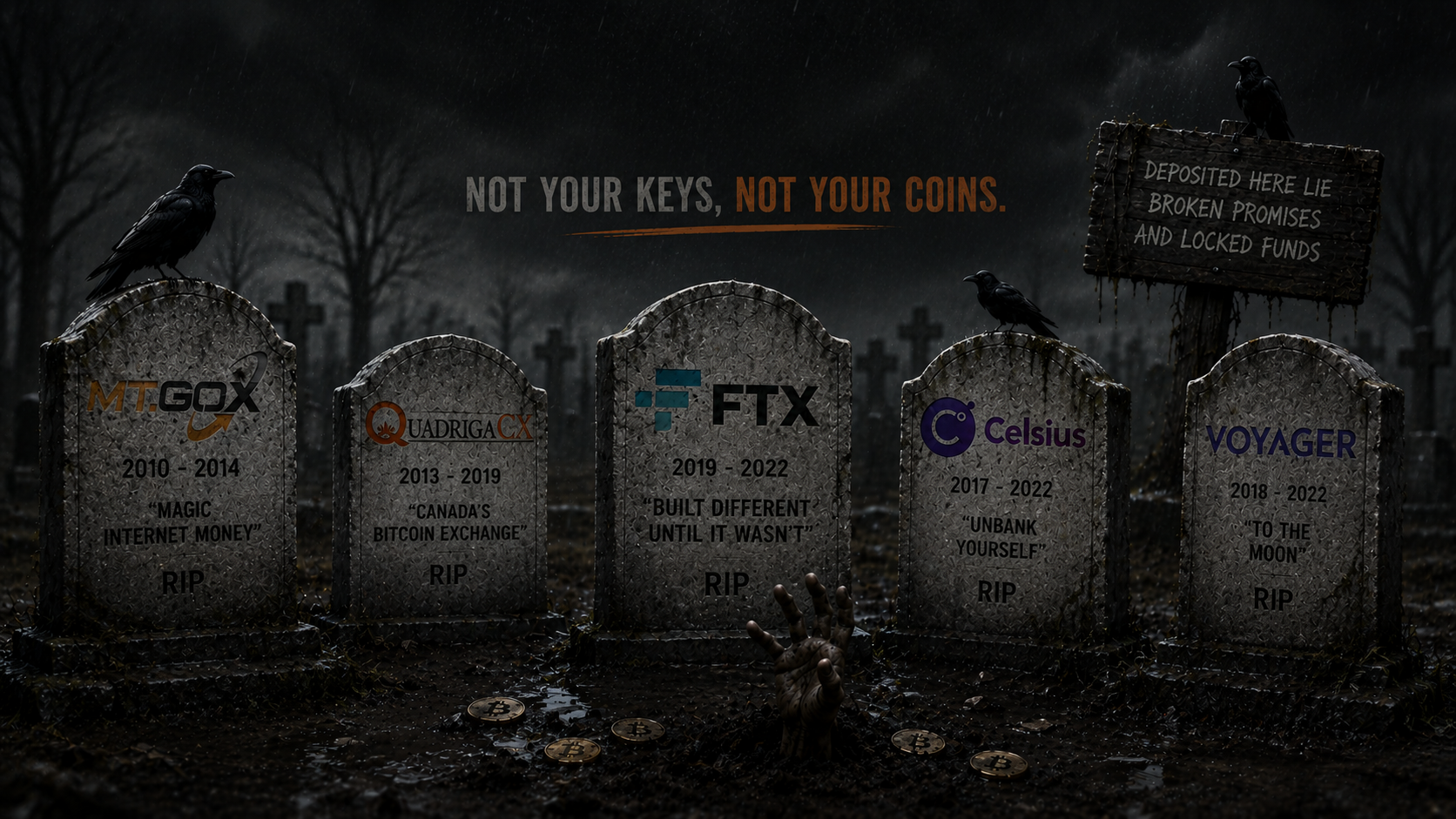
Mt. Gox. 2014. 850,000 Bitcoin gone. Users waited years. Most got pennies on the dollar.
QuadrigaCX. 2019. The founder "died" and supposedly took the only passwords with him. $190 million in customer funds. Vanished.
FTX. 2022. What was considered on of the most trusted names in crypto. Billions in customer funds "accidentally" used to prop up their sister trading firm. Sam Bankman-Fried is now doing 25 years. His customers are still waiting.
Celsius. Voyager. BlockFi. One after another.
Each time, the customers said the same thing: "I never thought it would happen to this one."
It will keep happening. Exchanges are honeypots. They hold enormous amounts of other people's money. That attracts hacks, fraud, and mismanagement. The incentives are broken. The risk is always yours.
THE BANK COMPARISON IS NOT A COMPLIMENT
Some people say keeping Bitcoin on an exchange is "just like a bank." They mean it as reassurance. It is not reassuring.
Your bank deposits are insured up to $250,000 by the FDIC. Exchange deposits are insured by nothing. Zero. Most exchange user agreements say explicitly that in insolvency, you are an unsecured creditor. Read yours.
Banks are also heavily regulated, audited, and legally required to maintain reserves. Exchanges are not. Some have proven they can operate fractional reserve without telling anyone, for years, before it falls apart.
And here's the thing about banks: even they shouldn't be your final answer. Bitcoin exists so you don't have to trust anyone. Not an exchange. Not a bank. Not a government. That's the whole point.
SELF-CUSTODY IS NOT COMPLICATED
The reason people leave Bitcoin on exchanges is they think self-custody is hard. It is not.
A hardware wallet costs $50-150. You buy it. You set it up. You write down your seed phrase on paper or a metal plate. You store it somewhere safe. That's it. Your Bitcoin is now yours. No counterparty risk. No withdrawal limits. No "we're pausing withdrawals for liquidity reasons."
The seed phrase is the only thing that matters. Twelve or twenty-four words. Write them down. Don't store them digitally. Don't take a photo. Put the paper in a safe place. Some people use metal backup plates for fire and water resistance.
This is not technical. This is the same level of responsibility as keeping cash in a safe or storing important documents. People have been doing that for centuries.
The only thing standing between you and sovereignty is thirty minutes and the willingness to take it seriously.
WHAT HAPPENS WHEN YOU WITHDRAW
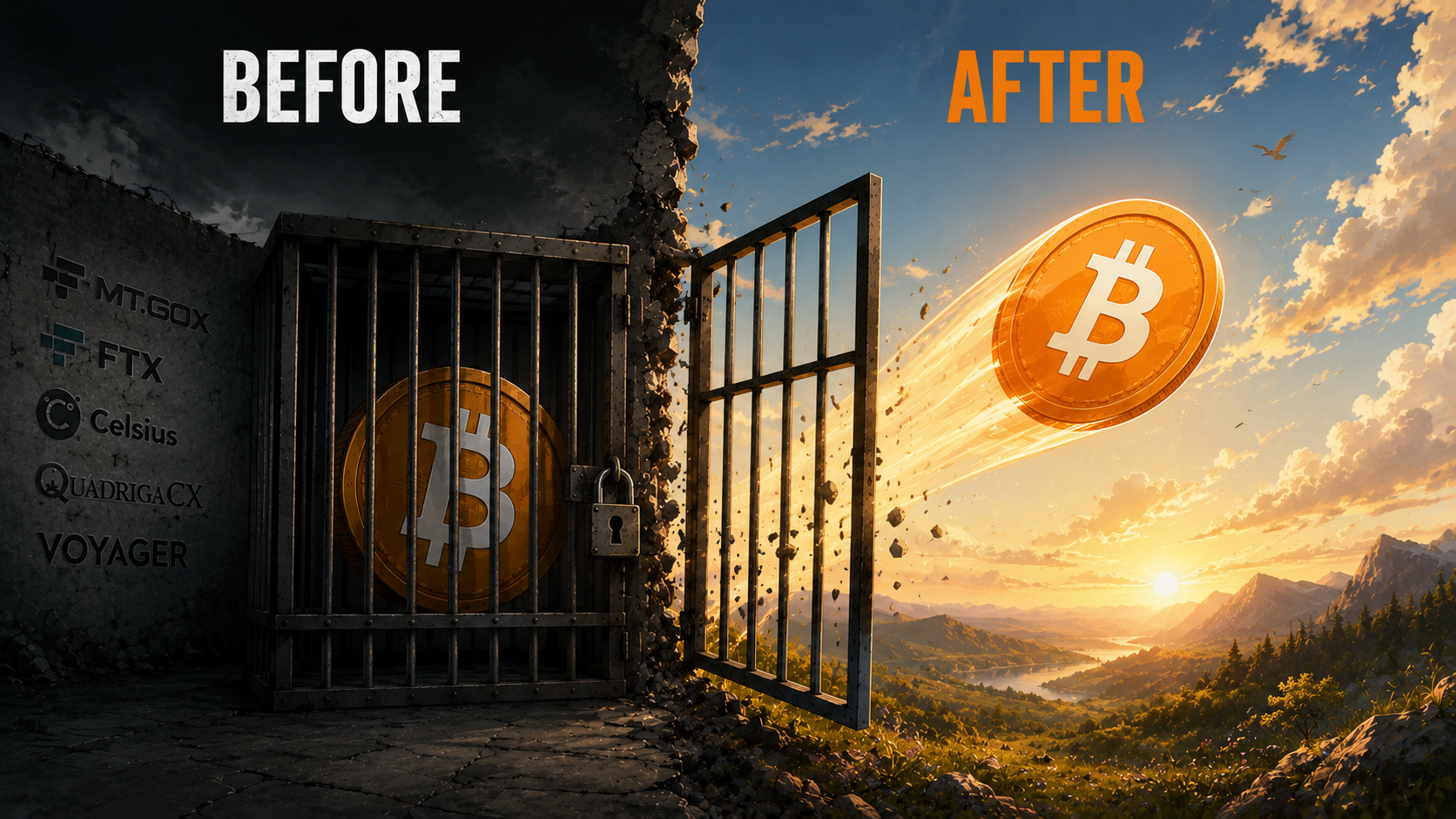
The moment you move your Bitcoin to a wallet you control, something shifts.
No one can freeze it or rehypothecate it. No one can lend it out, lose it in a bad trade, or lock it up in bankruptcy proceedings. Bitcoin does not care about exchange terms of service. The network settles to your address and that's final.
This is what Bitcoin was built for. Peer-to-peer electronic cash. No trusted third party required.
When you leave your Bitcoin on an exchange, you are opting back into the trusted third party model. You are choosing the system Bitcoin was designed to replace. You are trusting a company. Companies fail.
THE DECISION IS YOURS
The market can't save you from this. No bull run changes the counterparty risk sitting in your exchange account right now. Price doesn't matter if you can't withdraw.
Get your Bitcoin off exchange. Set up a hardware wallet. Write down your seed phrase.
Do it before you need to. Because when you need to, it may already be too late.
Not your keys, not your coins