
You Can Improvise A Bailout. You Cannot Improvise A Network.

When a currency wobbles, the response is always fast. An emergency facility opens overnight. A swap line gets extended before Asian markets reopen. A capital control gets announced on a Sunday so it is already in force by Monday. The speed is the point: institutions want the intervention to look instant, because instant looks like strength.
What speed cannot buy is the thing an intervention is actually trying to borrow: trust. Trust in a monetary system is not a switch a committee flips during a crisis. It is a balance that gets built one ordinary day at a time, long before anyone needed to draw on it. Miss that distinction and every rescue looks like strength right up until the moment it is tested again.
THE OVERNIGHT RESCUE
Currency crises do not announce themselves months in advance. A trading partner dumps a reserve asset, a peg comes under pressure, a central bank has to choose between defending its exchange rate and defending its bond market. The response, whatever form it takes, gets built in days because it has to be. Nobody plans the specific rescue in advance. What gets improvised is the mechanism.
What does not get improvised, no matter how good the mechanism is, is the willingness of the rest of the world to believe it. That belief is either already there, accumulated over decades of a currency doing what it promised, or it is not there, and no facility assembled over a weekend creates it from nothing. The rescue borrows credibility. It cannot mint it.
WHAT A NETWORK ACTUALLY COSTS
A monetary network is not a rescue mechanism. It is a habit repeated by millions of separate, unrelated people, none of whom checked with each other, all choosing to keep using the same system because it kept working the last time and the time before that. That habit cannot be decreed into existence. It has to be earned, transaction by transaction, block by block, for as long as the system has existed.
This is the part a crisis cannot shortcut. A government can print a currency in an afternoon. It cannot print the decade of people trusting it enough to hold it. Bitcoin has been running without interruption since 2009, and every one of those years is a year nobody can go back and add later. The network's real asset is not the code. It is the time already spent proving the code does what it says.

THE FLOOR NOBODY CAN BACKDATE
Proof of work makes this literal instead of just poetic. Every block adds real, spent energy to a running total that cannot be reduced without redoing all the energy spent after it. That total only moves one direction. There is no version of Bitcoin's security budget where a government or a competitor sits down this year and simply declares a bigger number. The number is the record of what already happened, and what already happened is finished.
You cannot build things after the catastrophe.
That is the whole argument in one sentence, and it applies to more than a single company's product roadmap. A resilient system has to already be spread, already be tested, already be running before the moment it is needed, because the moment itself is far too late to start. The years Bitcoin has already put in are not a marketing point. They are the actual product.
THE LATECOMERS INHERIT THE PROBLEM THEY TRIED TO SKIP
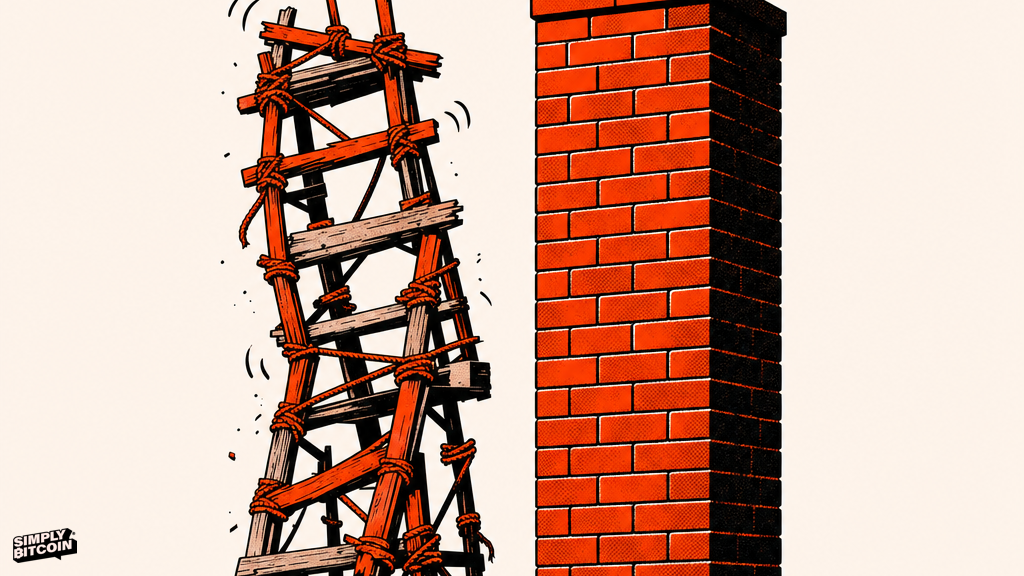
Every cycle produces a new wave of alternatives that promise to deliver the same resilience faster: a wrapped version of an existing asset, a token standing in for a bond, a central bank digital currency rushed through after the last crisis exposed a gap. Some of these solve real, narrow problems. None of them solve the problem Bitcoin's time already solved, because none of them can shortcut the years.
A tokenized asset is only ever as trustworthy as the issuer standing behind it, and an issuer can freeze, reverse, or simply fail. A digital currency built by a central bank inherits every incentive of the central bank that built it. Wrapping an old system in new technology does not remove the single point of failure. It just moves the wrapper closer to the crisis that made the wrapping urgent in the first place. The rush is the tell.
THE SAME LOGIC APPLIES TO YOUR OWN MONEY
Scale this down to one household and it stops sounding abstract. Nobody builds a savings habit the week they lose a job. Nobody learns self-custody the day an exchange freezes withdrawals. The skill, like the network, has to already exist before the emergency arrives, or the emergency simply wins.
This is why holding Bitcoin before you need it matters more than holding it because a headline told you to. A person who already knows how to secure a seed phrase, already understands why they hold their own keys, and already has a stake in a system that does not need anyone's permission is not improvising when their local currency has a bad month. Everyone else is starting from zero at the worst possible time to start.
READY BEFORE IT MATTERS
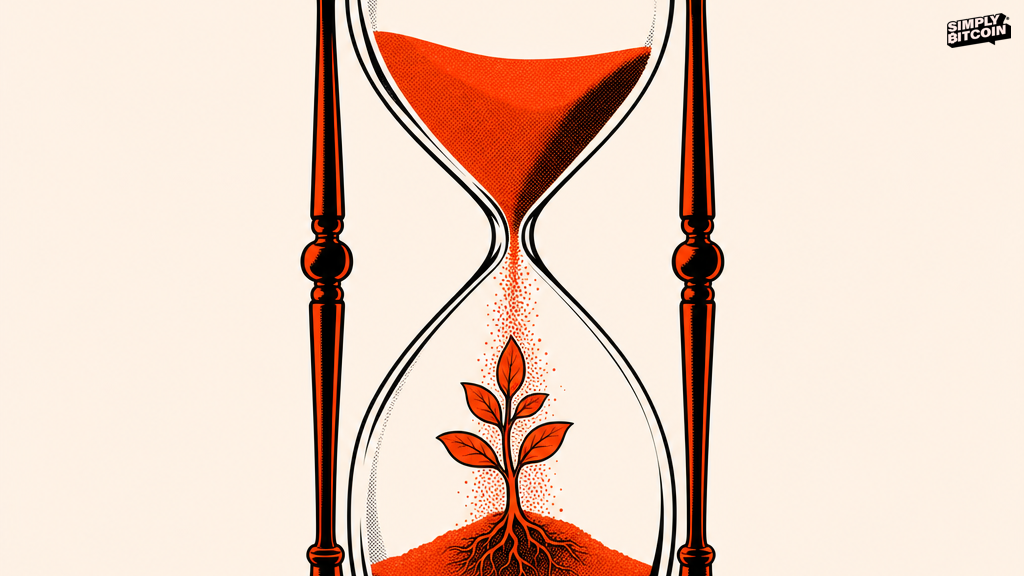
Every institution built to respond to a crisis is judged on how fast it moves once the crisis hits. Bitcoin was never built to respond. It was built to already be there, running, verified, and unbothered, long before the next currency war, the next default, the next Sunday-night emergency meeting. The years it already has are the one thing nothing built this week can match.