The State Can Declare A Reserve. It Cannot Self-Custody One.

In March 2025, a single executive order made the United States the first G7 government to name bitcoin a national reserve asset. Nineteen months later, Washington has not bought one coin on the open market. The reserve exists on paper. The buying does not exist anywhere.
The easy explanation is politics: stalled legislation, midterm caution, a White House that keeps saying weeks when it means quarters. All of that is real. None of it is the real reason. The real reason sits underneath the politics, in what bitcoin actually requires from whoever holds it, and in what the American government is built to never allow one office to have.
A SIGNATURE IS NOT A PURCHASE
Executive Order 14233 did not authorize the Treasury to buy bitcoin. It created a reserve and seeded it with coins the government already held through forfeiture, then directed agencies to study whether and how to acquire more. No funds were appropriated. No statute backs it. A future president could unwind it with the same single signature that created it.
That gap between declaring a reserve and funding one is not an oversight. It is the entire story. A reserve made of seized coins costs the government nothing and risks nothing politically. A reserve built by spending public money to buy a volatile asset is a different decision, made by different people, through a different process, and that process has not produced a purchase in a year and a half.
WHAT SELF-CUSTODY ACTUALLY REQUIRES
Bitcoin's entire security model rests on one person holding one key. Whoever controls the key controls the coins, completely and immediately, with no second signature required and no committee to notify first. That is not a limitation of self-custody. It is the point of it. The system was built so that ownership could be total and unilateral, answerable to no one else.
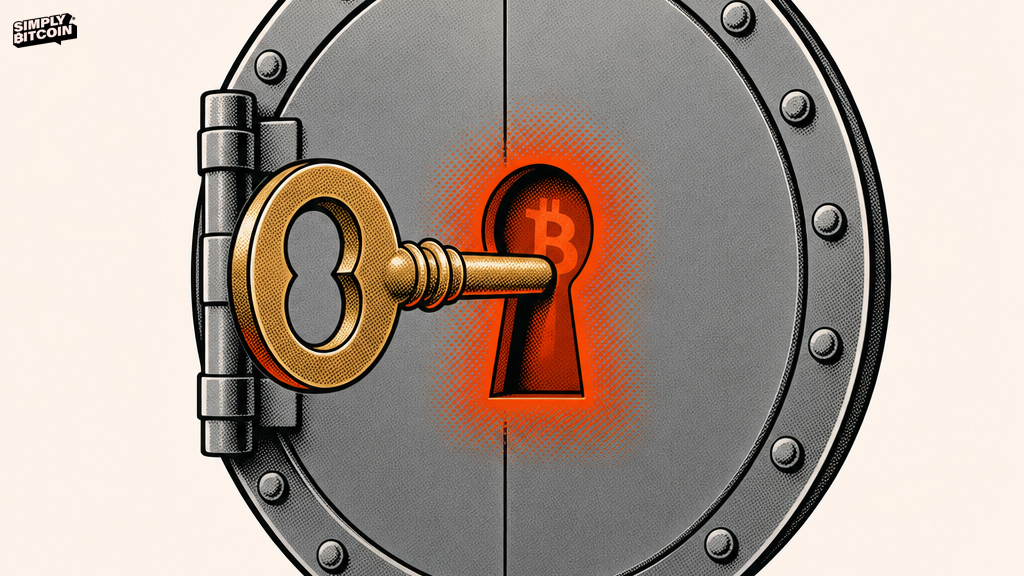
This is why a person who moves their coins off an exchange and into their own wallet has finished the hardest part of owning bitcoin in one afternoon. There is nothing left to coordinate. There is no second party whose approval the first party needs. The decision and the custody are the same act.
A GOVERNMENT IS BUILT TO DO THE OPPOSITE
The federal government cannot work that way, and it is not supposed to. The audit ordered by the same executive order found bitcoin private keys sitting in desk drawers across different agencies, with no consolidated inventory and no shared standard for who was responsible for what. Treasury and Commerce have since been stuck in a dispute over custody and operational control that has slowed implementation for more than a year.
Read that as incompetence and it is infuriating. Read it as structure and it makes complete sense. No single federal office is allowed to be the one party that holds the key, decides the policy, and reports to no one else about either. That concentration of authority is exactly what oversight, interagency review, and congressional appropriation exist to prevent. The government was not failing to build a self-custody setup. It was doing what a government does, which is distribute control so that no single hand has all of it.

THE DRAWER WAS THE SYSTEM WORKING
A desk drawer with a hardware wallet in it looks like negligence from the outside. From the inside, it is what happens when a bearer asset lands inside an apparatus with no mechanism for giving anyone sole authority over it. Nobody in that building was supposed to be the one person who could move the coins alone. So nobody was, and the coins sat wherever the last case agent left them.
This cuts both ways. A government where one appointee could quietly control a national bitcoin position the way an individual controls their own wallet would be a government with a new and serious problem. The friction that kept the reserve from being bought, consolidated, and secured is largely the same friction that keeps power from concentrating in one unaccountable office. It is good for a democracy. It is terrible for actually holding a scarce, bearer asset the way the asset wants to be held.
A STATUTE RELOCATES THE PROBLEM, IT DOES NOT SOLVE IT
The fix on offer is legislation. A bill to write the reserve into law cleared the House Financial Services Committee in September 2026 by a narrow margin, with the House floor, the Senate, and a presidential signature still ahead of it. Suppose it eventually passes. A law still requires an appropriations process, an inspector general, oversight hearings, and a chain of officials who each answer to someone else for how the coins are bought and held.
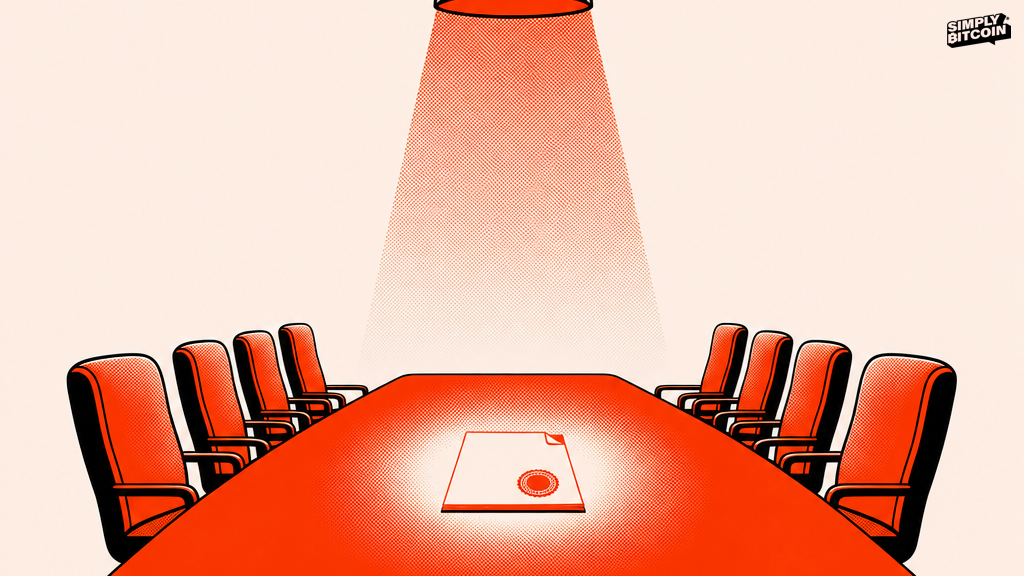
None of that is self-custody. It is the same multi-party structure the executive order ran into, moved from the executive branch to the legislative one. A statute can force a purchase to happen. It cannot make the government hold the result the way a person holds their own key, because making it hold the result that way would require giving someone inside it exactly the kind of unilateral control the whole system of checks exists to deny.
ONE KEY ALREADY SOLVED WHAT NINETEEN MONTHS COULDN'T
A person who self-custodies bitcoin has already built, in one decision, the thing the United States government has spent a year and a half failing to approximate with audits, interagency task forces, and committee votes: unified, unilateral, accountable-only-to-itself control over a bearer asset. Not because that person is smarter or faster than the federal bureaucracy. Because they never needed anyone else's permission to hold what they hold.
The strategic reserve was never stalled by a missing signature. It was stalled by the asset itself asking for something no accountable institution can give without stopping being accountable. That is not a scandal. It is bitcoin doing exactly what it was built to do, even to the one buyer who was never actually built to hold it.


Daily Bitcoin news, analysis and interviews. New shows every single day.
Subscribe on YouTube