The Separation of Money and State Explained

Every civilization in recorded history has made the same mistake. They handed control of money to whoever held power. And whoever held power used that control to extend, entrench, and enrich themselves. It happened under kings, emperors, central committees, and elected governments. The form changed. The outcome never did.
THE STATE AND MONEY: A LONG, UGLY RELATIONSHIP
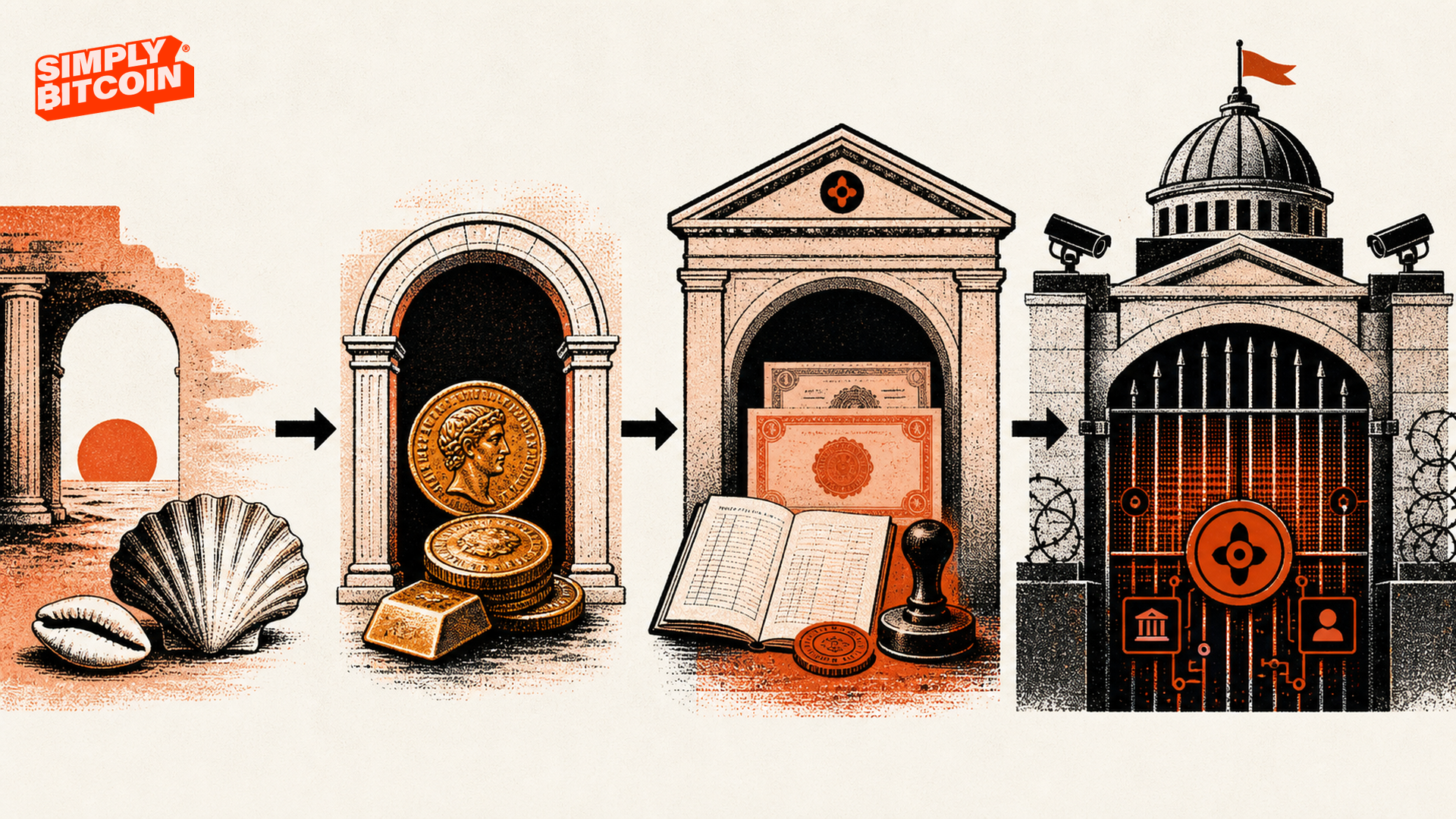
For most of history, money was something the market discovered; shells, salt, silver, gold. Governments didn't create these things. They emerged from billions of human decisions about what held value and what could be traded across distances and time.
Then governments figured out a trick. Declare yourself the exclusive issuer of money and back it with force, and you own the money supply. You control who gets it, who loses it, and what it's worth. The transition from commodity money to state-issued fiat currency wasn't a technological upgrade. It was a power grab disguised as modernization.
The result is a system where governments can spend without taxing, wage wars without consensus, bail out banks without accountability, and slowly drain the savings of working people through inflation. None of this requires a vote. None of it requires transparency. It all happens inside a system that most people never think to question, because money itself feels like a fact of nature rather than a political choice.
WHAT MONETARY MONOPOLY ACTUALLY COSTS
The cost isn't abstract. It shows up in rent that keeps climbing while wages stay flat, in retirements that lose purchasing power every decade, in small businesses that can't save enough capital to grow. It shows up most brutally in places like Argentina, Turkey, and Zimbabwe, where the state's grip on money has destroyed generations of savings in a matter of months.
It also shows up as control. Every transaction in the fiat system passes through institutions that answer to governments. Your bank can freeze your account at the request of a regulator. Your payment processor can cut you off for selling the wrong product, holding the wrong opinion, or simply existing in the wrong jurisdiction. Financial access isn't a right in this system. It's a privilege that can be revoked.
Most people accept this because they've never seen an alternative. Now there is one.
BITCOIN ENDS THE MONOPOLY
Bitcoin is money that no government issued and no government can control. The supply is fixed at 21 million, enforced by code running on tens of thousands of nodes distributed across the world. No central bank can inflate it. No government can confiscate it without the owner's cooperation. No payment processor can block a Bitcoin transaction because Bitcoin doesn't ask permission.
This is what makes Bitcoin different from every previous form of money. Gold was a great monetary asset until governments decided to store it for you and then stopped redeeming the receipts. Every previous decentralized money got centralized the moment it became inconvenient for the powerful. Bitcoin's architecture makes that play impossible. The rules are written in math. Math doesn't take orders from finance ministers.
Holding Bitcoin means holding money that exists entirely outside the state's reach. Sending Bitcoin means transacting with anyone, anywhere, without asking permission from a bank or respecting a border that means nothing to the protocol.
Bitcoin is the first monetary system in history where the rules are the same for everyone and nobody can change them to benefit themselves.
THIS IS HOW SHIFTS IN POWER ACTUALLY HAPPEN
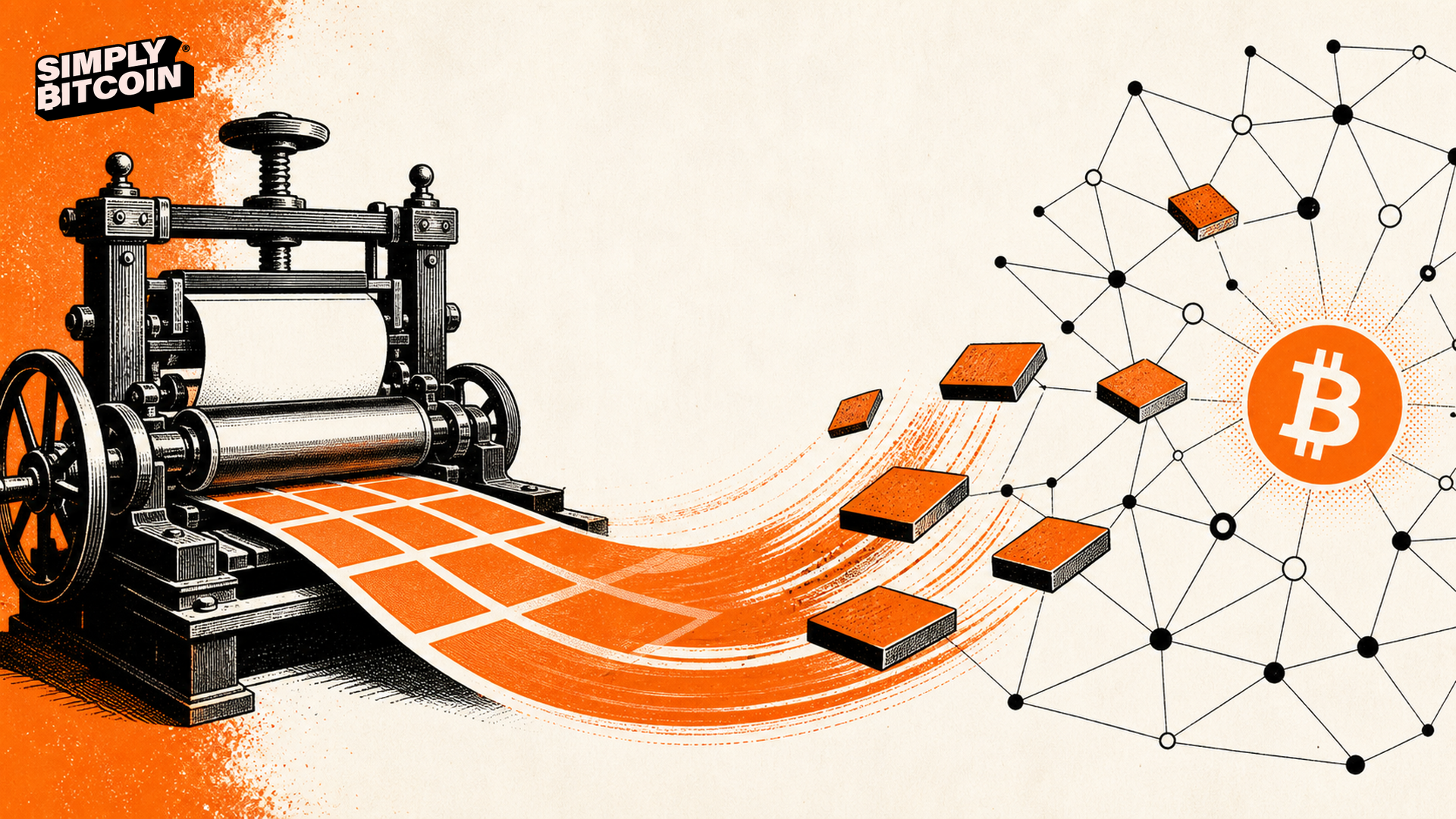
The separation of church and state once seemed like the most dangerous idea anyone could propose. The church and the state had been fused for centuries. Reformers who challenged that fusion were burned. Then the printing press happened, and the idea spread faster than any institution could contain it. Within a generation, the relationship between religious authority and political power transformed in ways that are still shaping the world today.
Bitcoin is the printing press moment for money. The idea that individuals could hold, move, and store value without asking permission from a state-chartered institution once seemed radical, even dangerous. Now it's software, running globally, moving value across borders in minutes for fractions of a cent.
The state's monopoly on money is in jeopardy.
THE ROAD AHEAD
This transition won't happen overnight and it won't happen without resistance. Governments that have held monetary monopolies for centuries don't surrender them willingly. They'll regulate, restrict, and slow adoption wherever they can.
None of that stops the math.
Every person who moves their savings into Bitcoin is choosing sound money over political money. Every node runner is reinforcing a network that doesn't depend on any government's permission to operate. Every developer building on Bitcoin is extending a monetary system that will outlast every central bank on earth.
The separation of money and state is the most important idea of the 21st century, and it's already happening.