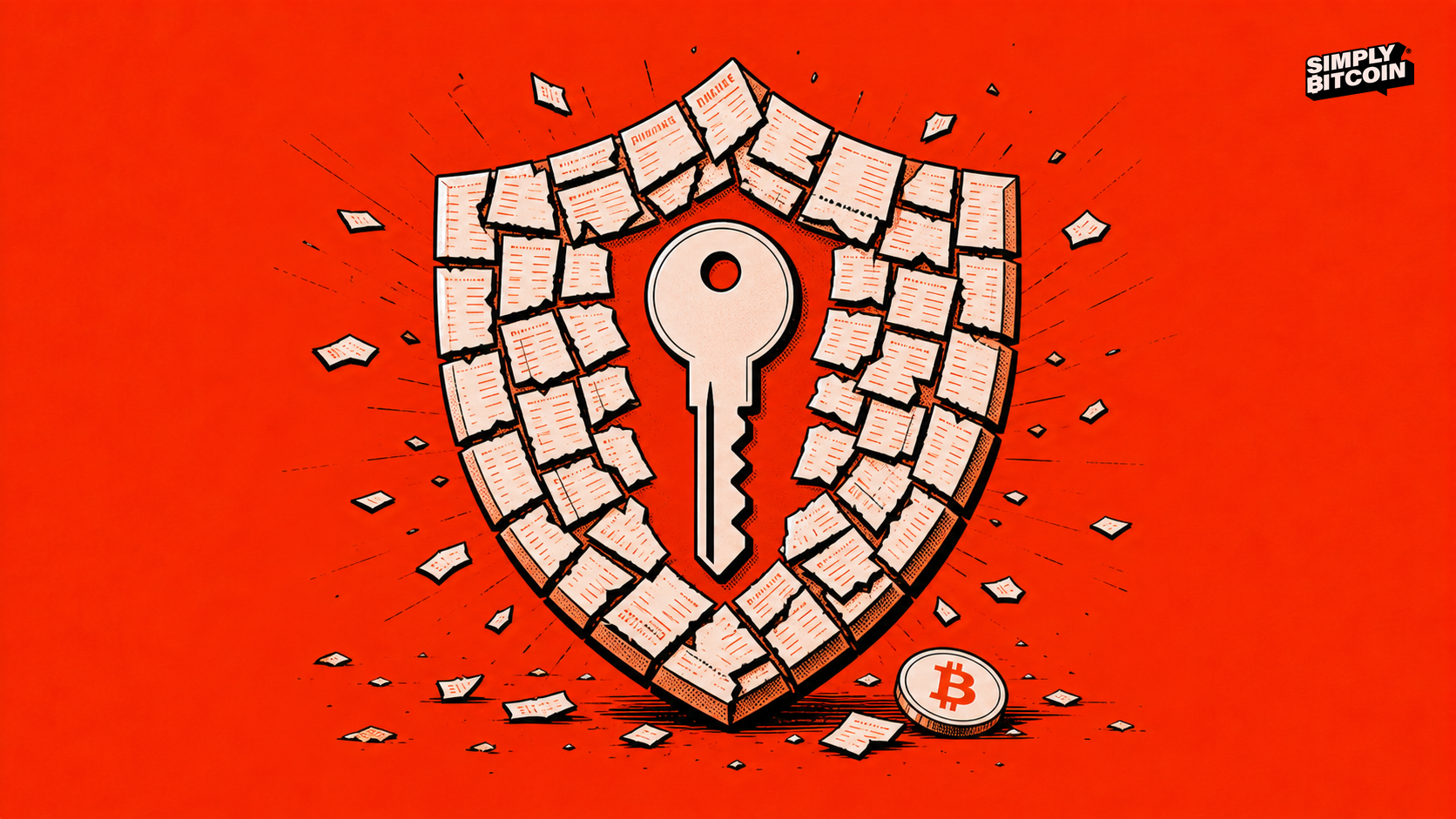
The Receipt That Settles Forever

Most people think money lives inside an account. They open an app, see a balance, and assume the number belongs to them because the screen says so.
Bitcoin teaches a deeper lesson. Real ownership begins with a claim the whole network can verify, transfer, and settle without asking the keeper of a private database to agree.
That is the power hiding inside Bitcoin's UTXO model. Every coin is tracked as an unspent transaction output, a clean receipt from the network that says value moved here, under these rules, and it remains spendable until the rightful key signs it forward.
A UTXO is how Bitcoin turns money into a fact.
THE ACCOUNT MODEL IS A PERMISSION SYSTEM
The normal financial world trains people to think in accounts. Your bank account has a balance. Your brokerage account has a balance. Your payment app has a balance. That interface feels simple, but underneath it sits a permission system.
An account balance is an entry in someone else's database. The institution can update it, freeze it, reverse it, close it, report it, delay it, or ask for more information before letting it move. The customer sees a number. The institution controls the ledger.
Bitcoin moves the center of gravity away from accounts and toward outputs. The network asks for a valid signature and a valid coin. No profile, relationship manager, support ticket, or banking partner has authority over the rules.
That change sounds technical until you feel what it means. Bitcoin verifies ownership directly.

A COIN IS A CHAIN OF PROOF
A UTXO is created when bitcoin is sent to a locking script. That output sits on the ledger as spendable value. When the rightful key spends it, the output is consumed and new outputs are created. Coins exist as specific chunks of value with a history the network can validate.
This is one of Bitcoin's quiet superpowers. Every node can look at the ledger and know which outputs exist, which ones have already been spent, and which transactions follow the rules. No auditor has to trust a bank's internal spreadsheet. No holder has to hope a custodian has the money it claims to hold.
Bitcoin ownership is built from proof stacked on proof.
The system is elegant because it is strict. A coin cannot be spent twice. A fake output cannot sneak into the ledger. A signature cannot substitute for the wrong key. A node examines the transaction and either accepts it or rejects it.
That is honest money at the machine level.

FINAL SETTLEMENT HAS A SHAPE
In the fiat world, settlement is layered with promises. A card swipe looks instant, but the final movement behind it can involve banks, processors, networks, clearing systems, fraud windows, and reversibility. The user sees payment. The system sees a process.
Bitcoin gives final settlement a visible shape. A transaction consumes old outputs and creates new ones. Miners order that transaction into a block. Nodes verify the block. More proof of work builds on top. The receipt hardens with every confirmation.
That structure matters because finality is freedom from negotiation. Once a valid Bitcoin transaction is buried under enough work, it becomes part of the history every honest node recognizes. There is no back office where someone edits the past because the wrong person complained.
The receipt settles because the whole network carries the same record.
CHANGE COMES BACK TO YOU
The UTXO model also explains why Bitcoin feels like digital cash. When you spend a coin, you usually consume one or more outputs and create new ones. Part goes to the recipient. The rest comes back to you as change.
That design preserves clarity. Coins are discrete. Spending has inputs and outputs. Value is accounted for directly. Fees are the difference between what goes in and what comes out, which means the system needs no separate fee authority tapping your account after the fact.
There is discipline here. Bitcoin asks every transaction to balance in public. Inputs must fund outputs. Signatures must unlock coins. Fees must be real. The rules are the shape of the transaction itself.
You are spending specific coins on a global ledger anyone can verify.
THE NODE SEES THE TRUTH
The UTXO set is one of the most important things a Bitcoin node tracks. It is the current map of every spendable coin in the system. When a new transaction arrives, the node checks whether the inputs exist, whether they are unspent, whether the signatures satisfy the locks, and whether the transaction obeys consensus rules.
That is sovereignty in practice. Running a node gives you the ability to verify the monetary facts yourself. You are checking the rules directly against the network's history.
This is where Bitcoin becomes deeply personal. A full node gives ordinary people the same verification power as exchanges, miners, institutions, and governments. The software applies the same rules to one sat and to a billion-dollar transaction.
There is dignity in that. Bitcoin gives the individual a seat at the consensus table.

THE RECEIPT IS THE REVOLUTION
The UTXO model rarely gets the attention it deserves because it sounds like plumbing. But the plumbing is the revolution.
Bitcoin turns ownership into verifiable outputs. It turns spending into signed authorization. It turns settlement into accumulated proof of work. It turns money into a record that needs no trusted institution standing between you and the truth.
That is why Bitcoin keeps winning in the minds of people who study it seriously. The deeper you go, the more it feels like a complete monetary architecture built for sovereign humans.
Your coins are receipts from the hardest ledger on earth.
Hold your keys.
Run the truth.
Settle forever.