The Peaceful Revolution Nobody Sees Coming

You were told the system works for you.
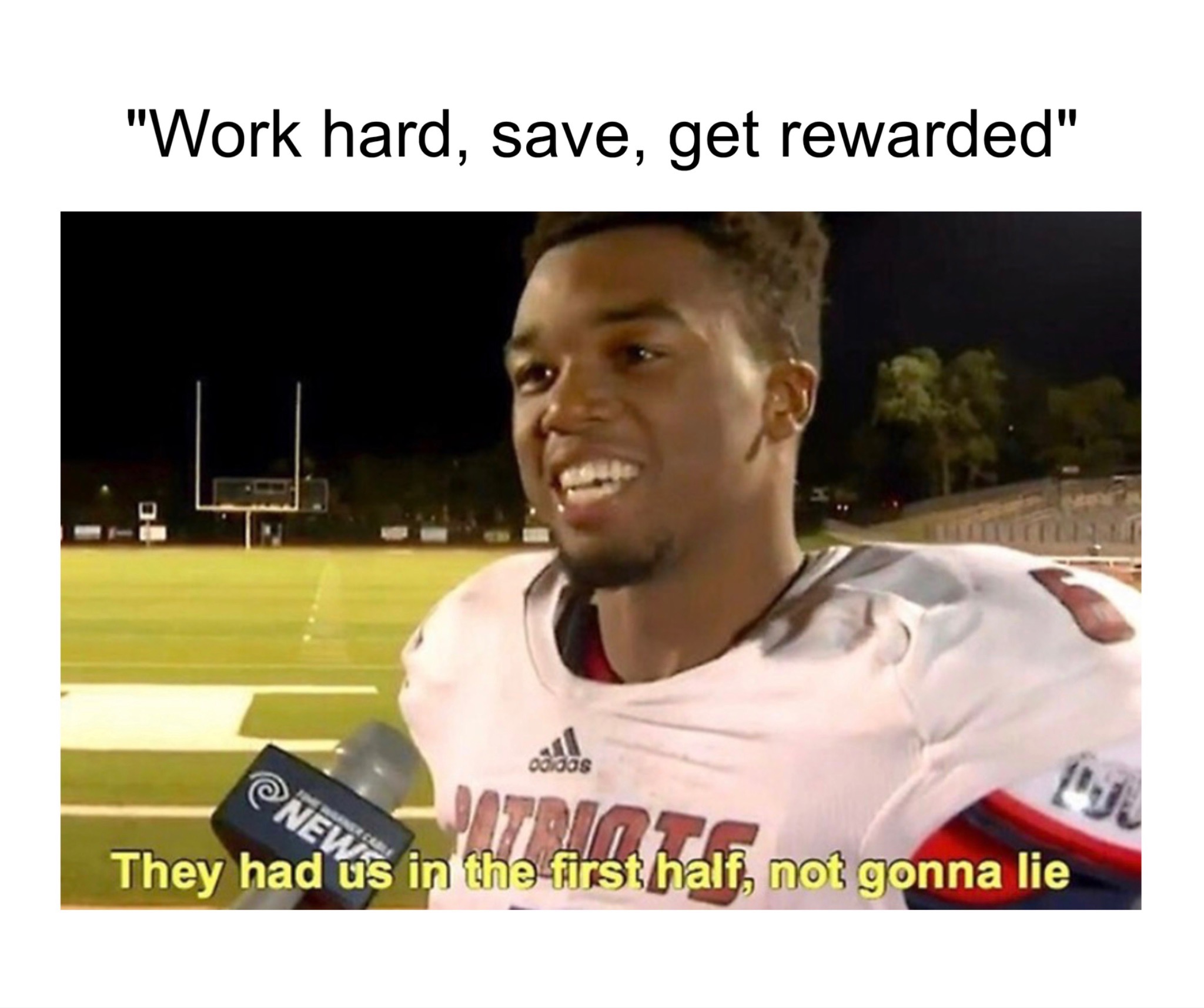
You were told to go to school, get a job, open a savings account, and trust the institutions. Work hard, save diligently, and the system would reward you. That was the deal.
Nobody told you the savings account would lose purchasing power every year. Nobody explained that the money printer runs whether you consent to it or not. Nobody mentioned that the rules of the game can change overnight. Interest rates, bailouts, capital controls, all decided by people you never voted for, in rooms you'll never enter.
This isn't a conspiracy. It's just how fiat works.
And once you see it, you can't unsee it.
THE SYSTEM DOESN'T NEED YOUR APPROVAL. IT NEVER DID.
The fiat system doesn't ask for your permission to debase your savings. It doesn't hold a vote before expanding the money supply. It operates on assumption: the assumption that you have no alternative. That you'll keep playing because there's no other game in town.
For most of human history, that assumption was correct.
Bitcoin broke it.
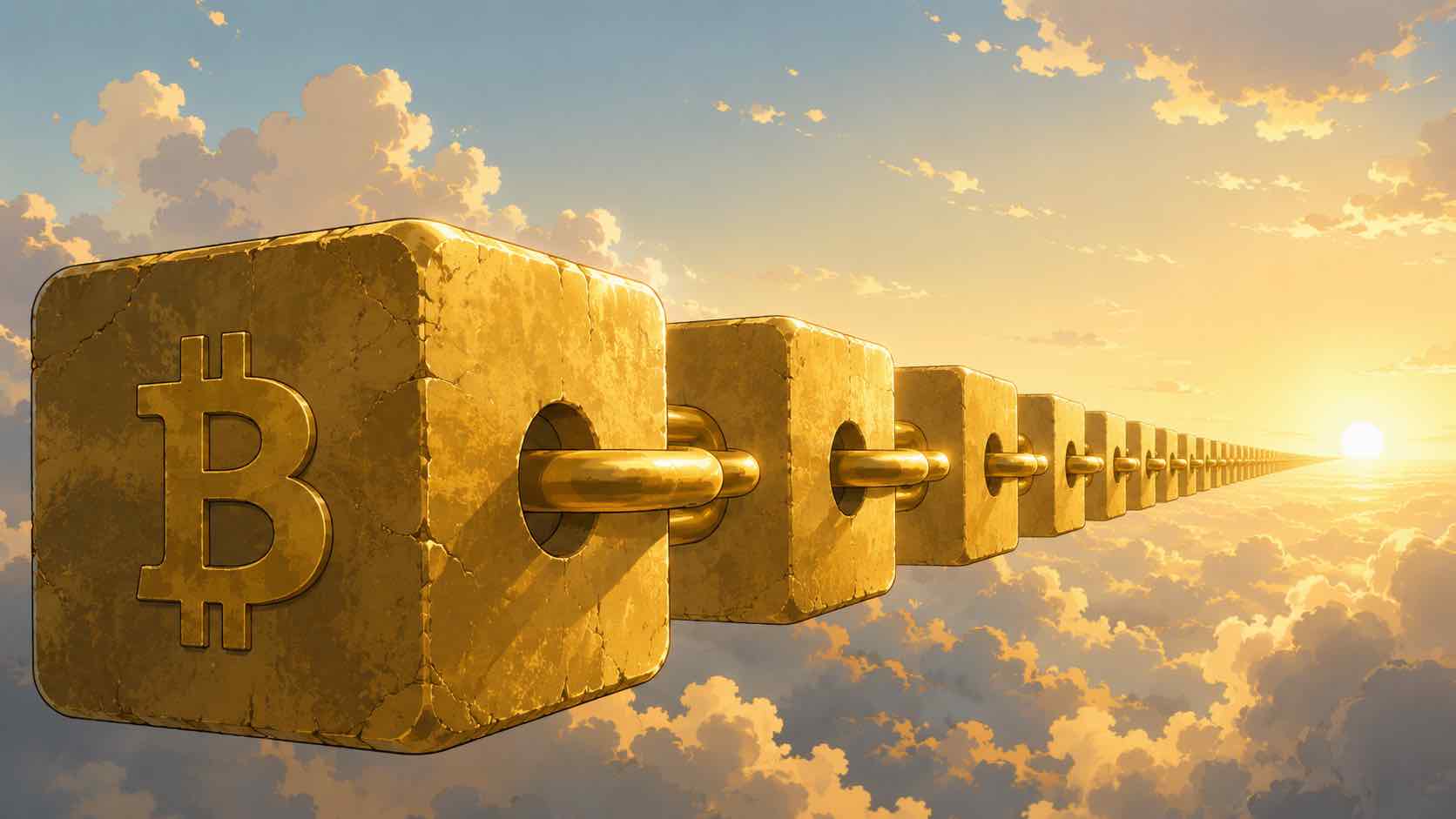
For the first time, individuals have access to a form of money that no government can print, no central bank can debase, and no institution can confiscate without your cooperation. Twenty-one million coins. Hard cap. No exceptions. No committee votes. No emergency measures.
The rules are written in code, not in legislation. Code doesn't make exceptions for powerful people.
EXIT IS NOT RETREAT
Here's where most people get it wrong.
They see someone buying Bitcoin and opting out of the fiat system and call it escapism. Naive. Impractical. "You can't just ignore the real world," they say.
Exiting the fiat system isn't running away from a fight. Refusing to fund one side of it is.
Every dollar kept in a savings account that yields less than inflation is a subsidy to the system. Every paycheck converted to Bitcoin is a withdrawal of consent. You're not protesting in the streets. You're not writing to your congressman. You're doing something quieter and far more powerful: removing yourself as a participant in a game designed for you to lose.
That's sovereignty.
THE MATH OF MASS OPT-OUT
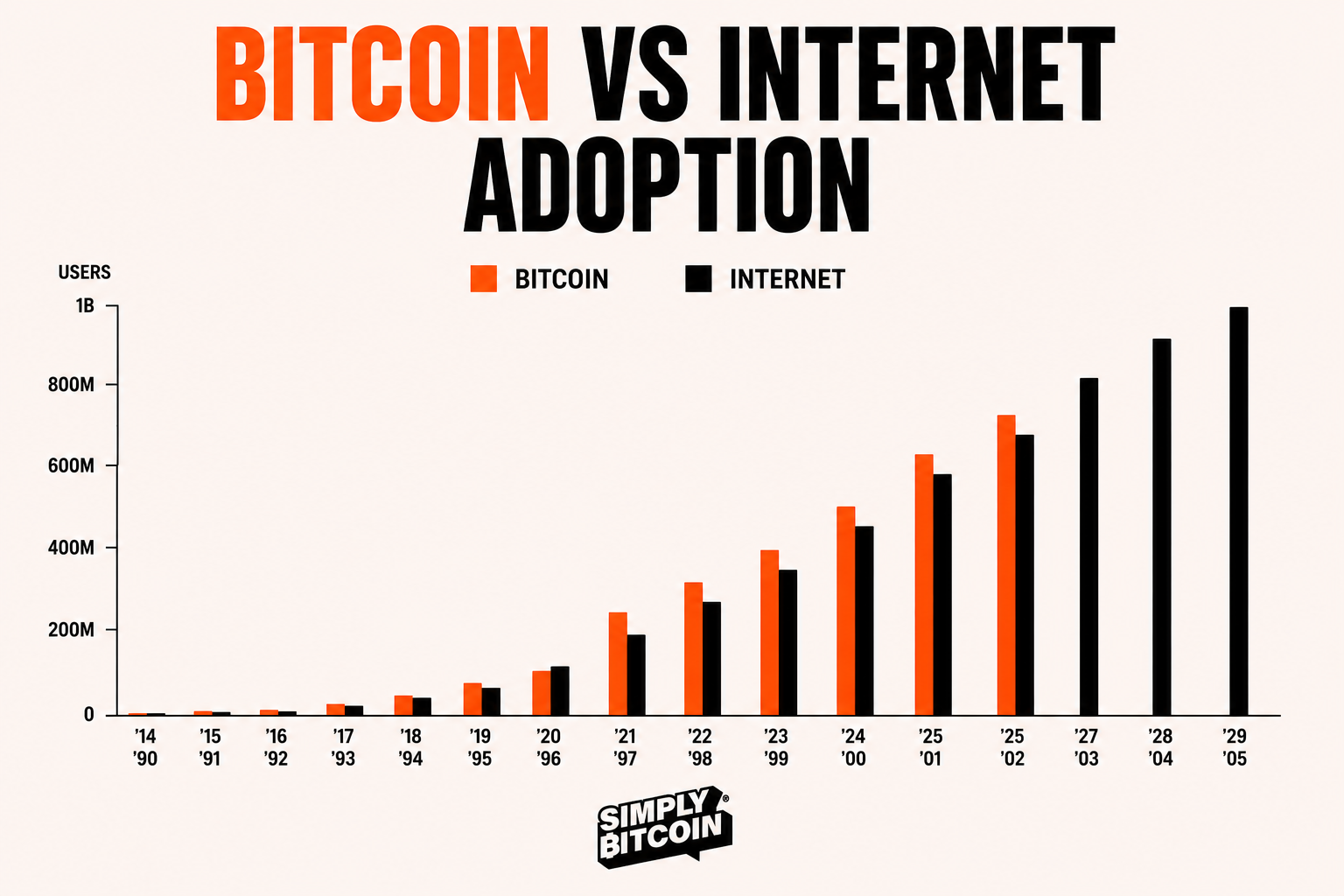
Here's what makes Bitcoin different from every political movement, protest, or reform effort in modern history.
It doesn't require coordination.
Nobody needs to agree on a leader, a platform, or a plan. There's no central committee. No manifesto that needs sign-off. Every individual who buys Bitcoin and holds their own keys is making a unilateral decision, and that decision compounds.
Think about what happens when enough people make that choice. The demand for fiat weakens. The network securing Bitcoin strengthens. The alternative becomes more accessible, more liquid, more legitimate. One person exiting is a rounding error. A million people exiting is a structural shift. A billion people exiting is a new monetary order.
No protest achieved that. No election delivered it. No reform movement came close.
The revolution doesn't require a majority. It requires enough.
NO PERMISSION REQUIRED
This is the part that tends to stop people in their tracks.
Every previous attempt to challenge entrenched financial power required permission at some level. You needed access. You needed capital. You needed the right connections or the right jurisdiction or the right moment in history.
Bitcoin doesn't care.
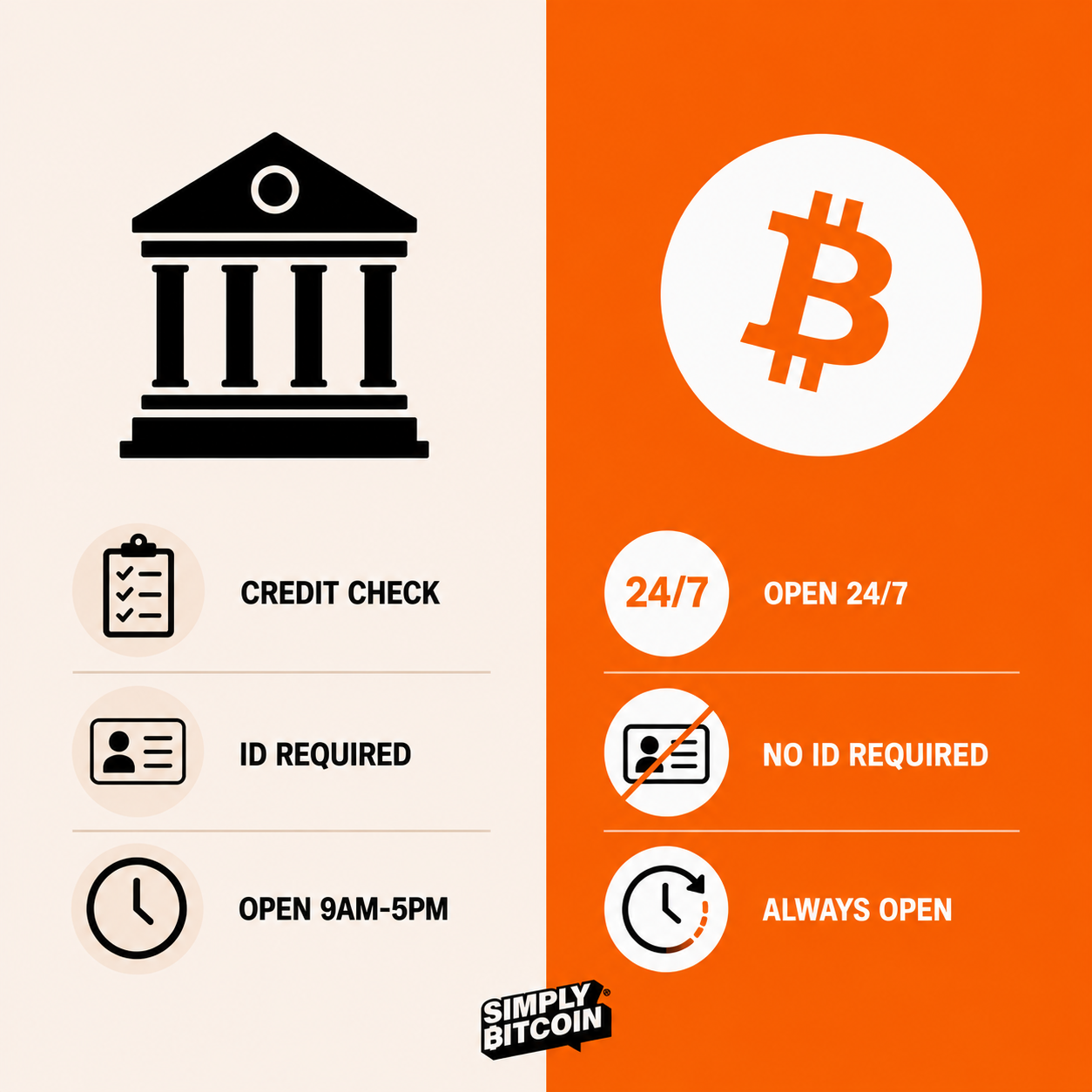
A farmer in rural Nigeria and a fund manager in Manhattan have access to the same monetary network, governed by the same rules, with the same hard cap. No application. No credit check. No minimum balance. No business hours.
That is radical. Genuinely, historically radical. It happened without a single shot fired, without a single government toppled, without a single march on a capital building.
The protocol just exists. And it keeps running. Block after block, roughly every ten minutes, regardless of what anyone thinks about it.
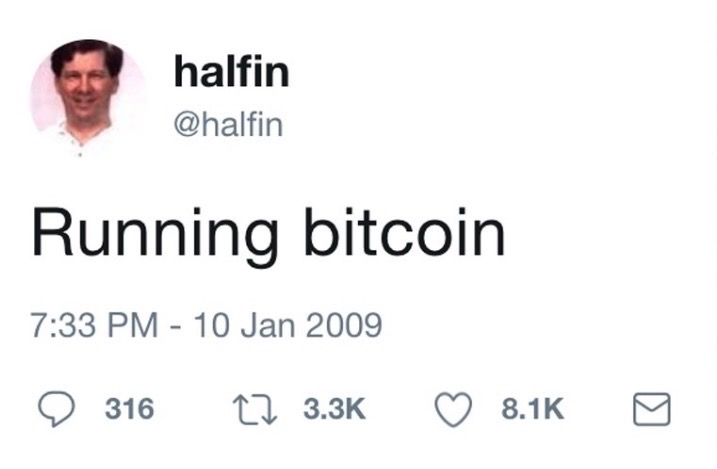
Hal Finney, one of the earliest Bitcoin contributors, understood this. He saw not just a new technology but a new possibility: that sound money could be returned to individuals without asking anyone's permission. That the exit door could be open to everyone.
He was right.
WHAT THE REVOLUTION ACTUALLY LOOKS LIKE
It doesn't look like a revolution. That's the point.
It looks like someone setting up a hardware wallet on a Tuesday night. It looks like a small business owner adding a Bitcoin payment option. It looks like a family in a country with a collapsing currency finding a way to preserve what they've built. It looks like a young person deciding that a savings account that loses value every year isn't good enough anymore.
None of these people are coordinating. None of them are following a leader. None of them are asking for permission.
They're just opting out. One transaction at a time.
There's no headquarters to shut down. No leader to discredit. No single point of failure. The revolution is distributed, like the network itself, and every node that joins makes it stronger.
THE EXIT IS THE ACT
You don't need to convince anyone. You don't need to win a debate on Twitter. You don't need to wait for a politician who gets it or a regulator who plays fair.
Buy Bitcoin. Hold your own keys. Remove yourself, one sat at a time, from a system that was never designed with your interests in mind.
That's it. That's the whole thing.
Every sat you stack is a vote. Not a vote cast into a system that may or may not count it. A vote with your actual wealth, recorded immutably on a ledger that nobody controls.
The peaceful revolution nobody sees coming is already happening.
The only question is whether you're in it.
Stack sats. Hodl. The exit is open.