
The Bank Was Never Lending You Money. It Was Lending You Its Trust.

A mortgage underwriter does not ask what your money is worth. She asks whether she can trust you to repay it for the next thirty years. The number she hands you at the end, your interest rate, is not a measurement of your house. It is a measurement of how much a stranger decided to trust your promise.
INTEREST RATES HAVE ALWAYS BEEN A TRUST PRICE
Every loan carries two prices stacked on top of each other. One is the cost of money over time. The other is the cost of trusting the specific person borrowing it. Lenders call the second one a risk premium. It is really a trust tax, charged because the lender cannot verify your future behavior and can only guess at it from your past.
A borrower with a long credit history, a stable paycheck, and an asset the bank can seize pays a lower trust tax. A borrower without those things pays more, or gets refused outright. The system is not measuring whether you deserve the money. It is measuring how well you have been credentialed to be believed.
GOLD NEVER SOLVED THE VERIFICATION PROBLEM
Gold should have been perfect collateral. It cannot be printed, counterfeited at scale, or inflated by a committee's vote. But gold has a flaw that mattered more than its scarcity: verifying it is slow, and moving it is slower. A bar in a vault needs an assayer, a scale, and a courier before anyone downstream can be sure it is real and that it is not already pledged against three other loans.
That slowness opened a gap, and institutions filled it. Instead of verifying the metal itself every time, the financial system started verifying promises about the metal. Banks, clearing houses, and eventually governments became the thing people actually trusted. The gold sat quietly in a back room. The paper promise about the gold is what actually moved.
THE STATE BECAME THE PERMANENT REFEREE
Once trust in an institution replaced verification of an asset, something had to decide who counted as trustworthy enough to borrow cheaply. Governments built that system and placed themselves at the very top of it. A government bond became the cleanest collateral in the world, not because a state is more honest than a person, but because a state can tax, legislate, and print its way out of a default when a person cannot.
Everyone else gets priced against that benchmark. A mortgage rate, a car loan, a credit card's APR are all the government rate plus a markup for how far your trustworthiness sits below the state's. The referee never disappears. It simply sets the floor every other borrower in the economy gets measured against.

THE REFEREE CAN DISQUALIFY YOU ON PURPOSE
A referee that scores trust can also withdraw it for reasons that have nothing to do with repayment. An account gets closed, a processor cuts off a merchant, a lender quietly tightens terms for an entire category of borrower, and the paperwork rarely explains why. The same infrastructure that prices risk can also be used to price disfavor.
This is not a hypothetical about some distant regime. It is a structural feature of any credit system where a human or institutional gatekeeper decides who gets to borrow cheaply. A gate that can say yes for good reasons can always learn to say no for a different one.
VERIFIABLE COLLATERAL DOES NOT NEED THE REFEREE
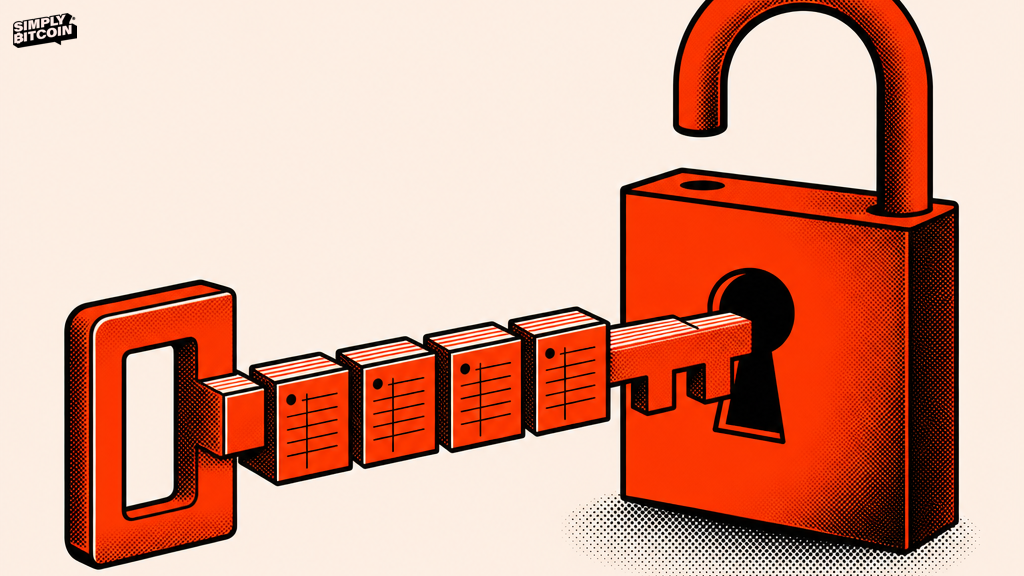
Bitcoin breaks the link between trust and verification that gold never could. A lender does not need to trust your employer, your bank's honesty, or a courier hauling a bar through customs. They need to check a public ledger. The collateral either exists, sits unencumbered, and is pledged to this specific loan, or it does not. That check takes minutes, and it requires nobody's permission to perform.
This is why a loan collateralized by verifiable Bitcoin can price closer to a government bond than to an ordinary personal loan. The lender's risk stops being a guess about someone's character and becomes a simple check of an asset that cannot lie about its own supply or location. The trust tax shrinks toward zero because there is almost nothing left to trust. There is only something to verify.
THE PEOPLE WHO NEVER PASSED THE TRUST TEST
The trust tax was never distributed evenly. A borrower with a thin credit file, an immigrant without domestic history, or a self-employed person with lumpy income all pay more for the same dollar, not because they repay worse, but because they are harder for the referee to score. The system was built to measure legibility to institutions, and plenty of honest people are simply illegible to it.
Collateral that verifies itself does not care about any of that. It does not ask where you worked for the last seven years or whether your income arrives on a predictable schedule. It asks one question: is the asset real, and is it pledged. A person the old system could never price fairly can now be priced exactly like anyone else, because the thing being judged changed from a life story to a ledger entry.
CREDIT WITHOUT A GATEKEEPER IS A DIFFERENT ECONOMY
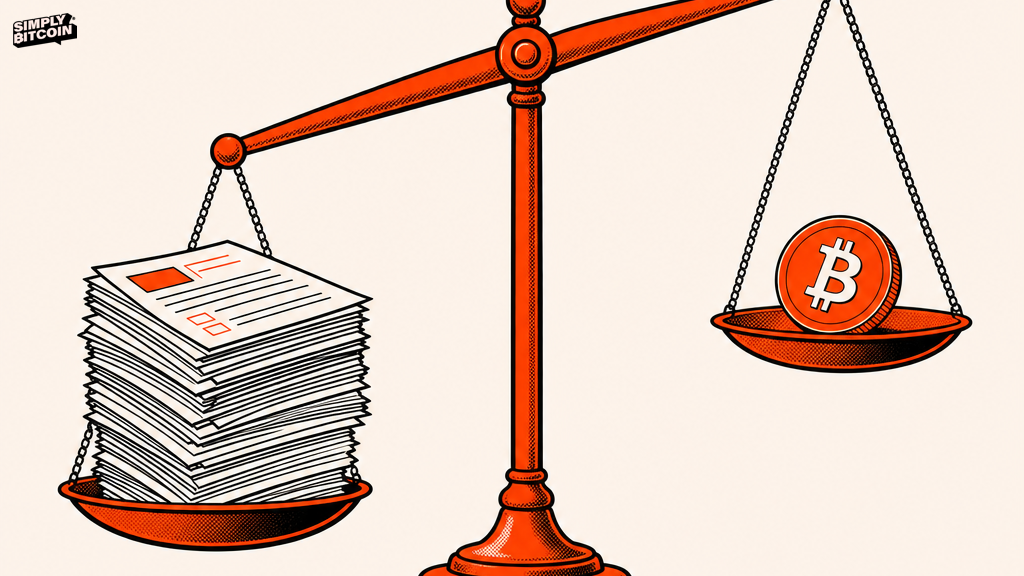
None of this makes verified collateral risk free. Prices move, loans can still go underwater, and a lender holding Bitcoin against a loan carries a volatility a government bond does not have. The claim here is narrower than Bitcoin ending all lending risk. The claim is that one specific kind of risk, the risk of not knowing whether to trust a stranger, stops being the dominant cost.
That is a structural shift, not a marketing line. Cheap credit used to require a referee willing to vouch for you. It is starting to only require a key.