The AI Trade Needs A Winner. The Monetary Trade Already Has One.
Every few years, the smartest money on Wall Street falls in love with a technology and forgets the scarce asset sitting underneath it. Twice already, that mistake has come right before some of the largest gains bitcoin has ever produced. A third version of the same mistake is happening right now, wearing a different name.
THE SAME EXIT, A NEW NAME EACH TIME
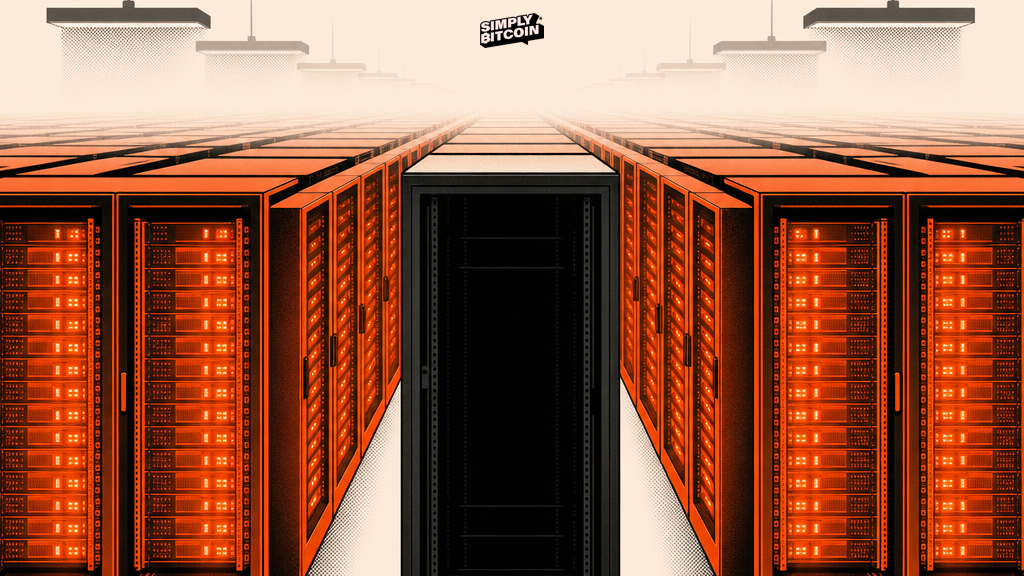
Alex Thorn, Chief Research Officer at Galaxy, published a report titled "Why Now Is the Time to Add and Hold BTC," laying out a pattern that is easy to verify and hard to dismiss. Wall Street has walked away from bitcoin toward "the technology" twice before, and both times it marked the bottom of the cycle, not the top. In 2015 and 2016, banks fell for enterprise blockchain through the R3 consortium while the lowest weekly bitcoin close sat at $231. The next cycle high landed 83 times above that low. In 2018 and 2019, the refrain shifted to bank rails like JPM Coin and Libra while bitcoin traded near $3,195 and was widely written off. The next cycle high landed 20 times above that low.
Thorn's report points out that the same sentiment is rotating again, this time toward stablecoins, tokenization, and artificial intelligence. The label keeps changing. The behavior underneath it does not.
THE MECHANISM BEHIND THE PATTERN
None of this is coincidence, and it is not even really about bitcoin. Institutions keep rotating toward the technology layer because the technology layer has a story: adoption curves, pilot programs, a possible winner still to be crowned. A fixed supply asset has no story like that. It just sits there, unprintable, which makes it a boring pitch and a genuinely strong thing to hold. A room full of fund managers would rather bet on which company wins a race than sit on an asset that has already finished one.
This is the same confusion that funded thousands of companies racing to own "the internet" during the dot-com years, while missing that owning the pipes was never the same bet as owning what traveled across them. Blockchain was the pipe. Bitcoin was always the thing being settled.
A BET WITH A WINNER AND A GRAVEYARD
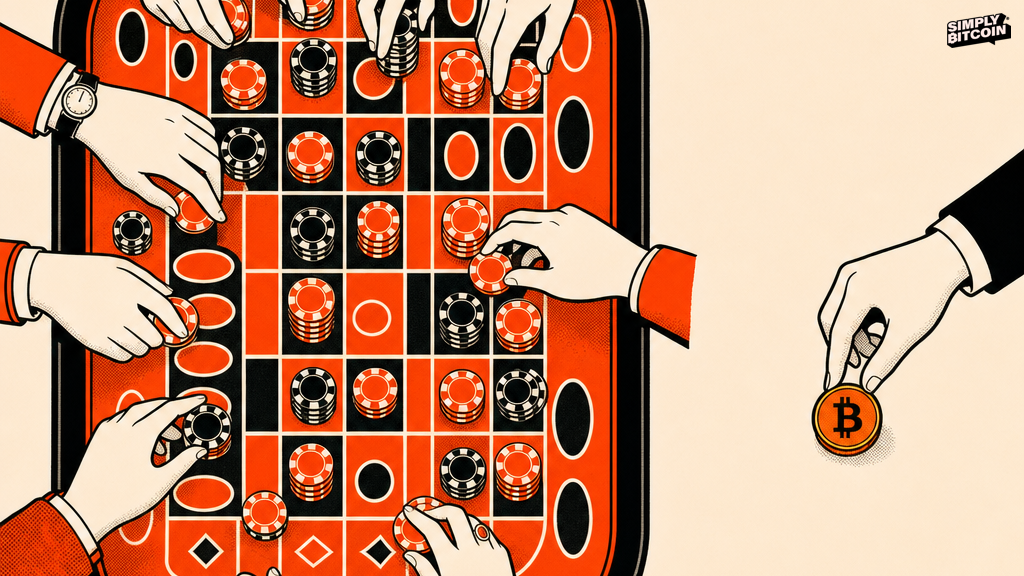
A prominent tech investor built his case for selling bitcoin on exactly this confusion. He urged his followers to rotate into Bittensor's TAO token, a bet on a specific decentralized AI network, while describing bitcoin as "a dead network that offers nothing beyond a store of value." He is making a real bet. It is just not the bet he thinks it is. He is forecasting which of dozens of competing AI networks still matters in five years, in public, with his own money, in exactly the shape every blockchain-not-bitcoin trade has taken before his.
Most of those networks will not survive the next funding cycle. That has been true of every speculative technology wave on record, and nothing about artificial intelligence repeals it. Somebody wins big. Most do not win at all, and there is no reliable way to know in advance which is which.
Compare that to a hedge fund manager who has spent most of this cycle explaining why he considers currency debasement close to a certainty. Asked directly why he has not rotated into artificial intelligence himself, his answer was not bullish or bearish. It was an admission: he does not know which AI company wins, and he has stopped trying to find out. He is not in the business of picking a winner. He is in the business of owning the asset that never required one.
THE ASSET THAT NEVER NEEDED A VOTE
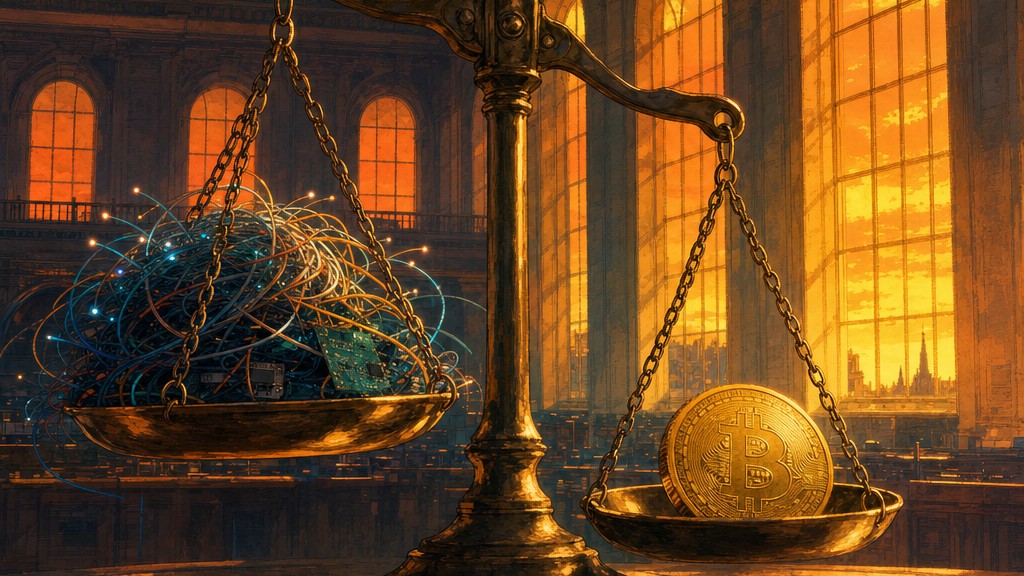
Here is the actual difference, stated plainly. A technology bet requires forecasting an outcome that has not happened yet: which protocol, which network, which company's product becomes the standard. Bitcoin's position was never won by forecast. It was won by math anyone can check today, the same math that held a decade ago and will hold a decade from now: a fixed issuance schedule, enforced by code rather than by a roadmap, verified by running the numbers rather than by trusting a pitch deck.
Central banks are making the same comparison with the oldest hard asset there is. Official gold holdings now sit at the highest level since 1975, bought by institutions that do not need gold to win a popularity contest, only to keep existing as a form of value no government can issue more of on command. Bitcoin is the same trade, running on code instead of a vault. Nobody at a central bank is betting on which commodity might someday become scarce. They already know which ones are, and they are buying them.
WHAT THE ORDINARY SAVER CANNOT AFFORD TO DO
A venture fund can place fifty bets on fifty different companies and only needs one or two to return everything the other forty-eight lost. That is the entire model: survive the graveyard long enough for the winner to pay for it. A household with one paycheck and one retirement account does not get that portfolio. A wrong pick in a concentrated technology bet is not a line in a venture spreadsheet. It is years of work that does not come back.
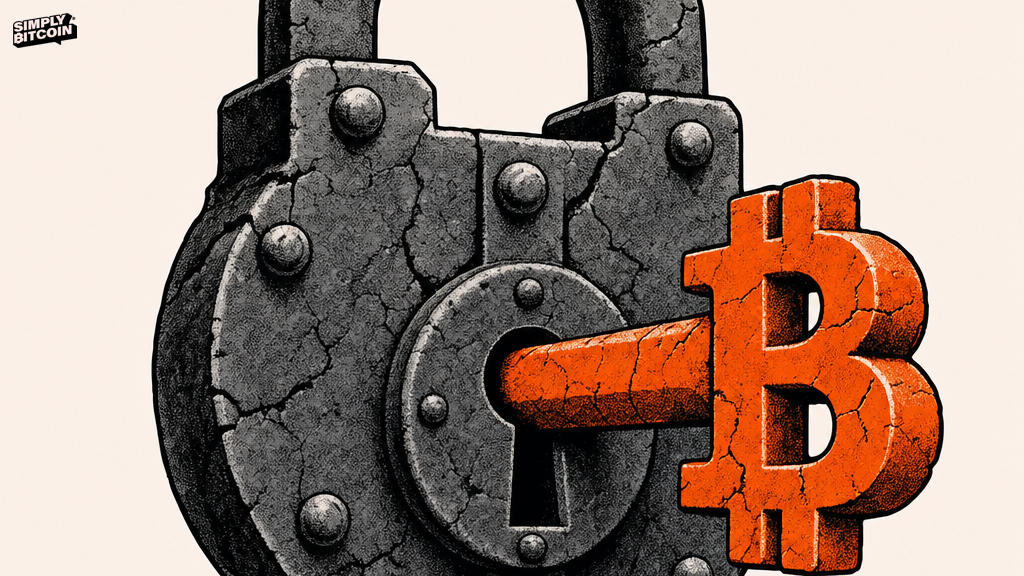
That is the real cost hiding inside "sell bitcoin, buy the future." It asks an ordinary saver to do what only a diversified fund can safely do: guess correctly, once, with money they cannot afford to lose. Bitcoin never asked for that guess. It does not require anyone to pick which network wins, because the question of which monetary asset holds the hardest, most verifiable scarcity was already answered, twice, in every cycle Wall Street decided to look away and call it finished.
Wall Street will keep finding a new technology to prefer over the asset sitting underneath it. That is not a flaw in bitcoin's case. It is the same tell, in a new wrapper, and the people who got paid for recognizing it twice before are not the ones waiting around to see if it works differently this time.


Daily Bitcoin news, analysis and interviews. New shows every single day.
Subscribe on YouTube