
Gold Has A Supply Problem. Bitcoin Never Will.
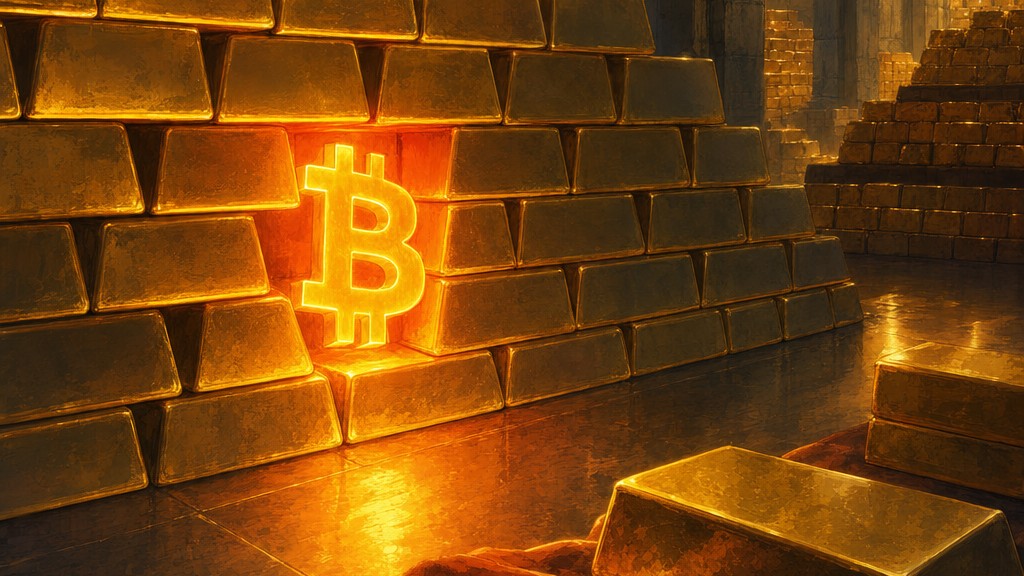
For the first time since 1996, the world's central banks hold more gold in reserve than they hold US Treasuries. Nobody rang a bell for this. It just happened, quietly, over three years of buying, and it tells you more about where money is headed than any headline will.
THE CROSSOVER NOBODY VOTED ON
Central banks are not retail traders chasing a candle. They plan in decades, and decades of habit just broke. Gold overtaking Treasuries in global reserves is a reversal of a preference that held since the aftermath of Bretton Woods, when high real rates and the depth of the dollar market made government debt the obvious place to park a reserve.
China alone has now bought gold for its central bank for 21 consecutive months, the holdings rising by about 20 tons in July. That buying kept going straight through gold's worst quarter in over a decade. A reserve manager does not keep buying an asset through a bad quarter unless the point was never the quarter.
MONEY NEVER NEEDED A USE CASE
The reason this matters starts with a question most people never ask: why does gold have any value at all. You cannot eat it. You cannot build a house from it. Its industrial use barely dents its market price.
Vijay Boyapati wrote the clearest answer to that question in an essay that became one of the most read pieces in Bitcoin's history. Boyapati penned The Bullish Case for Bitcoin as a long-form article in 2017 to provide the layperson with an economic framework with which they could understand Bitcoin. His core idea is the monetary premium: the gap between what an asset is worth for its use and what it is actually worth on the market. The difference between the purchasing power of a monetary good and the exchange value it could command for its inherent usefulness can be thought of as a monetary premium. Gold's premium is almost the entire price. Bitcoin's premium is the entire price, because Bitcoin has no other use at all. That is not a weakness. It is the whole point.
GOLD HAS A PRICE PROBLEM BITCOIN DOESN'T
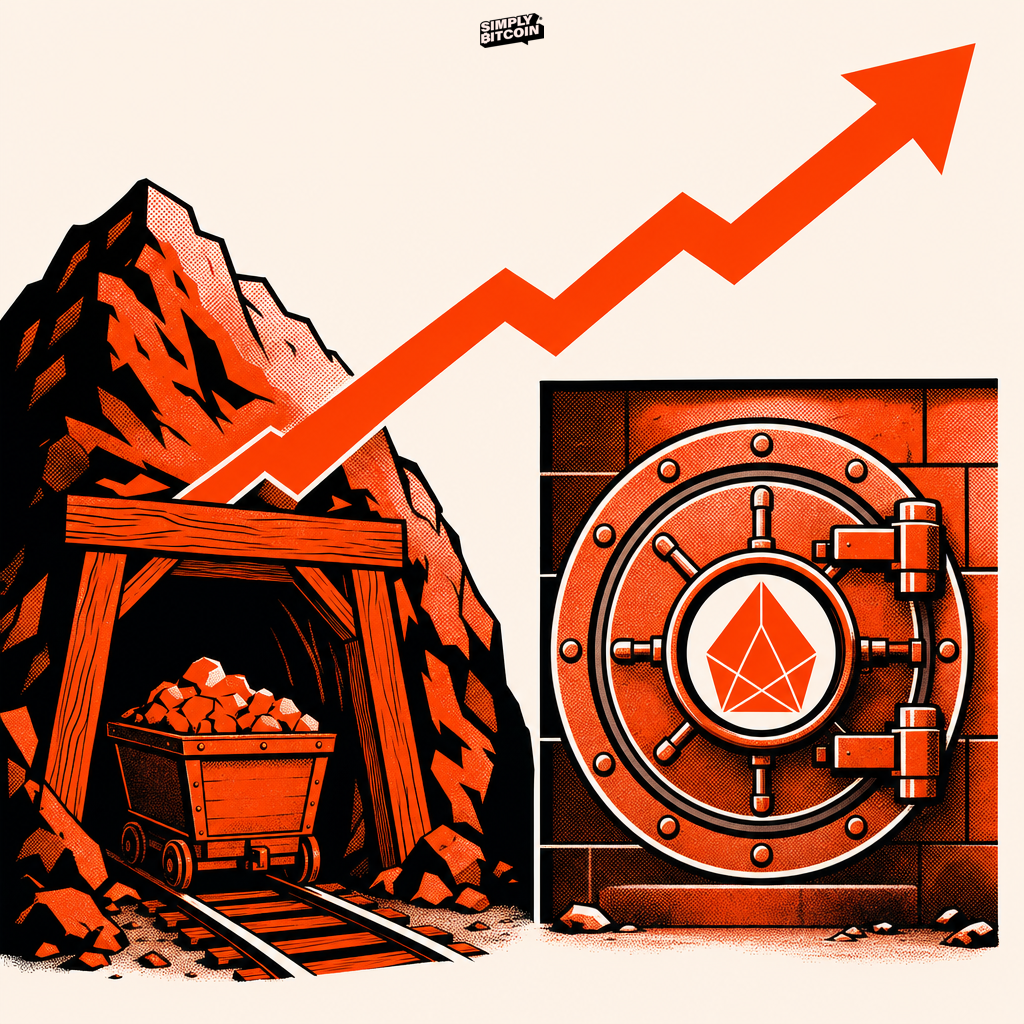
Once you accept that gold and Bitcoin are competing for the same job, the differences between them stop being trivia and start being the entire investment case. Gold's supply answers to its price. When gold rises, marginal deposits that were unprofitable to dig suddenly pencil out, new mines open, and more gold enters the market. The metal fights its own scarcity every time it rallies.
Bitcoin's supply answers to nothing. It does not care what the price does today, this year, or in twenty years. A fixed schedule of new coins arrives on a clock nobody can move, mining difficulty adjusts to keep it that way, and the total number that will ever exist was set the day the network started. Gold has a 5,000 year head start on being trusted. Bitcoin has a ceiling gold will never have.
THE WORLD IS RANKING HARDNESS, NOT PICKING SIDES
This is why watching gold rip while Bitcoin sits still should not read as a loss for Bitcoin. Central banks are not choosing gold over Bitcoin. They are choosing hard money over promises, and gold is simply the version of hard money every reserve manager already knows how to hold, audit, and store.
A reserve manager who has just spent three years rebuilding trust in something that cannot be printed does not stop at the version with a supply that bends. The same logic that moved a central bank from Treasuries to gold ends, eventually, at the asset gold cannot compete with on the one property that actually matters here: a supply nobody, anywhere, under any pressure, can increase.
THE ASSET WITH NO SECOND MOVE
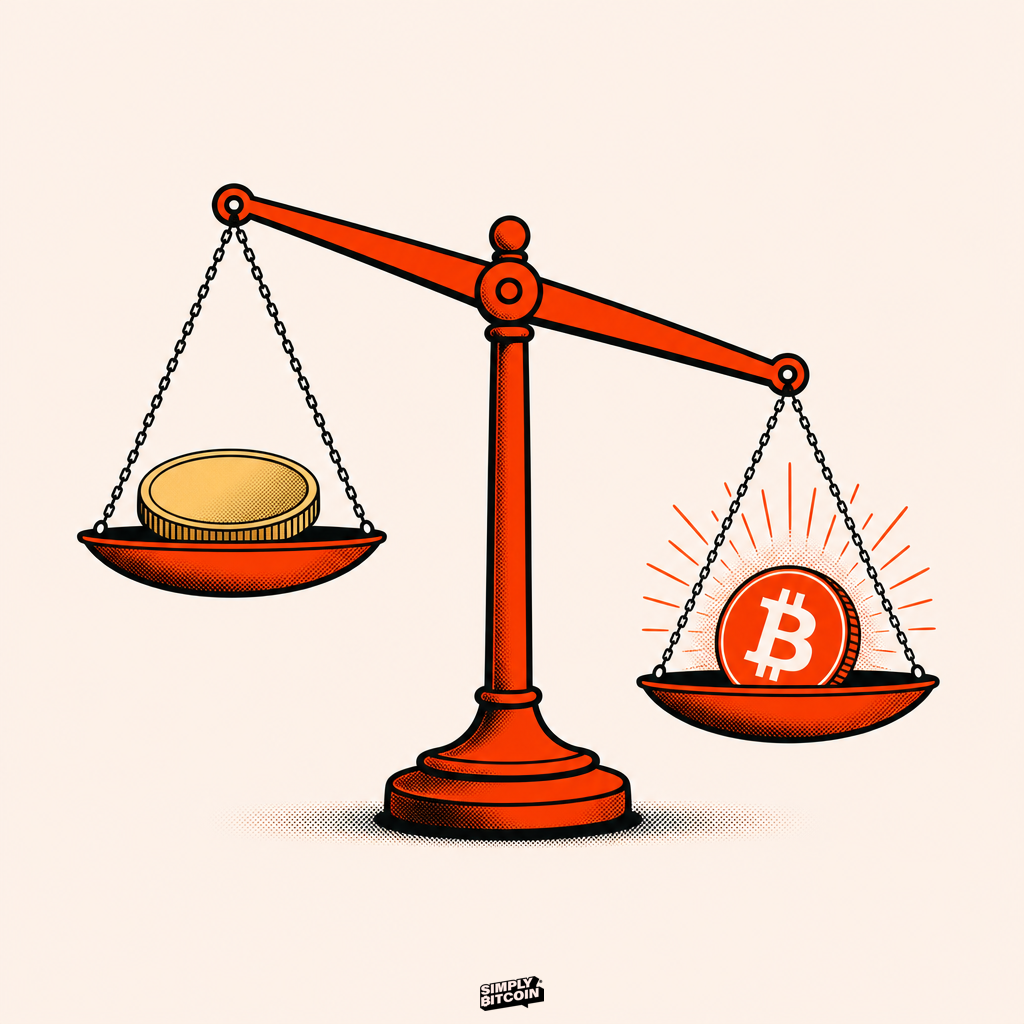
Every dollar a government borrows is a promise about the future. Every ounce of gold a miner pulls from a new deposit is a small crack in gold's own scarcity story. Bitcoin is the only asset in this comparison that cannot be talked into producing more of itself no matter how high the price goes or how badly anyone needs it to.
That is the quiet part of this crossover. The world just spent three years proving it no longer trusts a promise it can print. The next step in that same logic is an asset nobody, not a miner, not a central bank, not a government, can ever produce more of. Gold got there first. It was never going to be the last stop.