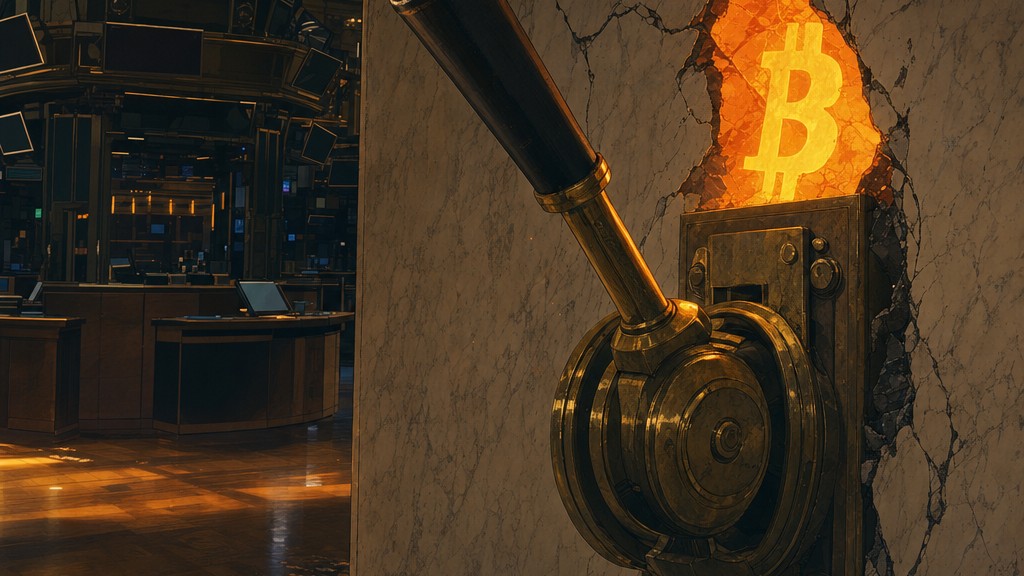
Every Market Has An Off Switch. Bitcoin Doesn't.
In March 1980, silver traders found out they could not sell. Not because buyers disappeared. Because an exchange in New York had spent two months quietly rewriting the rules on margin, and by the time the price broke, the only trades left standing were liquidations. The market did not fail. It was steered, by someone with the authority to steer it.
THE SWITCH HAS ALWAYS EXISTED
That is not a one-time story. It is the normal condition of every market humans have built. The New York Stock Exchange reopened on September 17, 2001, after markets were closed for four days, the longest closure since 1933. Nobody voted on that closure. A small group of exchange and government officials decided, and the rest of the country's portfolios waited for permission to trade again.
Go back further and the pattern repeats with a bank holiday instead of a trading halt. Roosevelt closed every bank in the country in 1933 and reopened only the ones the government judged solvent enough to survive. In both cases the mechanism is identical: a market is not really a market once someone above it can decide when it opens.
EVERY MARKET ANSWERS TO SOMEONE ABOVE IT
The Hunt brothers learned this the hard way in 1980. On January 7, 1980, COMEX adopted Silver Rule 7, which restricted margin requirements on silver futures, and the credit being offered to the Hunts vanished almost immediately. The exchange did not ban them. It just changed the terms of participation, and the terms were enough to end a fortune.
That is the quiet truth about every centralized market: participation is a privilege granted by an operator, not a right you hold independently. The exchange sets the hours. The clearinghouse sets the margin. The regulator sets who gets to keep trading when things get ugly. You are inside their system, on their schedule, at their discretion.
OWNERSHIP WITH A CONDITION ATTACHED
This is not a conspiracy. It is the design. Every exchange, every bank, every clearinghouse exists specifically so someone can intervene when the alternative is systemic collapse. The 1980 margin hikes and the 2001 closure were not abuses of the system. They were the system working exactly as built, which is the part worth sitting with.
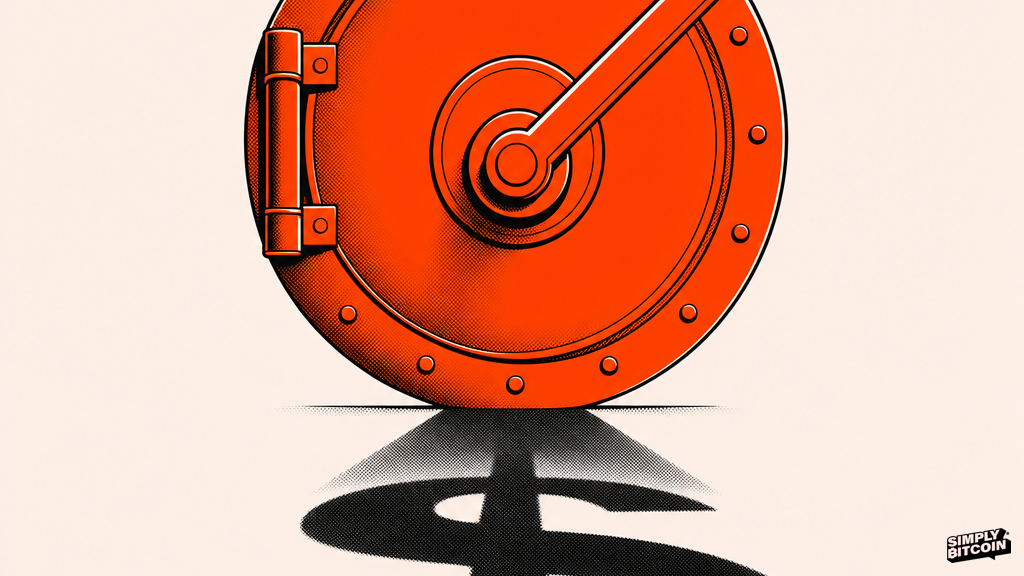
What that means for you as an owner of an asset inside that system is simple and rarely said out loud. You own it on the condition that the market stays open, and the market stays open on the condition that whoever runs it decides it should. Two conditions stacked on top of each other, and neither one is yours to control.
A MARKET WITH NO ADMINISTRATOR
Bitcoin was built to remove the first link in that chain. There is no exchange to raise your margin requirement on the network itself, because there is no single exchange the network runs through. There is no regulator who can order the ledger closed for the weekend, because the ledger has no office to send that order to.
The network has produced a new block roughly every ten minutes since January 2009, through wars, defaults, exchange collapses, and government bans, because no single party ever held the authority to stop it. Thousands of computers enforce the same rule set independently, and a rule change requires nearly all of them to agree, which is a different kind of governance than a phone call to an exchange president.
THE TRADE OFF NOBODY ADVERTISES
None of this makes Bitcoin gentle. A market with no administrator also has no one to halt the panic when it comes. Nobody raises the margin requirement to slow a crash. Nobody suspends trading to let everyone calm down. The price simply is what it is, second by second, and you absorb it in real time instead of finding out two weeks later what your account is worth.
That is the actual trade. Every protection a closed market offers you is also a leash. Every freedom an open market gives you is also a cliff with no railing. Bitcoin chose the cliff on purpose, because a railing is just a switch with better branding.
WHAT YOU ACTUALLY OWN WHEN NOTHING CAN CLOSE
The 1980 silver traders and the 2001 stockholders were not wrong to own what they owned. They were wrong to assume ownership meant the same thing at all times. It didn't. It meant what the operator decided it meant, on the day the operator decided to act.
Bitcoin does not offer that comfort, and it does not need to, because it never took the authority away from you in the first place. Nobody has ever needed to ask permission for the Bitcoin market to open. That is not a feature layered on top of the asset. It is the asset.