Bitcoin's Volatility Is A Feature. The Dollar's Stability Is The Bug.

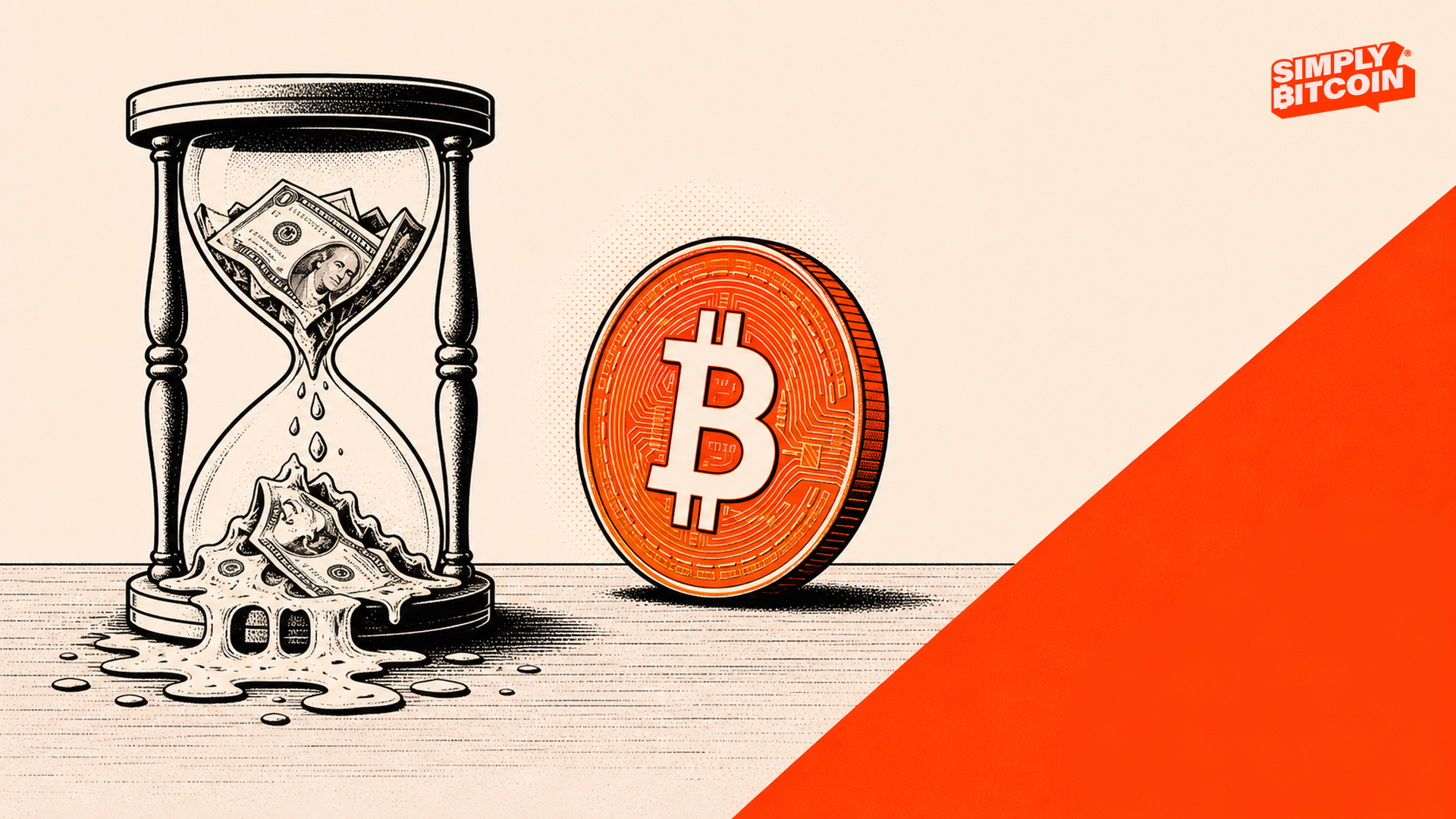
Every time someone tells you Bitcoin is "too volatile," hand them a calculator and ask them to look up what $1 bought in 1971. Then in 1990. Then in 2010. Then today. Walk them through it slowly. The dollar has lost over 90% of its purchasing power since Nixon took the world off the gold standard. That is the "stable" asset they are defending. That is the benchmark they want you to measure against.
The volatility argument is not an insight. It is a trained reflex. And it is time to understand exactly what it is hiding.
The Trap They Set For You
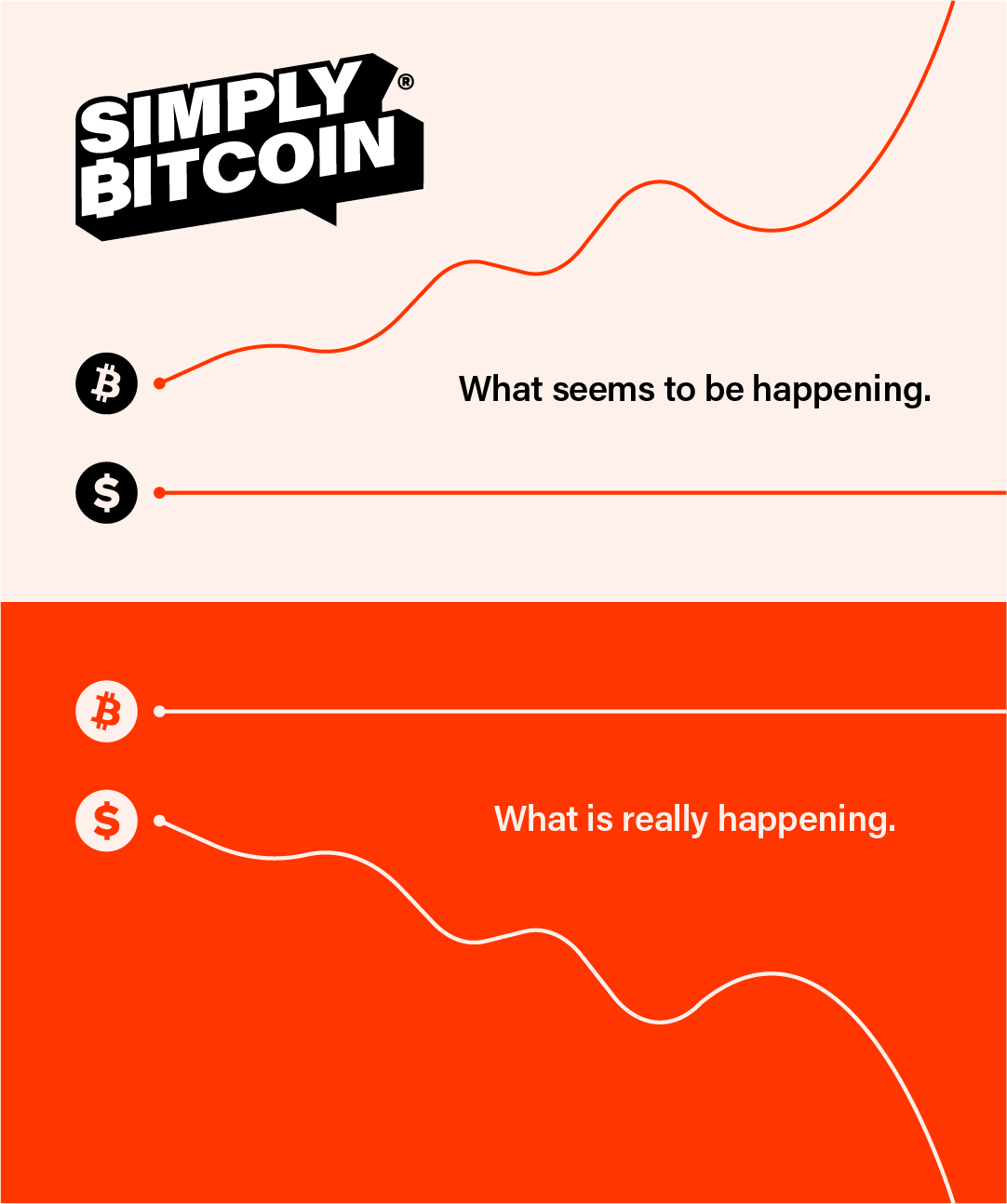
When someone says Bitcoin is too volatile, they are implicitly claiming the alternative is stable. But the dollar is not stable. It is simply losing value at a pace slow enough to feel normal. A temperature that drops one degree per day does not feel like a crisis until the water starts to freeze. By then, it is too late to notice how cold the room got.
The dollar's "stability" is an accounting trick. It measures itself against goods and services that are also being inflated by the same monetary system. You are not seeing stability. You are seeing two things decline together at roughly the same rate, one of them being your savings.
Bitcoin, on the other hand, moves dramatically in short windows because the market is still discovering what a fixed-supply, globally accessible, permissionless monetary network is actually worth. Price discovery on something this new, in real time, across every timezone on earth, produces volatility. That is not a flaw in the protocol. That is a function of how markets work when they encounter something genuinely unprecedented.
The Numbers Nobody Reads Out Loud
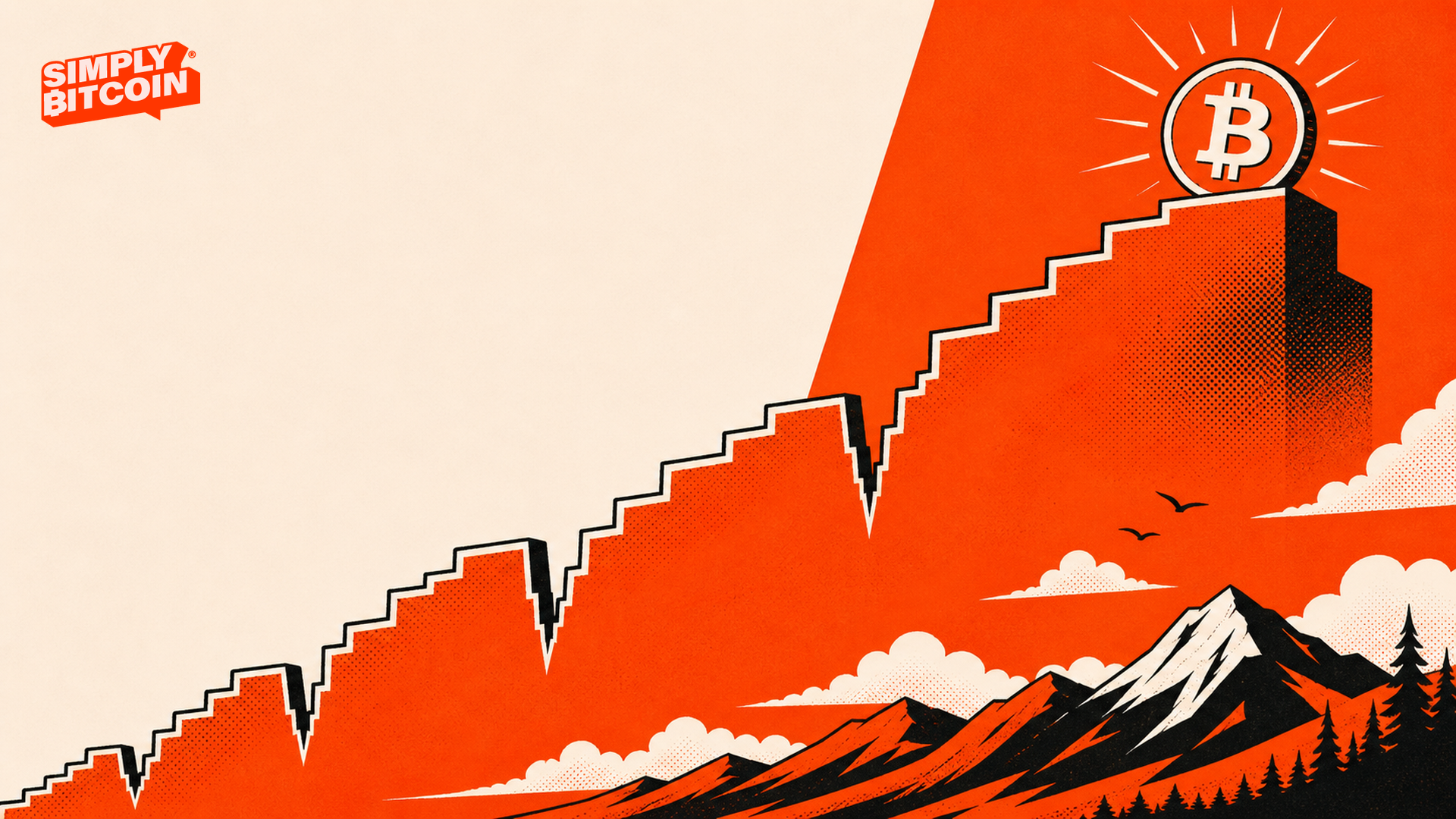
In 2012, Bitcoin was worth roughly $5. Anyone who bought then and held through every crash, the 2013 collapse from $1,200, the 2018 crash from $20,000, the 2022 crash from $69,000, still came out ahead by a factor that would have been called science fiction if you said it out loud in a bank lobby.
The key word is held. Volatility only destroys you if you panic. The people who lost on Bitcoin did not lose because Bitcoin failed. They lost because they sold at a low point and locked in a loss that the protocol was never going to make permanent. The network kept running. The blocks kept getting mined. The supply kept compressing. The people who stayed understood that short-term price action is noise, and the signal is the supply schedule and the network effect underneath it.
Meanwhile the people who stayed "safe" in dollars across the same period watched their purchasing power quietly evaporate, year after year, without a single dramatic moment they could point to as the cause.
One of these is a visible risk. The other is an invisible one. The invisible one is the one doing most of the damage.
What Volatility Actually Tells You
The price of anything new and undervalued oscillates wildly when it starts attracting serious capital. That is because early on, different participants have radically different beliefs about what the thing is worth. As more people converge on a shared understanding, volatility compresses. We have watched this pattern play out with Bitcoin across four market cycles. Each cycle's floor was higher than the previous cycle's peak. Each cycle brought new institutions, new nation-states, new infrastructure, new holders who did not sell the next time it got bumpy.
Volatility in early Bitcoin is not a sign that the asset is broken. It is a sign that we are still early in the process of the world recognizing what money that cannot be inflated, confiscated, or censored is worth.
The traditional finance crowd calls this volatility a problem because they are optimizing for quarterly performance reviews and client retention. They need assets that look smooth on a chart. They do not care whether your wealth compounds over a decade. They care whether you call them angry in October.
Sovereign individuals optimize for something different. They optimize for purchasing power in ten years. On that timeline, the risk profile of Bitcoin and the risk profile of cash are not even comparable. Cash guarantees degradation. Bitcoin offers the opposite.
The Question Nobody Asks
Here is the question that should follow every volatility complaint: volatile compared to what, and over what timeframe?
Volatile compared to the dollar over a week? Sure. Volatile compared to the dollar's purchasing power over twenty years? Bitcoin is not the risky one in that comparison.
Every asset class involves risk. Real estate can crash, burn, or be seized by eminent domain. Stocks can go to zero and pay no taxes on the way down. Bonds are government promises backed by the ability to print more of the same currency they are denominated in. Savings accounts pay interest at a rate that consistently trails actual price increases. There is no safe harbor. There is only the question of which risk you are choosing and whether you have thought it through.
Bitcoiners have thought it through. That is how most of them got here.
The volatility argument will keep appearing in your life, usually from people who have never looked at a four-year Bitcoin chart, never calculated the historical inflation rate of the dollar, and never asked themselves what their savings actually bought in a grocery store a decade ago versus today.