Bitcoin Was Clear Before The Clarity Act Existed

A memecoin called $LAPTOP went from two dollars and thirty nine cents to three hundred and sixteen dollars and back down to under five, all in the same morning. The project's thin liquidity pool helped drive the token's quoted price from $2.39 to an eye-popping $316 before it crashed. The people who bought at the top did not lose to bad luck. They lost to a structure that was rigged before the first trade printed.
The Senate is trying to write a law that stops this from happening again. On September 15 it holds a cloture vote on the Clarity Act, and supporters generally need three-fifths of the Senate, or 60 votes in a fully seated chamber, just to move the bill to debate. Whether it clears that number is a live question. The better question is why an entire industry needed hundreds of pages of law to prove it was honest, and Bitcoin never did.
A LAW IS A PATCH FOR A PROMISE
Every provision in the Clarity Act exists to answer one question about a token: who controls it, and can they be trusted not to dump it on you. That question only exists because someone controls it. An issuer holds the allocation. A founder sets the vesting schedule. A market maker decides how much real liquidity actually sits behind the number on the screen.
Regulation is what a system builds after it admits trust alone already failed somebody. It is not proof the system works. It is the receipt for the fact that it needed policing, filed after the damage instead of before it.
EVERY PROVISION IN THE BILL IS A CONFESSION
Read the requirements and they name the crime before they name the fix. Disclosure of pre-launch allocations exists because insiders were quietly handed supply before the public ever saw a chart. Registration with a regulator exists because projects operated with nobody accountable when the price stopped moving up.
$LAPTOP is the case study running live while the bill is still being negotiated. Founders including Hunter Biden held 30 percent of the token supply, locked for six months and vesting over two years. Separately, a wallet tied to the project had already been sent one tenth of the total supply a week before launch and had offloaded roughly 42.5 million of those tokens since. None of that was illegal when it happened. It is exactly the behavior a Clarity Act provision is written to make expensive.
It is also not a one time story. Nearly 1 million investors carried cumulative losses of $3.81 billion on the $TRUMP token through June, after it fell roughly 97 percent from its peak. Two coins tied to two politically connected names, two collapses built the same way. The pattern is the point.
A market that needs a law to prove it is honest was never verifying itself in the first place.
BITCOIN HAS NOTHING LEFT TO DISCLOSE
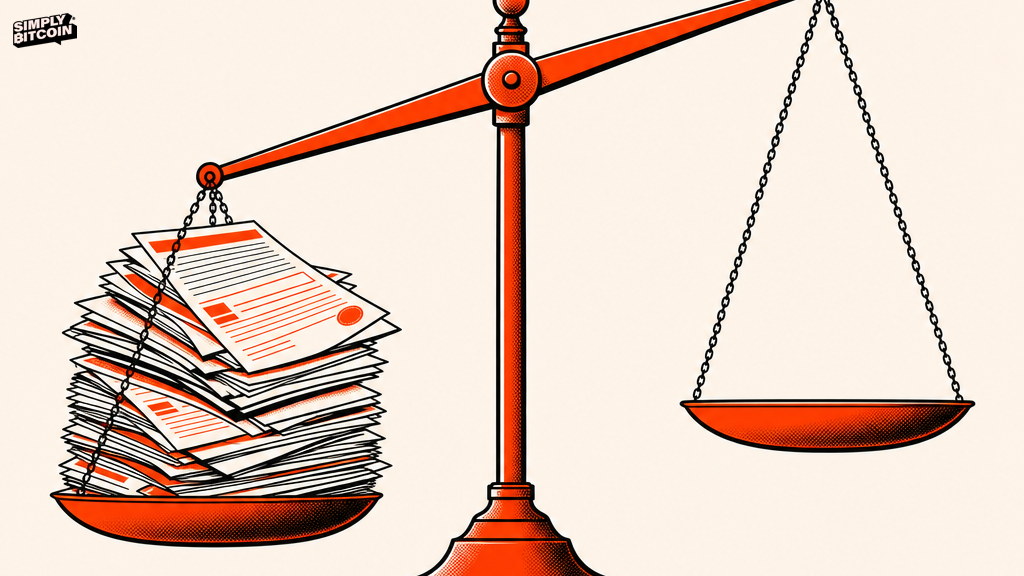
Run the same disclosure requirements against Bitcoin and the form comes back empty. There is no founder wallet holding a locked allocation, because there was no company and no offering. There is no early insider grant to report, because the first block paid the same fifty coins any miner could have earned, and nobody arranged otherwise. There is no market maker deciding how much real liquidity sits behind the price, because the price is whatever strangers agree to across thousands of venues that answer to no one together.
The issuance schedule was published the day the network started and has not moved once since. Anyone can run the software and count the coins themselves instead of taking a filing's word for it. That is not a regulatory outcome. It is a design decision made years before a regulator ever had a reason to ask the question.
VERIFICATION REPLACED THE NEED FOR PERMISSION
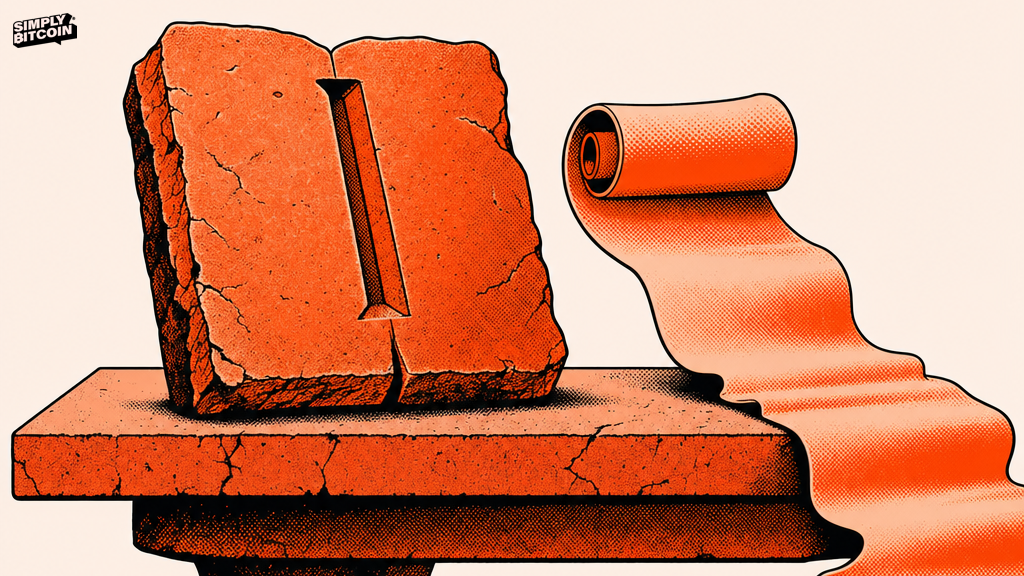
The actual thing Bitcoin offered was never speed or price. It was a substitute for the entire category of law the Senate is now negotiating line by line. Instead of asking a government to certify that an issuer behaves, Bitcoin removed the issuer and let anyone check the ledger directly. The rule against cheating is not enforced by a regulator holding a felony charge in reserve. It is enforced by every node checking every other node's math, continuously, with no vote required.
That is the difference between trust minimized and trust required. A token with a founder needs a law watching the founder. A protocol with no founder needs nothing watching it, because there is nothing left to watch that isn't already public and already checkable by anyone who bothers to look.

THE VOTE CANNOT TOUCH WHAT BITCOIN ALREADY BUILT
The bill has already survived a longer road than most legislation gets. The House passed it in July 2025 by a 294-134 vote, with all voting Republicans joined by 78 Democrats. The Senate Banking Committee advanced its portion by a 15-9 bipartisan vote in May 2026. More than a year of drafting, concessions, and committee votes, and the question of whether it clears the floor is still open the morning it matters most.
If it clears sixty votes, the industry gets rules it has needed for a decade, and the next founder who pre-loads a wallet risks more than a bad headline. If it fails, the fraud continues under whatever patchwork existing regulators can manage without new authority. Either outcome is worth watching. Neither one changes a single line of Bitcoin's code.
Bitcoin's clarity was never something Congress was going to grant. It shipped in the genesis block, before an industry existed that was large enough to need policing, and it has not needed a hearing to stay true since.