
Bitcoin Stopped Flinching. That Says Everything About Who Owns It Now.

In the span of a few weeks, Bitcoin absorbed a hardware wallet exploit that drained tens of millions of dollars, watched its most famous corporate buyer start selling instead of stacking, and lost ground on the one regulatory bill the industry had been counting on. Any one of those stories used to be enough to send the price down double digits inside a day.
This time the price barely moved. It sat in the low sixties, flat, almost indifferent. That refusal to fall on cue is not a footnote. It is the most useful piece of information in the entire cycle.
THE HITS THAT SHOULD HAVE SUNK THE PRICE
Run the actual list. Attackers exploited a $116 million Coldcard hardware wallet vulnerability, which barely moved Bitcoin's price, unlike past cycles, when bear markets tend to overreact to bad news and ignore good news. Strategy's Executive Chairman Michael Saylor started selling Bitcoin reserves through the company, and the firm's STRC preferred stock slid toward $75. Odds of the Clarity Act passing, the bill setting federal rules for digital asset markets, fell from the mid-40s into the teens.
Any one of those headlines would have been a body blow in 2021 or 2022. Stacked together, they barely dented the chart.
WHEN AN ASSET STOPS FLINCHING, THAT IS THE TELL
Bitwise CIO Matt Hougan put a name on the pattern in an interview this month. "One sign that you're at the bottom of a bear market is when an asset stops responding to bad news," Hougan said.
"We're ignoring bad news. We're maybe over-indexing to good news."
A market that overreacts to every negative story and shrugs off good news is a market still full of nervous hands looking for a reason to sell. A market that stops doing that has already lost most of those hands. The panic sellers do not disappear quietly. They disappear during the drawdown that came before, and what is left afterward is a different owner entirely.
THE OLD OWNER PANICKED. THE NEW OWNER DOES NOT CHECK THE APP.
Look at who has been adding, not trading, through this stretch. JPMorgan increased its holdings in BlackRock's iShares Bitcoin Trust from roughly 3 million shares at the end of December 2025 to nearly 8.3 million shares in Q1 2026. By the second quarter, that stake had climbed to about 10.4 million shares. Morgan Stanley raised its own IBIT holdings by 23 percent over the same stretch, to about 16.5 million shares from 13.4 million three months earlier.

These are not accounts that check the price before lunch. A 13F filing gets updated once a quarter. The institutions filing them are not trading Bitcoin, they are allocating to it, on a schedule measured in years rather than headlines. Hougan has described conversations with wealth management platforms including Wells Fargo, UBS, and Stifel, noting that "those ships have turned slowly towards crypto, and they really don't care about the short-term price."
That is the actual regime change. Retail bought the top on excitement and sold the bottom on fear, the way it always has. The new marginal buyer does not open the app during a hack headline. It rebalances a model portfolio once a quarter and moves on.
THE REAL BURNER ISN'T A BITCOIN HEADLINE. IT IS THE STATE'S OWN LEDGER.
If Bitcoin news no longer drives Bitcoin's price, something else has to. Look at what the government released this month instead. The US posted a $432 billion budget deficit in July 2026, widening from a $291 billion shortfall a year earlier and exceeding forecasts for a $346 billion gap. Interest on the public debt continues to be a key driver of the deficit, with the July total up $26 billion from a year earlier. The cumulative deficit for the first ten months of the fiscal year reached $1.799 trillion, already exceeding the full prior fiscal year's shortfall with two months still to go.
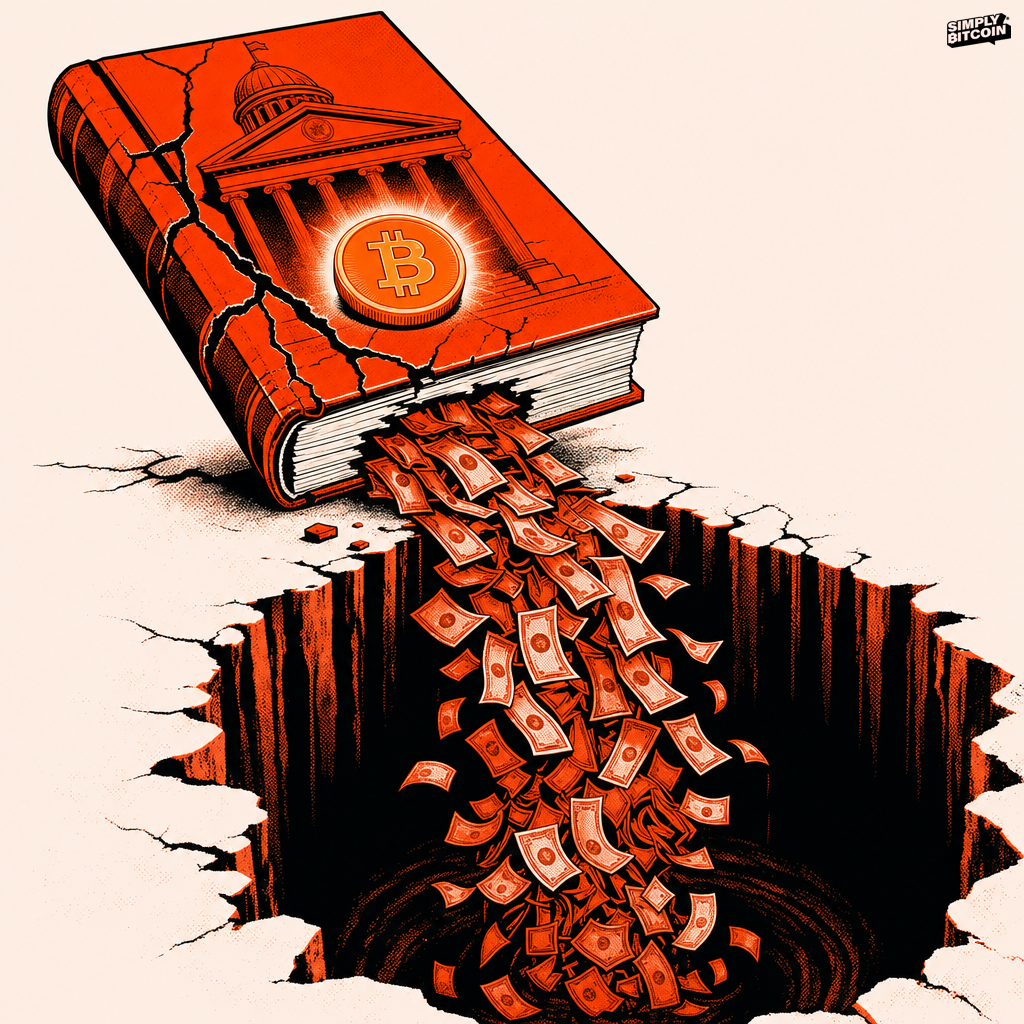
None of that is a crypto story. It is a government story, and it does not resolve when a hardware wallet bug gets patched or a bill gets a new vote count. A debt load that grows faster than the revenue meant to service it is a permanent condition, not a headline cycle. It is the burner that never turns off, and it is the reason a large bank builds a Bitcoin position it plans to hold for years rather than trade around a news flash.
THIS IS WHAT A MATURING ASSET LOOKS LIKE
An asset that shrugs off a hack, a founder's selling, and a stalled bill while the government that issues the competing currency posts record deficits is not complacent. It is being repriced by an owner with a longer memory and a shorter attention span for noise.
The headlines did not get quieter. The audience for them did.