
Bitcoin's Code Held. Its Supply Chain Didn't.
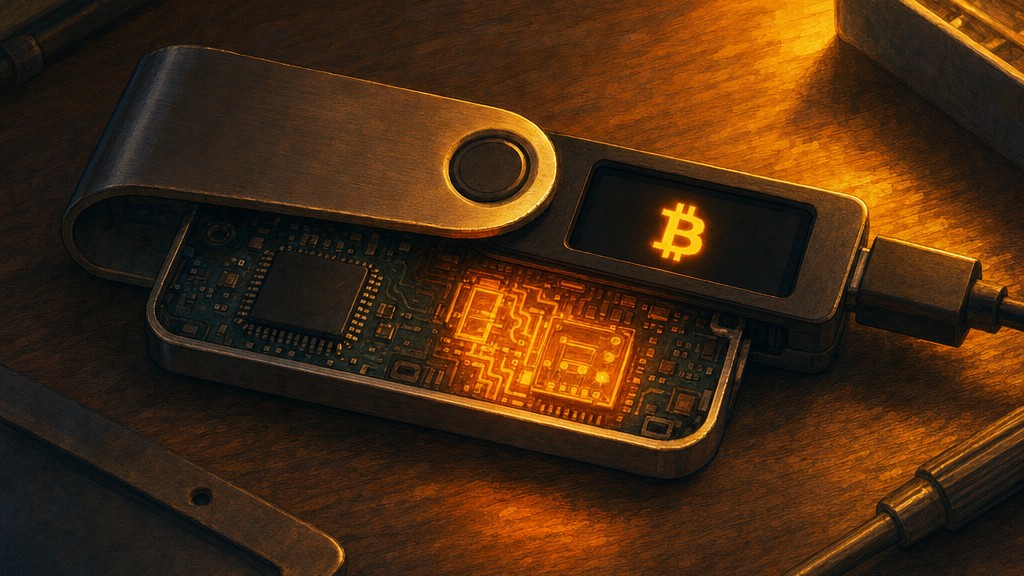
In the same week, Bitcoin absorbed two separate scares. The first was a warning about the future: artificial intelligence might crack the math securing every Bitcoin wallet, perhaps within months. The second was not a warning. It was a theft, and the money was already gone before anyone wrote a headline about it.
One story describes a break that has never been demonstrated. The other describes roughly ninety million dollars that actually left real wallets. Lay them side by side and the lesson is not about cryptography failing. It is about where verification stops and trust has to pick up the rest.
TWO SCARES, SAME WEEK, DIFFERENT EVIDENCE
On October 7, Ethereum Foundation researcher Justin Drake told the industry to start planning for what he called bunker mode. He wrote that it was reasonable to brace for the possibility that ECDSA breaks before quantum computers arrive, in the worst case in months, not years. He recommended holders move funds to addresses that have never signed a transaction, so their public keys stay hidden behind a hash.
Coinbase's head of cryptography, Yehuda Lindell, pushed back immediately. He said there was no evidence whatsoever pointing to a break of decades old hardness assumptions like elliptic curve cryptography. His argument was not that Drake invented the scare out of nothing. It was that proving a new theorem is a different activity than breaking an assumption that has held for decades, and treating the first as proof of the second is exactly how fear outruns fact.
No one has produced a working exploit. No practical attack has been demonstrated, but Drake recommended that large holders gradually move funds to addresses whose public keys have never appeared onchain. A Bitcoin address does not reveal the public key behind it until that address spends outward. Before that, only a hash sits on the ledger. The entire logic of moving to a fresh address is that there is nothing exposed yet to crack.
THE CHECK THAT PASSED AND STILL LOST
Three days later, a different story broke, and this one had a body count in dollars. Ledger confirmed that a device tied to recent cryptocurrency thefts contained an unauthorized hardware implant, with all known cases involving wallets sold by the Southeast Asian reseller CryptoBilis. CryptoBilis operated in Malaysia, Indonesia, and the Philippines.
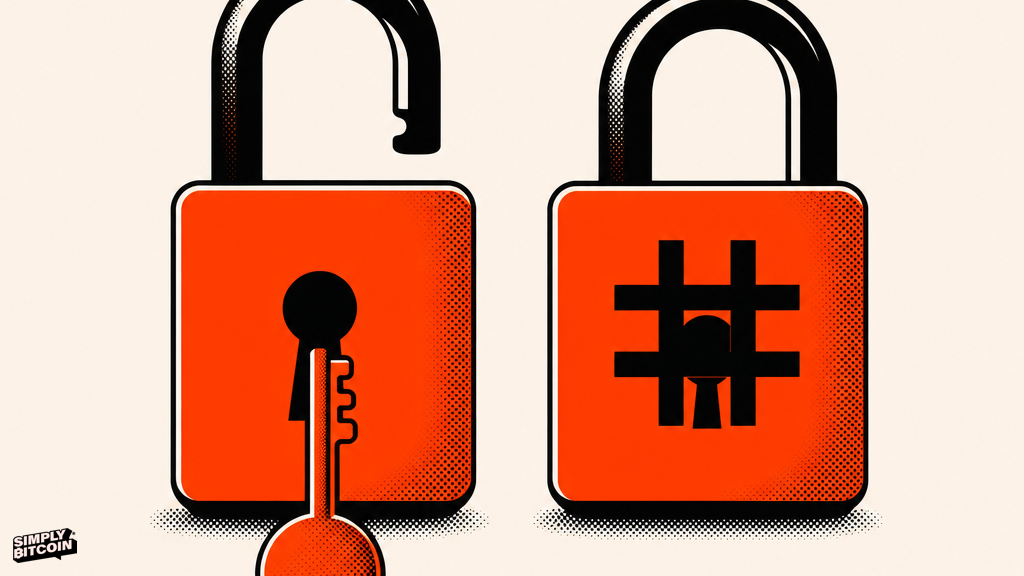
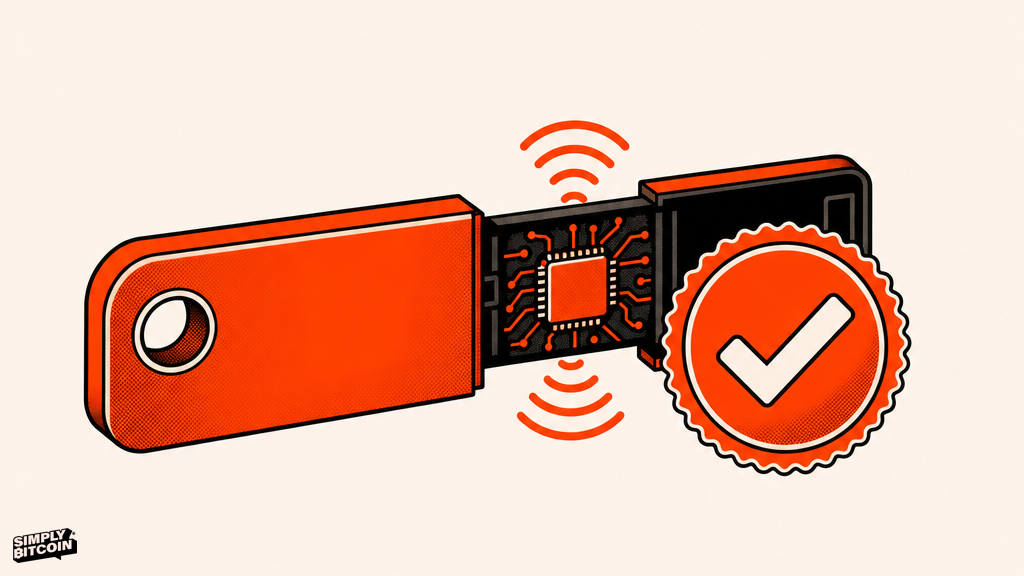
Mark Karpelès, the former Mt. Gox CEO who examined the hardware, found the mechanism. The implant could transmit recovery phrases over LTE while passing Ledger's Genuine Check. That single detail is the whole story. The authenticity check was not fooled. It confirmed the real secure chip, because the real secure chip was genuinely there. The extra board sat beside it, outside anything the check was ever built to look for.
On chain researchers estimate that eighty six million to ninety three million dollars was stolen from more than three hundred wallets, though Ledger said its internal systems and direct sales channels were not compromised. The company's own factory line held. The channel between that factory and a customer's hands did not.
VERIFICATION HAS AN EDGE, AND THE EDGE IS THE BOX
Put the two scares next to each other and a pattern appears that has nothing to do with artificial intelligence. Bitcoin's protocol is the one part of this story that is fully verifiable. Anyone can read the code, check the signature math, confirm that no one minted an extra coin. That is the entire promise of proof of work and open consensus: you do not have to take anyone's word for the rules, because you can read them yourself.
A private key never lives inside that open ledger. It lives inside a physical object, assembled somewhere, shipped through a chain of hands, and sold to you by someone you have no way of auditing. The protocol's verification stops at the edge of the software. Past that edge, in the box, on the truck, on a reseller's shelf, there is no hash to check and no chain to read. You are back to trusting a logo and whoever handled the device before you opened it.
That is not a flaw unique to one manufacturer. It is the shape of every hardware security story, in every industry, forever. The math can be perfect and the delivery can still be compromised. The implant worked precisely because the part that was verifiable, the secure chip itself, was genuine, and the part that was not verifiable, everything a reseller could add before the box reached a customer, was exactly where the attacker went to work.
THE BORING RULE BEAT THE SCARY HEADLINE
The defense against both scares turns out to be the same unglamorous habit. Against a hypothetical AI break, the fix is not reusing addresses and not exposing a public key before it has to be exposed. Against a real supply chain compromise, the fix is buying hardware directly from the manufacturer, generating a fresh seed on your own device, and never typing a seed phrase into any screen, app, or support account that asks for it.
Neither rule needed a headline about artificial intelligence to be true last year, and neither one needs one to be true next year. The AI story moved fast because it came with a case for the end of the world: thinking machines, broken math, a deadline measured in months. The reseller story moved slower, because a compromised supply chain in Southeast Asia does not have the word intelligence anywhere in it. But the money that disappeared did not disappear into a hypothetical. It disappeared into an actual circuit board, soldered into an actual device, sold through an actual store that was never the manufacturer.
Bitcoin's cryptography is the part of this system built to need no one's permission and no one's trust. The week just showed, again, that the part still worth worrying about is everything built around it: the box, the reseller, the screen asking for your words. Verify what the protocol lets you verify. For everything else, control the channel instead.