
Bitcoin Can't Be Banned. It Can Only Be Adopted.

Over 40 countries have tried to ban Bitcoin. China has done it three separate times. India threatened it, backed off, threatened it again. Nigeria restricted the banks, then watched peer to peer volume climb anyway. Every single attempt produced the same result. The network kept going, the hash rate kept climbing, and the people who wanted Bitcoin found a way to get it.
That track record isn’t luck. It is the entire design.
A Ban That Needs a Throat to Choke
Every law needs an entity to enforce it against. A company has headquarters. A bank has a charter that can be revoked. A stock has an issuer who can be subpoenaed. Bitcoin has none of that. It is a protocol running on tens of thousands of nodes spread across more than a hundred countries, maintained by an open source community with no office, no CEO, and no central server to seize.
When a government bans Bitcoin, what exactly are they banning? They can ban exchanges from operating within their borders. They can pressure banks to flag transactions. They can make life harder for the on ramps and off ramps. What they cannot do is reach into the protocol itself and switch it off, because the protocol does not live in their jurisdiction. It lives everywhere at once.

EVERY CRACKDOWN BECOMES FREE MARKETING
This is the part regulators never seem to learn. A ban does not kill demand, it validates it. The moment a government treats Bitcoin as a threat worth legislating against, it tells every citizen paying attention that this thing is powerful enough to scare the people who print the currency. Curiosity spikes. Search volume spikes. The people who were on the fence start asking why something so supposedly worthless needs a law against it.
China banned mining in 2021 and miners packed their rigs into shipping containers and relocated to Texas, Kazakhstan, and Paraguay within months. Bitcoin’s hash rate dipped for a single quarter and then surged past its previous all time high. The ban didn’t weaken Bitcoin. It decentralized it further, stripping out a concentration risk that critics had pointed to for years. You could not design a more effective stress test if you tried.
ADOPTION ONLY MOVES ONE DIRECTION
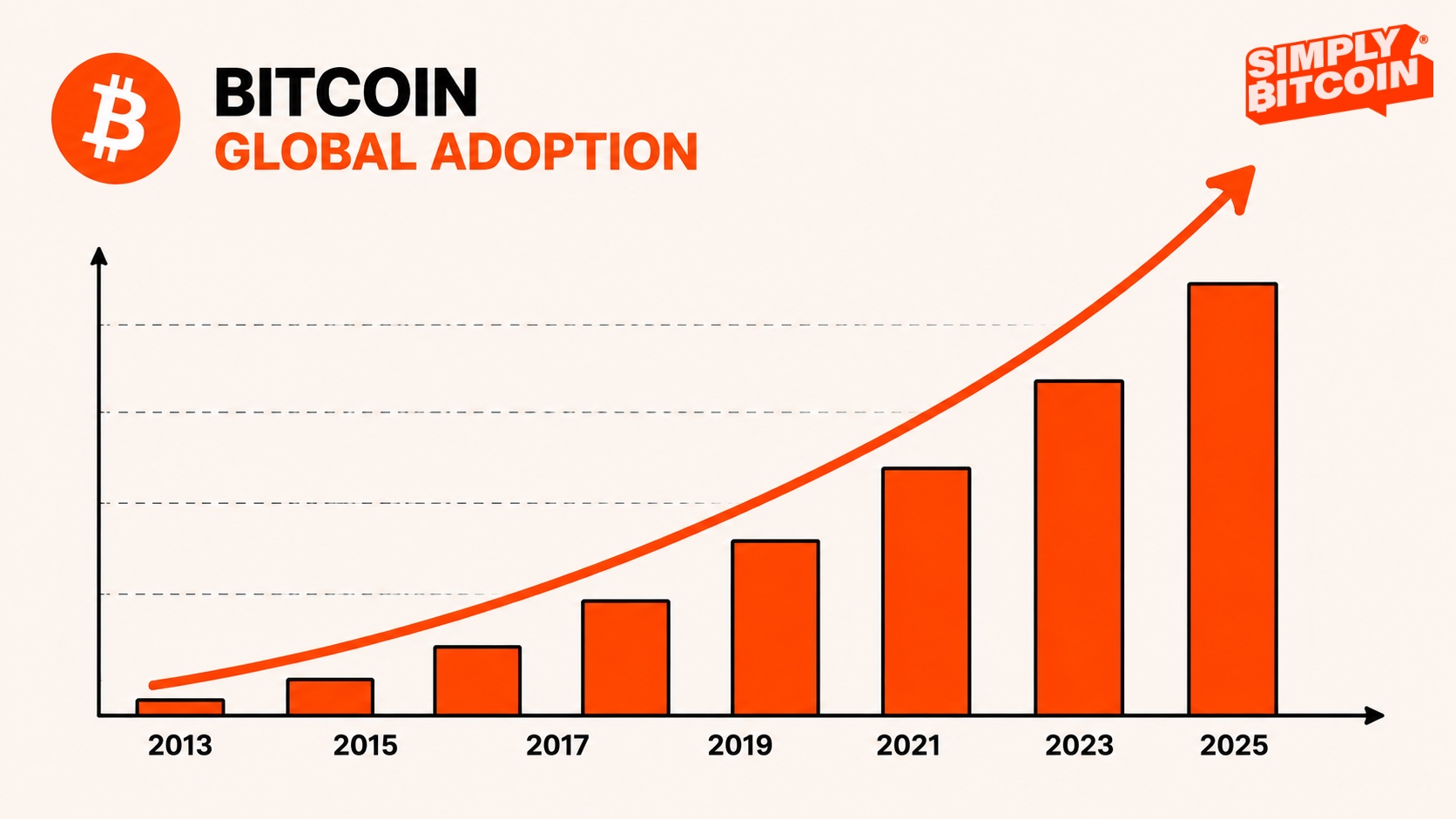
Here is the number that matters more than any headline about a crackdown. Bitcoin has never had a year where global adoption went backward. Wallet counts climb. Lightning capacity climbs. Nation state reserves climb. El Salvador adopted it as legal tender and neighboring countries started studying the playbook instead of mocking it. Every cycle, more sovereign individuals pull their savings out of a system that can be frozen, taxed away, or inflated into nothing, and into one that answers to nobody.
That is the asymmetry true believers understand instinctively. A fiat currency requires constant maintenance, propaganda, and enforcement to hold its value. Bitcoin requires none of that. It just keeps validating its own ledger every ten minutes whether a finance minister approves or not. You cannot legislate away math, and you cannot un-ring a bell that two hundred million people worldwide have already heard.
THE ONLY VOTE THAT COUNTS IS YOURS
Every person who moves savings into Bitcoin is casting a vote that no parliament can overturn. Every node you run adds one more copy that no regulator can edit. Every merchant who accepts a transaction proves the network works in the real world, right now, without waiting for permission from anyone in a suit.
The governments that ban Bitcoin are not stopping the future. They are just choosing not to participate in it, and handing the advantage to whoever does. Sovereignty was never going to be granted by the people who benefit most from your dependence. It was always going to be taken, quietly, one wallet at a time, by people who decided they were done asking.
They can ban an exchange. They cannot ban an idea that already lives on every continent on earth.