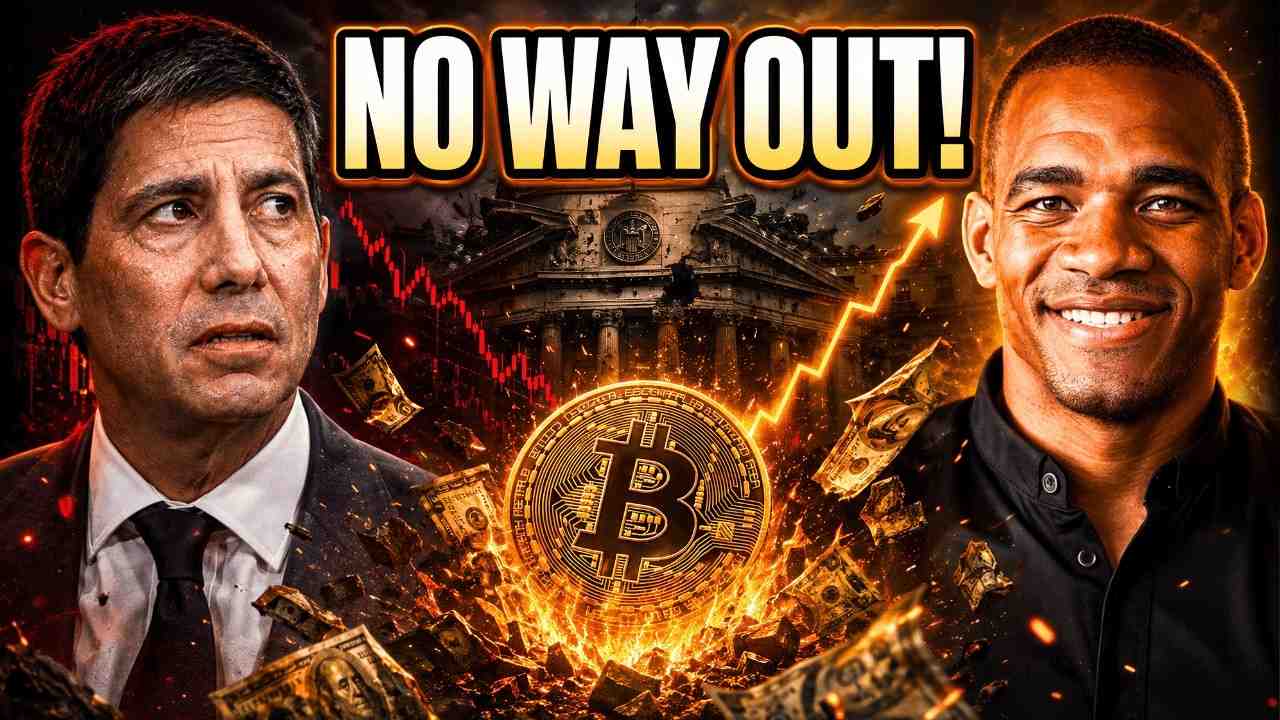
Alex Gladstein Says Bitcoin's Overlooked Promise Isn't Price, It's Freedom

Alex Gladstein, chief strategy officer at the Human Rights Foundation, joined the show to talk about his latest essay for the Wall Street Journal, "Bitcoin's Overlooked Promise: Freedom." His argument: most of the debate around Bitcoin happens inside the small slice of the world where banks are insured and currencies hold their value. For the rest of the planet, he says, Bitcoin is doing something closer to its original job.
BITCOIN'S OVERLOOKED PROMISE
Gladstein traced Bitcoin's origin back to the 2008 financial crisis, when millions of Americans lost homes and jobs while the banks that caused the crash were bailed out rather than prosecuted. He framed Satoshi Nakamoto's invention as a direct response: a monetary system that governments and banks could not quietly bail themselves out of using someone else's money. For Americans, he said, Bitcoin has mostly been a spectacular investment. For people living under authoritarian governments or collapsing currencies, which by his own estimate covers somewhere around 70 to 80 percent of the world's population, he argues it functions closer to a lifeline.
A BITCOIN WALLET THAT PAYS FOR GROCERIES IN KENYA
The clearest example he gave was Kenya, where a bridge connects Bitcoin wallets to M-Pesa, the mobile money system nearly every merchant already accepts. Someone holding Bitcoin can pay for a taxi, rent, electricity, school fees or groceries without the business on the other end ever needing to know Bitcoin was involved. Gladstein said HRF is working on similar bridges in Thailand, Ghana, Brazil and Nigeria, aimed at letting people live on Bitcoin without having to sell it just to get by.
WHY HE SPLITS BITCOIN, STABLECOINS AND EVERYTHING ELSE INTO THREE BUCKETS
Asked how stablecoins fit into the picture, Gladstein pushed back on the idea that they compete with Bitcoin. He compared them to eurodollars, the offshore dollar contracts that emerged decades ago when foreign holders wanted dollars without putting them in New York banks. Stablecoins, in his view, are a new version of the same idea: dollar-denominated contracts that extend the reach of the existing financial system rather than replace it. He pointed to Tether and Circle now holding more US Treasuries than entire countries like Germany and South Korea, which he said gives the current administration real incentive to keep the stablecoin market growing rather than restrict it.
His suggested framework: treat Bitcoin, stablecoins and everything else labeled crypto as three separate categories rather than lumping them together. Stablecoins, he argued, are trending toward more KYC and tighter control over time, looking increasingly like ordinary bank accounts. Bitcoin, in his telling, is the one branch that cannot be steered that way.
ANSWERING THE "BIG BITCOIN IS IN CONTROL" MEME
Gladstein also addressed the joke, increasingly made with a straight face in some corners of Bitcoin Twitter, that large institutions and governments have co-opted Bitcoin and stripped it of its original purpose. He recalled a debate five years ago with Ben Hunt, who writes the Epsilon Theory newsletter, over whether Wall Street adoption would corrupt Bitcoin or strengthen it. Gladstein's position then, which he said still holds, is that Bitcoin works as a Trojan horse: once institutions and governments hold enough of it, their own incentives push them to protect and improve it rather than weaken it. He pointed to BlackRock's interest in quantum readiness and Michael Saylor's obvious stake in Strategy's Bitcoin never going to zero as evidence the incentives are already running that direction.
He was careful not to call Bitcoin finished or safe. Privacy is still weak, mining is still concentrated, and the real work, getting Bitcoin into more hands as actual money rather than a balance sheet line item, is only getting started.
This story comes from the Simply Bitcoin Live show. Watch the full episode.


Daily Bitcoin news, analysis and interviews. New shows every single day.
Subscribe on YouTube