A Paper Market Survives Exactly As Long As Redemption Stays Expensive
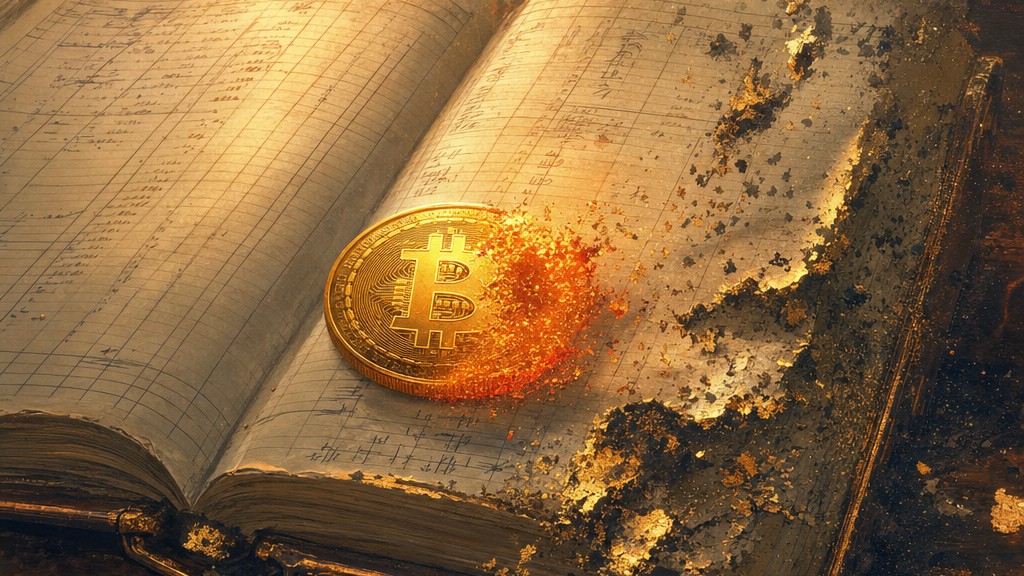
Every market that lets people bet on an asset without owning it eventually prints more claims on that asset than units exist to back them. Gold lived through this for most of the twentieth century and the arrangement held for decades. Bitcoin is walking into the same test right now, except one variable in the equation changed, and that variable decides how long the test can run.
THE PRICE ON THE SCREEN ISN'T ALWAYS THE PRICE THAT SETTLES
A futures contract, a perpetual swap, or a corporate credit instrument built around an asset can trade at a different price than the asset itself for a surprisingly long time. Nobody has to deliver anything today. The contract settles in cash, or it settles later, or it settles into another instrument that promises to settle eventually. As long as settlement stays far enough away, the paper price and the real price can drift apart and nobody is forced to reconcile them.
This is not a conspiracy. It is just what happens whenever a claim on a thing becomes easier to create than the thing itself.
GOLD'S PAPER MARKET LIVED ON HOW HARD IT WAS TO CALL THE BLUFF
In the 1960s, a group of central banks ran a coordinated effort to hold gold at a fixed price by selling reserves into the market whenever demand pushed the price up. The arrangement worked for years because calling the bluff meant physically producing gold: moving bars, verifying purity, settling through a small number of institutions that controlled the vaults. That friction was the entire defense. It is also, eventually, what failed. By 1968 demand for real metal overwhelmed what the pool could keep supplying, and the fixed price broke into a two-tier market, one rate for central banks and a different, higher rate for everyone else. A few years later the United States stopped redeeming dollars for gold at any rate.
Notice what actually ended the arrangement. It was not an audit, a press release, or a regulator. It was redemption. Enough people asked for the real thing at once, and there was no way to manufacture more of it fast enough to answer them.
BITCOIN DELETES THE COST OF CALLING THE BLUFF
Gold's paper era survived because verifying the real asset required a vault, an assayer, and a cargo plane. Bitcoin's supply is published on a ledger that updates roughly every ten minutes, and anyone with an internet connection can check it without asking permission from an institution, a government, or a market maker. There is no assay. There is no shipment. There is no small club of banks that controls who gets to verify. The cost of calling the bluff did not shrink from expensive to cheap. It fell to something close to zero.
That single fact changes what a paper claim is actually worth. A promise is only as strong as the cost of testing it, and Bitcoin made the test free.
A FUTURES CONTRACT IS JUST A FASTER VERSION OF THE SAME TRICK
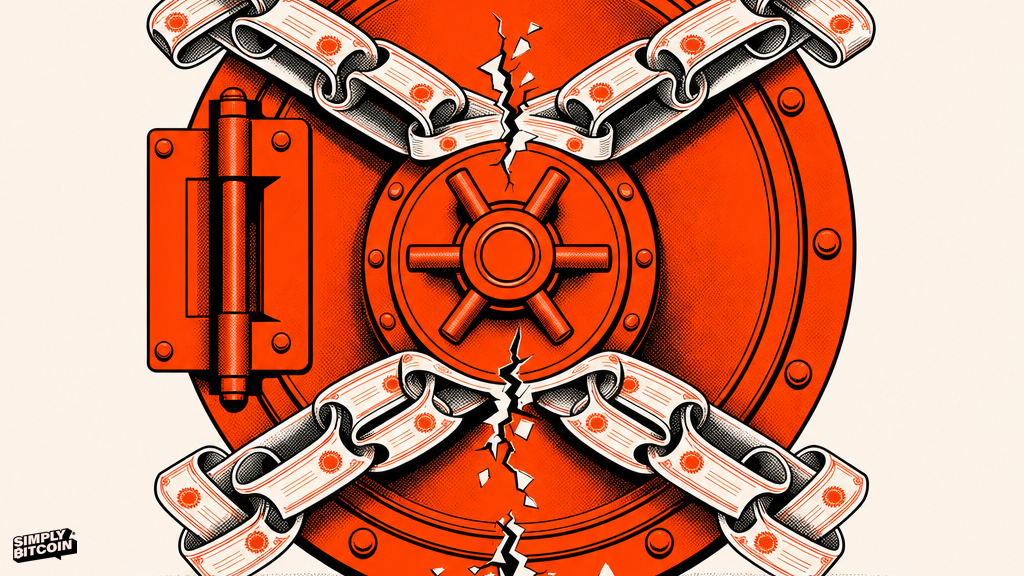
When cash-settled Bitcoin futures launched in 2017, nobody buying or selling that contract had to touch a coin. The exposure was synthetic from the start, a bet on a number rather than a claim on an asset. That is exactly the gold playbook: create a tradable proxy, let the proxy absorb the speculative flow, and the real supply never has to move. The first spot Bitcoin ETF changed that pattern when it launched in 2024, because that structure is legally required to hold the actual asset behind every share. One of those products can expand without ever buying a coin. The other cannot grow at all without buying one.
The difference between those two products is the whole argument in miniature. A cash-settled wrapper can multiply claims indefinitely. A redemption-backed wrapper is capped by how much real Bitcoin it can acquire, because its own structure forces the reconciliation that gold's paper market spent decades avoiding.
THE GAP CANNOT SURVIVE WHAT IT USED TO SURVIVE
Gold's paper market needed eight central banks and seven years to finally lose the argument, and even then it took a coordinated national effort to force the reconciliation. A single government could stall it. A pair of allied treasuries could paper over it a little longer. The redemption pressure had to build across institutions big enough to matter, because an individual holder with a few coins in a vault somewhere had almost no leverage over a fixed exchange rate set by nations.
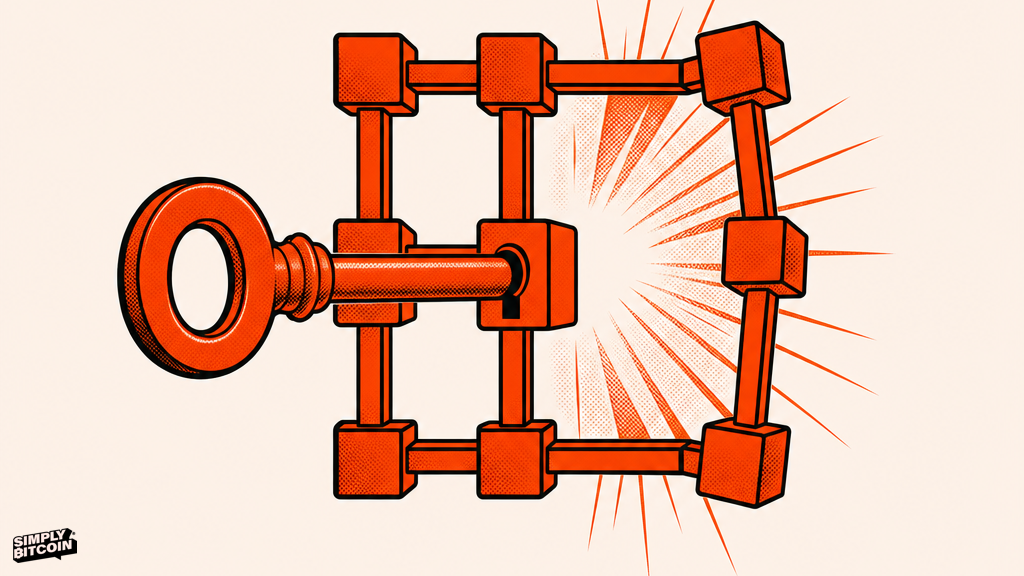
Bitcoin removes that requirement entirely. Redemption pressure does not need a central bank. It needs one person anywhere on earth deciding the paper price looks cheap relative to the real thing, and acting on it with no intermediary standing in the way. The number of parties capable of forcing the reconciliation went from a handful of finance ministries to every holder of a hardware wallet, simultaneously, with no coordination required. A gap that used to need a geopolitical crisis to close can now close because enough ordinary people independently reached the same conclusion on the same afternoon.
THE ONLY POSITION OUTSIDE THE PAPER MARKET IS THE ONE YOU HOLD YOURSELF
None of this makes paper claims harmless while they exist. A leveraged position can still get liquidated. A yield product built on top of volatile collateral can still face a run of its own if its promises outgrow what it is actually holding, and that risk is real regardless of which asset sits underneath it. Paper markets do damage on the way down even when the underlying asset is sound.
But there is one position in this entire structure that was never exposed to any of it. A coin sitting in a wallet you control was never lent, never rehypothecated, and never converted into somebody else's balance sheet obligation. It does not need redeeming because it was never surrendered in the first place. Every other instrument in this essay, the futures contract, the credit wrapper, even the ETF, is a claim that stands between you and the asset. Self-custody is the only version of this trade with no claim in the chain at all, which is also why it is the only version immune to a redemption run it never has to survive.