A Network Fixes Itself By Consensus. A Bank Fixes You By Decree.

A venture capitalist went on a podcast and said Bitcoin is capped, will eventually get hacked by artificial intelligence, and will fall to zero. The clip traveled everywhere within a day. What matters more than whether he is right is what his claim quietly assumes: that a fix for an existential threat either already exists in the open, or it gets written after the crisis by whoever is already holding your money.
THE SOUNDBITE
Chamath Palihapitiya, the Social Capital founder and All-In podcast co-host, told the Moonshots podcast that Bitcoin's buyer pool is capped because central banks cannot hold an asset with Bitcoin's privacy leaks, pointing to France's forced disclosure of crypto holdings and the kidnappings that followed. His sharper claim was technical. AI models pointed at Bitcoin's SHA-256 security could eventually crack the wallet attributed to Satoshi Nakamoto, drain it, and short the market before announcing the theft, profiting twice.
"I just think it's capped, and then I think eventually it gets hacked, and then it goes to zero."
He is not a disinterested observer. Palihapitiya has said he moved his own Bitcoin exposure out of direct holdings and into equity in Digital Currency Group, trading the asset he is warning you about for a stake in a company instead. The man predicting the hack already took his own coins off the table.
THE PART HE LEFT OUT
Dan Boneh runs Stanford's Applied Cryptography Group and co-authored the Google Quantum AI paper that actually estimates what a quantum computer would need to break Bitcoin's elliptic curve cryptography. He is about as close to a neutral referee on this question as exists. Asked directly whether Bitcoin solves its quantum problem, he called the opposite view insane and said the path is already known: move wallets to post-quantum addresses and post-quantum signatures, a transition built on cryptographic standards NIST finalized back in 2024.
Boneh is not a cheerleader. He has separately warned that the bigger near-term danger is rushing that migration into a buggy mess, not a quantum computer arriving first. That is a real, live argument about pacing and engineering tradeoffs. It is a wildly different claim than capped, hacked, zero.
DIVIDED IS NOT THE SAME AS BROKEN
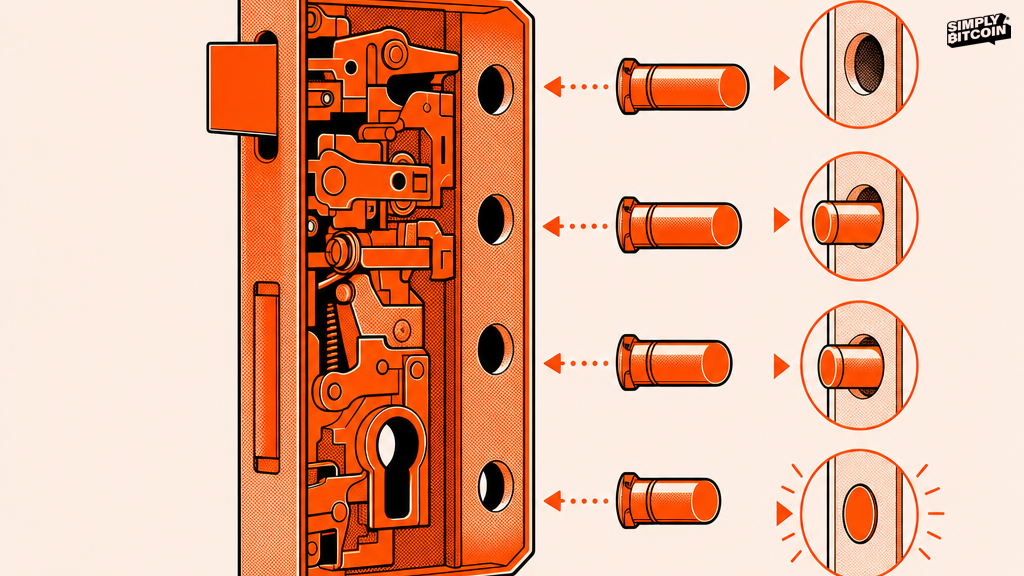
Palihapitiya's deeper complaint was that Bitcoin's community is too divided to coordinate a transition, calling it basically impossible. Flip that sentence around and it becomes the whole argument. The same slowness that makes a voluntary upgrade hard to push through also makes it impossible for anyone, including a convincing emergency, to push an unwanted change through.
Bitcoin has already lived this fight twice. SegWit split the community for years before it finally activated in 2017. Taproot went through its own contentious debate before activating in 2021. Both landed because enough of the network chose to run the new software, not because an authority declared it. A slow, arguable process is the price of making sure the fix is something users actually verified, not something handed to them while the doors were already locked.
THE OTHER KIND OF FIX
Compare that to how the legacy system has historically repaired itself. In 1933, the government closed the banks, invoked Executive Order 6102 to recall gold at a price it alone set, and changed what a dollar could be redeemed for while the public had no way to object. In 2008, the rules governing deposits, money market funds, and failing banks were rewritten in real time, after the panic had already started, not before.
The fix in that world has a consistent shape. It arrives after the damage is done. It asks for trust rather than offering verification. And it tends to change the deal rather than restore it.
THE PATTERN WEARING A NEW COSTUME
The video that sparked this piece raises a theory, and it should be treated as exactly that: a speculative scenario, not a confirmed plan. The theory imagines AI agents causing enough chaos inside the banking system that millions of people log into their banks one morning and see a zero balance where their savings used to be. No branch to call. No one who can explain what happened.
A reassurance follows. The money is safe, just not on the old rails, so it comes back on a new one that is easier to monitor and control. The replacement arrives already built, and most people take it, because the alternative is losing everything.
Whether or not that specific script ever plays out, it rhymes with 1933 and 2008 because trust-based fixes only come in one shape. They get announced once the alternative is already worse than accepting the new terms. Nobody needs your vote when the only other option is zero.
THE ASYMMETRY
That is the actual contrast hiding underneath a billionaire's soundbite. One system publishes its worst-case fix years in advance, argues about it in public for years, and only adopts it when enough people choose to run it. The other system announces its worst-case fix during the emergency and asks you to accept it because the alternative has already been taken off the table.
This is verification over trust, playing out as two different crisis plans. Bitcoin's response is slow because it has to be checked. The bank's response is fast because it never asked for your agreement in the first place.


Daily Bitcoin news, analysis and interviews. New shows every single day.
Subscribe on YouTube