A Moat Built From Law Expires. A Moat Built From Math Never Does.
On November 12, Nvidia's board removed Jensen Huang, the man who had run the company for thirty-three years, over a personal scandal that had nothing to do with chips, models, or market share. Four months earlier, Huang had become the most visible advocate open AI had, publicly asking Washington not to lock the technology behind a handful of permissioned providers. Whatever actually ended his tenure, the fight he was in the middle of is still running, and it exposes something true about two different ways a company, or a currency, can defend its position: with a better product, or with a law.
THE FOUR MONTH HEAD START
The economics of closed AI models are getting worse, not better. Training a frontier model costs tens of billions of dollars, and the lead it buys shrinks every quarter as open models catch up on hardware anyone can buy. At Nvidia's CES 2026 press Q&A earlier this year, Huang put a figure on the shift, saying one in every four tokens generated today comes from an open model. That number does not describe a niche. It describes a closed lab's paying customers quietly building the same capability at home.
A head start that keeps shrinking cannot be the whole business plan. If the product itself will not hold the line, something else has to.
WHEN THE PRODUCT CAN'T PROTECT YOU, THE LAW HAS TO
In July, Huang used his very first post on X to share an open letter. The letter was Open Weights and American AI Leadership, published the same day and co-signed by 25 companies, including Nvidia, Microsoft, Meta, IBM, Dell Technologies, Palantir, and Hugging Face. "The world needs both frontier closed models and frontier open models," Huang wrote in his X post. The ask was modest: do not regulate downloadable models out of existence before they get the chance to compete.
Two names were conspicuously missing from the original signers, and one of them never did sign. The letter rapidly doubled its signatories to 50 in a single day, including OpenAI and Google. Anthropic has not signed the letter, however. Its CEO had already said plainly what he thought of the alternative: "the scaling of open source models, I think it's going down a very dangerous path." A company that cannot out-build its competitors on price or performance is left arguing that the competition itself is the danger.
A MOAT MADE OF STATUTE NEEDS A STANDING ARMY
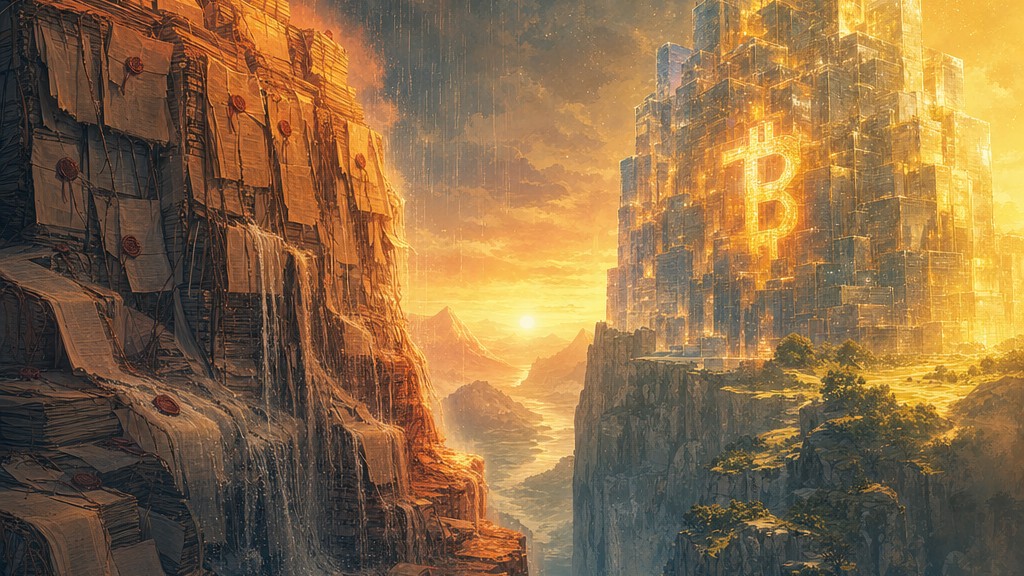
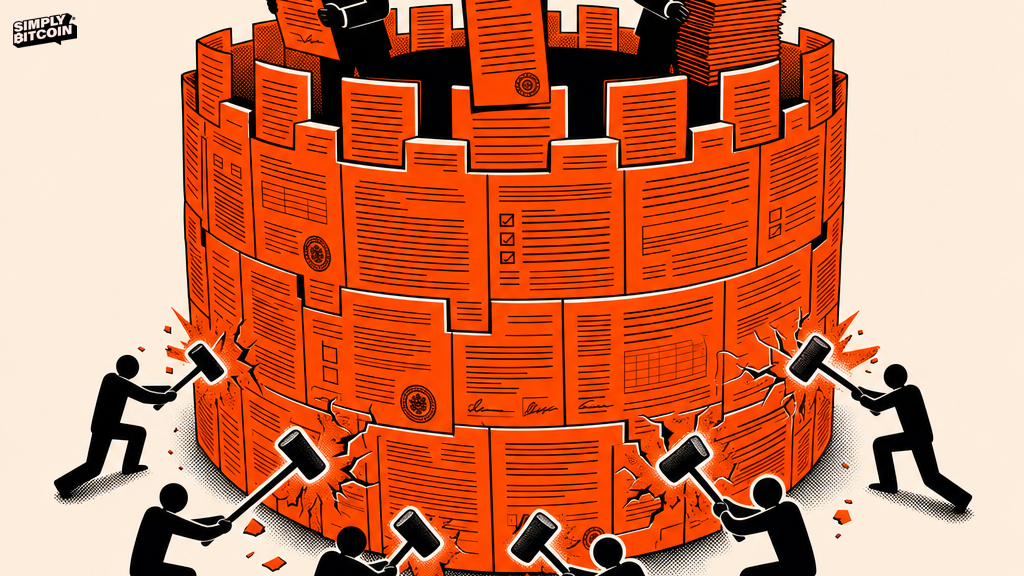
That is the move. If a four month technical lead will not pay back tens of billions in training costs, the only lead that lasts is a legal one: a rule that only the biggest labs can afford to comply with, built on fear of what the technology might do in the wrong hands. A moat like that is not built once and left standing. It has to be defended in every election cycle, every committee hearing, every regulatory comment period, against every competitor who would rather it did not exist. Someone has to keep showing up to renew it.
And whoever is loudest against that moat becomes a problem to be solved. Within hours of Huang's exit, the chairman of the House Select Committee on China was already calling for new export controls in the year-end defense bill. The timing is not proof of a conspiracy. It is proof of how fast a legal moat's defenders move once an obstacle clears.
THE MOAT THAT NEVER NEEDS RENEWING
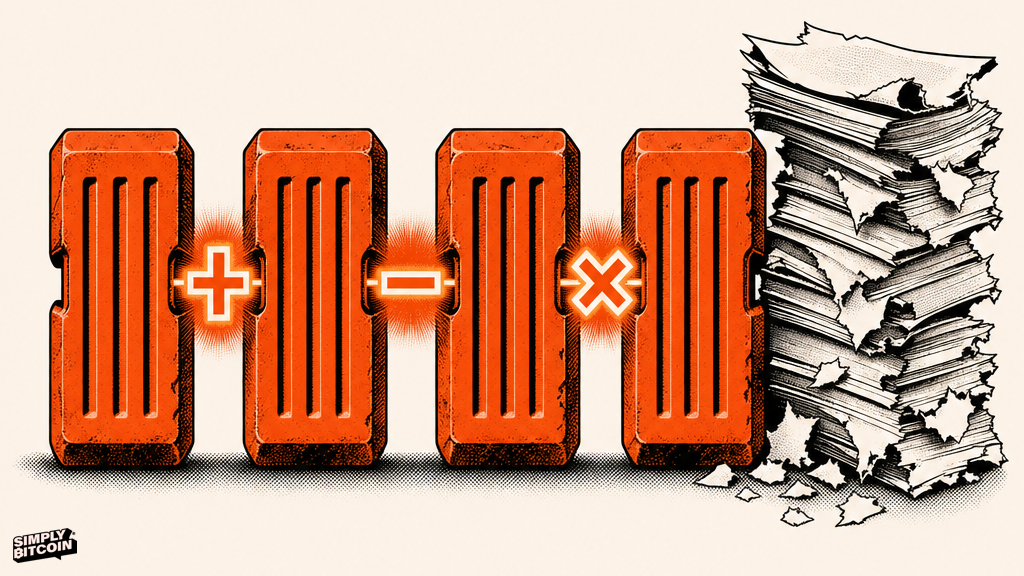
Bitcoin's scarcity works on the opposite logic entirely. Twenty one million coins exist as a hard limit written into code that tens of thousands of independent computers all over the world enforce by simply running the software and rejecting anything that breaks the rule. Nobody has to defend that limit in a committee hearing. Nobody has to out-lobby a rival to keep it in place. There is no renewal date, because there was never a permission slip to begin with.
Proof of work protects the ledger the same way. Changing Bitcoin's history requires redoing the work of every block since, work measured in real electricity spent by real machines, not in persuading a regulator or winning a vote. A closed AI lab's moat survives as long as the right people stay in office and the right argument stays persuasive. Bitcoin's moat survives as long as arithmetic does.
WHAT A MOAT REVEALS ABOUT WHAT'S INSIDE IT
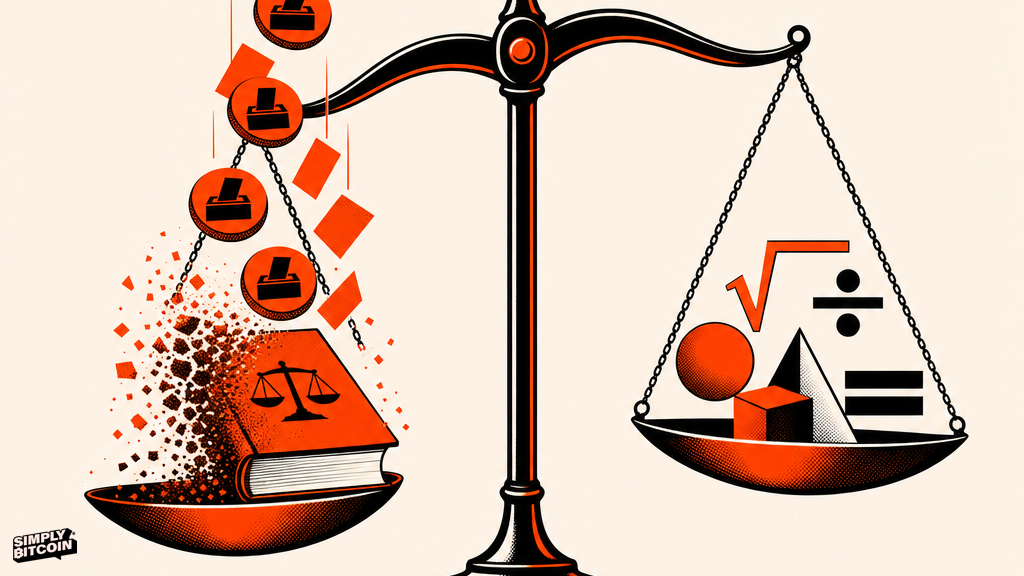
Here is the test worth applying to anything that calls itself scarce: does it need permanent political defense to stay that way. A legal moat is an admission. It says the thing being protected could not survive open competition on its own merits, so a law has to stand in for the merit it lacks. That is true of a closed model protected by export controls just as it was true of a currency protected by capital controls and legal tender laws long before any of this AI fight started.
Bitcoin never needed that kind of protection and still does not. Its scarcity was not granted by a government that could later take it back, and its security does not depend on which executive keeps their job this quarter. A moat built from law has an expiration date built into its very design, because law is a human decision that can always be re-made by the next human decision. A moat built from math was never a decision at all.


Daily Bitcoin news, analysis and interviews. New shows every single day.
Subscribe on YouTube