A Forced Sale Requires A Lender. Self-Custody Has None.

Treasury Secretary Scott Bessent spent the closing days of August defending a currency intervention by describing what happens if he does not repeat it. A disorderly decline in the yen, he told the Senate, could set off forced unwinds of major trading positions and spread stress across global markets, not just Japan's. Not a crash. Not a correction. A forced sale: a position closed not because its owner chose to sell, but because someone else had the contractual right to make them.
THE MECHANICS OF A FORCED SALE
The mechanism behind that warning is old and simple. For years, investors borrowed cheaply in yen, because Japanese rates sat near zero, and used the proceeds to buy Treasuries and other higher-yielding assets abroad. The trade only works while the currency they owe stays cheap.
As the Bank of Japan lets its own yields rise, that math breaks. Investors funded in yen have to sell what they bought, to raise the yen they now owe more of, whether or not it is a good time to sell. Japan holds more US Treasuries than any other country on earth. When enough of that trade unwinds at once, it sells Treasuries into a falling market, which is the exact scenario Bessent was warning the Senate about.
EVERY FORCED SELLER BORROWED FIRST
Strip away the currencies and the institutions and one fact remains underneath every forced unwind in financial history. Nobody gets margin called on an asset they own outright. A forced sale requires a lender, a contract, and a currency the seller does not control. Remove any one of those three and the forced sale cannot happen, no matter how disorderly the market gets.
That is the actual definition of leverage, stripped of the jargon. It is agreeing that someone else gets to decide when you sell. You get the upside while the trade works, and you get a phone call the moment it stops.
THE CARRY TRADE IS THE TELL
Watch how the Bessent letter is framed and the currency mismatch disappears into the background every time. It becomes a story about a country, about a currency, about geopolitics. It is really a story about debt denominated in something the debtor cannot print.
Every institution caught in a forced unwind made the same bet: that the cost of the currency it borrowed would stay low forever. It is the same bet a homeowner makes on an adjustable rate, the same bet a nation makes when it finances its deficit in someone else's money. The bet always looks fine until the rate changes and the lender still gets paid first.
BITCOIN HELD OUTRIGHT HAS NOTHING TO OWE
This is the seam where Bitcoin actually separates itself from the story, and it has nothing to do with price. A Bitcoin holder who bought outright, in self-custody, with no leverage against it, owes nothing to anyone. There is no lender who can call the loan, because there is no loan. There is no margin desk that can demand more collateral, because there is no margin.
Nobody can force that holder to sell at 3am because a currency on the other side of the planet moved. Nobody can bundle that Bitcoin into someone else's balance sheet and unwind it without the owner's consent, because the private key that moves it exists nowhere else. That is not a slogan. It is the plain result of removing the counterparty.
THE EXCHANGE REBUILDS THE LEVER THEY NEED
The moment Bitcoin sits on an exchange, inside a fund structure, or posted as collateral against a loan, the counterparty comes right back. Now there is a balance sheet between the owner and the asset, and balance sheets get margin called. Now there is a custodian who can freeze, lend out, or rehypothecate what was supposed to be yours. The coin did not change. The ownership did.
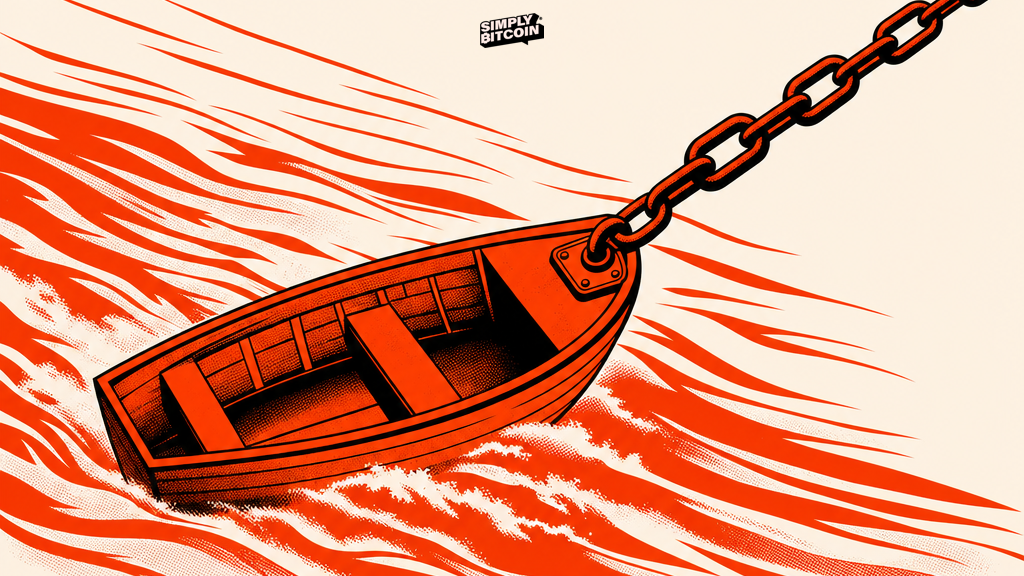
This is why the distinction between holding Bitcoin and holding a claim on Bitcoin is not a technical footnote. It is the entire difference between being the ship that cannot be chained and being one more position on someone else's book, waiting for the letter that says the unwind has started.
Bessent's letter was not really about the yen. It was an admission that the entire system runs on borrowed currency and forced sellers, and that the only asset in the room nobody can force to sell is the one nobody else is holding for you.