
A Bank Picks The Word For Its Failure. A Chain Never Gets A Vote.

Monday morning, Chase customers could not log into their own accounts. Paychecks sat unconfirmed, Zelle transfers stalled, and a teller behind the counter could not explain anything past four words: the system is down. By that evening, the bank had a sentence ready. Not an explanation. A software bug in an on-premise hardware system. Not cyber related.
THE WORD ARRIVES BEFORE THE EXPLANATION
That phrase did a lot of work in a single afternoon. It told millions of customers what not to worry about before anyone outside the building had seen a single log file. Nobody voted on that sentence. Nobody checked it against anything. It arrived, and the story was effectively over, because the only party who could see inside the failure was also the only party allowed to describe it.
A WEEK OF IDENTICAL SENTENCES
The same week, Microsoft's Outlook went dark worldwide and the explanation was a capacity upgrade. The FAA grounded flights nationwide and the explanation was a facilities upgrade. Days later, JPMorgan confirmed a separate cyberattack had hit vendors handling customer marketing data, thousands of emails tied to its highest-net-worth cardholders among them, and stated plainly that the breach had no connection to the earlier outage.
None of these statements have to be false for the pattern to matter. The point is not that an institution lied. It's that an entire week of unrelated failures, at unrelated companies, produced the same sentence shape over and over: a soft word for the cause, a firm word for what it wasn't, and no path for anyone outside to check either half.
THE SOFTER WORD IS THE PRODUCT
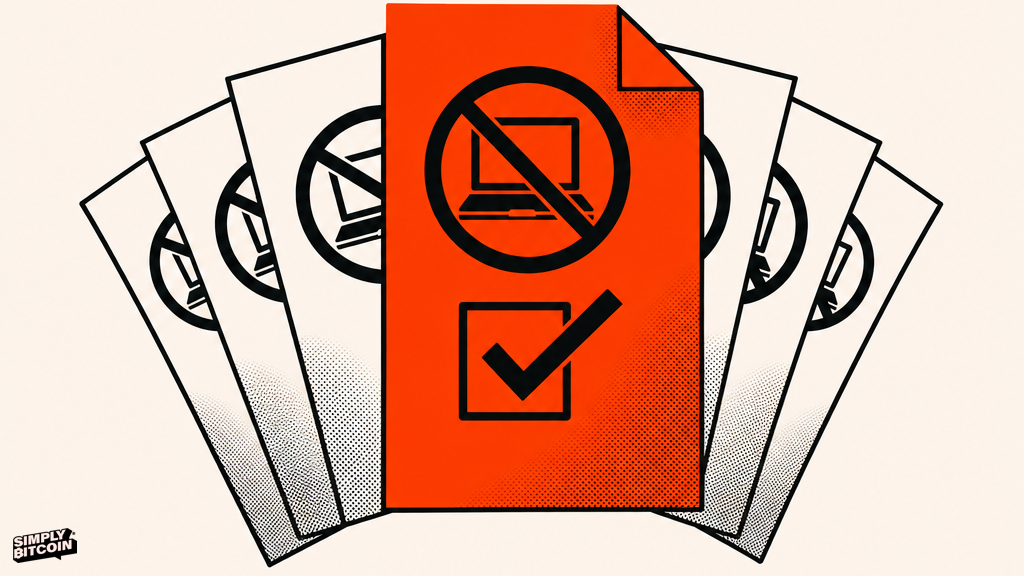
A phrase like "software bug" or "not cyber related" is not neutral description. It's risk management, priced in real time. Calling something a hack invites regulators, lawsuits, and a stock that opens lower. Calling the same event a bug invites a shrug and a retry button. The institution that controls the only window into its own systems also controls the only vocabulary available to describe what happened behind that window.
You cannot independently verify an on-premise hardware failure from your kitchen table. You can only believe the statement, or not. That's the whole transaction, and it happens every time, to everyone, by design.
A LEDGER THAT NEVER GETS TO PICK ITS WORD
Bitcoin's ledger doesn't have a spokesperson's desk sitting between a block and the person checking it. If a block were invalid, every node checking it would see the same invalid block at the same moment, and no statement changes what the software already computed. The record isn't an account of what happened. It is what happened.
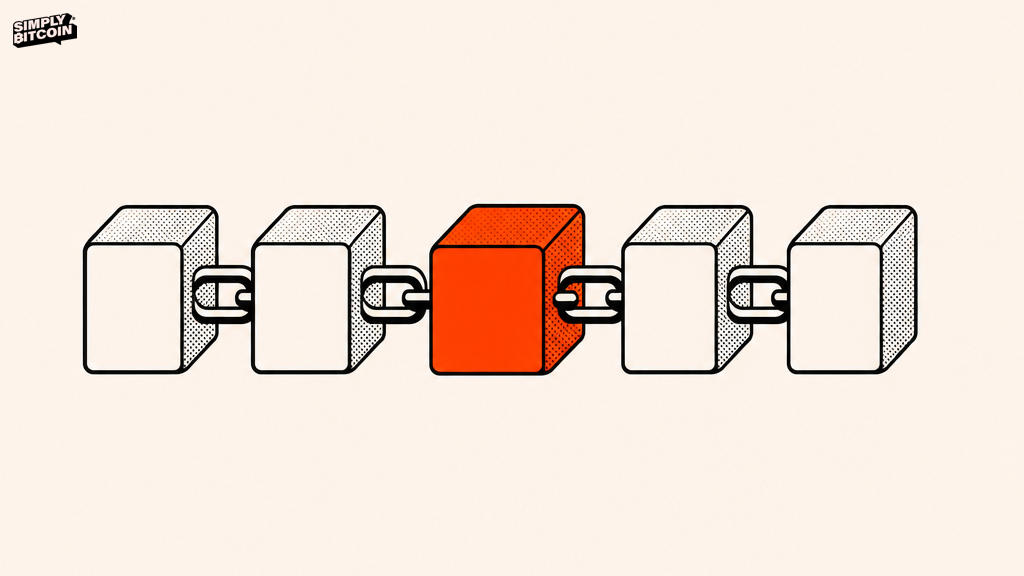
This isn't a claim that Bitcoin can't fail. It has had bugs, forks, and real disagreements over its history, same as any software project run by humans. The difference is who gets to describe the failure afterward. A chain split isn't settled by a better-written press release. It's settled by which chain the rest of the network keeps building blocks on, visible to anyone running a node, argued about in public, resolved by computation rather than by a quote.
WHAT THE SOFT WORD IS BUYING TIME FOR
The word matters beyond reputation, because while an outage lasts, the institution also decides what you're allowed to do with your own money. A frozen login isn't just an inconvenience. It's a temporary suspension of your ability to verify your own balance, confirmed only by the same party that chose the word for the suspension in the first place. You're asked to trust an account of the very thing you currently cannot check.
That gap, the space between when something happens and when you're allowed to see proof of it, is where every one of these statements lives. It isn't a flaw in the banking system. It's a feature of any system built on custody: someone else holds the record, so someone else gets to decide how the record gets described to you.
THE ONLY RECORD THAT NEVER NEEDED A SPOKESPERSON
Self-custody removes that gap. No institution stands between you and your balance, so there's no party positioned to choose a softer word for a failure that is yours to see directly, and no permission slip required before you check whether it happened. The chain doesn't issue a statement, because nobody asked it to explain itself. It just keeps producing blocks, roughly every ten minutes, the same during a bank outage as the week before one.
That's the actual proof, and it never needed a word for it.


Daily Bitcoin news, analysis and interviews. New shows every single day.
Subscribe on YouTube