A Bad Take Gets You Rebooked. A Bad Block Gets Rejected.

Peter Schiff has spent close to a decade telling anyone who would listen that Bitcoin is tulip mania, fool's gold, a pyramid scheme, or some rotating combination of the three. Jason Calacanis just added his own entry to the file, calling Bitcoin a dead network that will never see a new high again. Both men are still booked. Both are still quoted as informed opinion on money. Neither has paid a professional price for being wrong, because the thing that is supposed to keep score, the audience's memory, simply doesn't.
THE ASYMMETRY NOBODY POLICES
Schiff earned real credibility once. In August 2006, Schiff warned viewers on CNBC that the U.S. economy would be hampered by too much consumption and borrowing and not enough production and savings, and the crash arrived almost exactly as he said it would. That call was real. It was also nearly twenty years ago, and he has been drawing on it ever since to back a completely different claim: that Bitcoin, an asset with no connection to subprime mortgages, is the next bubble to pop.
The record since then is long. Schiff has been a vocal critic of crypto assets, comparing Bitcoin to the tulip mania that engulfed the Dutch economy. In February 2021 he wrote that while a temporary rise to $100,000 was possible, a permanent fall to zero was inevitable. It did not fall to zero. In 2021 he even acknowledged that his prediction that Bitcoin would never reach $50,000 had been wrong, and kept predicting the collapse anyway. A surgeon with that error rate loses a license. A pundit with that error rate gets a bigger studio chair.
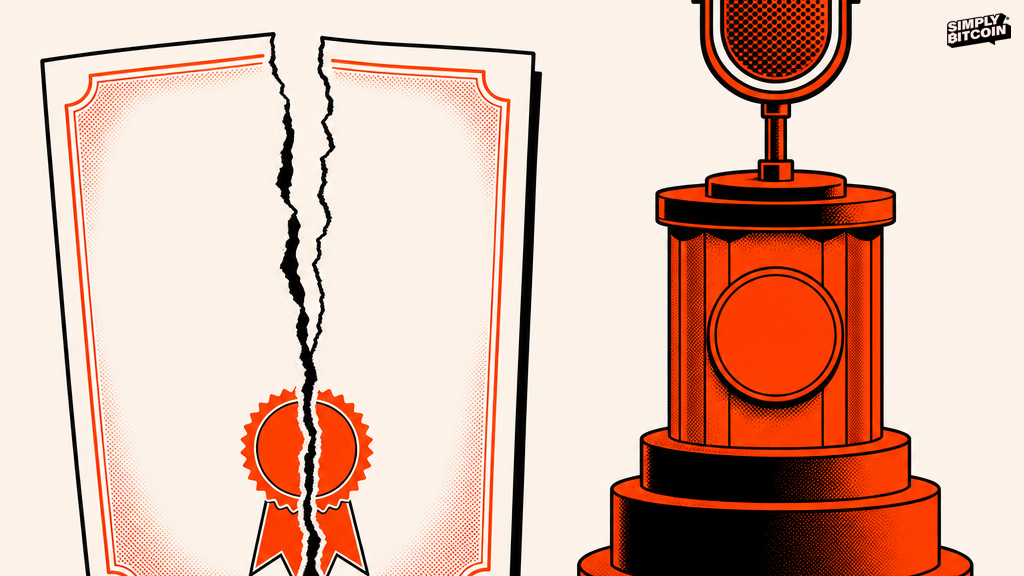
CERTAINTY IS THE PRODUCT, NOT THE PREDICTION
This is not a Schiff problem. It is a category of problem, and Calacanis just supplied the newest specimen. On October 27, 2026, Calacanis told followers to sell bitcoin, forecasting a fall to $57,000 within a year and declaring no new all-time high ever again. His framing was blunt: why put resources into a dead network that offers nothing beyond a store of value. In late 2024 he had already walked back an earlier failure call, acknowledging Bitcoin's resilience and reducing his estimated probability of total collapse to under five percent, and two years later he was back to declaring the thing permanently finished.
Financial television does not book probability-weighted nuance. A calm, hedged assessment of capital allocation does not get a thumbnail. A flat, certain prediction that something is about to die does. The selection filter is not broken. It is working exactly as designed, and it rewards volume of conviction over accuracy of outcome every single time, because volume is what keeps the segment on air.
THE RECEIPTS NOBODY BUILT UNTIL SOMEONE DID
What makes this correctable at all is that somebody eventually bothers to count. Bitcoindeaths.com has tracked bitcoin being declared dead 429 times, and an investor who put $100 into Bitcoin every single time would be sitting on more than $83 million. When Calacanis made his latest call, Bitcoin advocate and educator Joe Consorti pointed out that buying Bitcoin after his previous bearish predictions would have produced returns in the hundreds of percent. The tally only exists because someone chose to build it, outside the system that produced the bad calls in the first place.
That is the actual gap. Financial media has no native mechanism that forces a wrong prediction to cost the predictor anything. The audit has to be bolted on from outside, by a stranger with a spreadsheet, and it only works if someone keeps doing it forever. Memory is optional. Receipts are a hobby.
THE NETWORK THAT CANNOT BE TALKED OUT OF ANYTHING
Bitcoin runs on the opposite design. Every full node on the network independently checks every block against the same consensus rules: the proof of work, the subsidy, the signatures, the supply cap. A block that breaks any of those rules gets rejected, in full, regardless of who mined it, how much hash power backed it, or how confidently its sender announced it. There is no studio booker deciding the rejected block deserves another shot because it was entertaining. There is no credibility bank it can draw down from a correct call it made in 2006. The rule either holds or the block doesn't get added. That is what "don't trust, verify" actually means at the protocol layer, and it is also the one piece of financial infrastructure in this entire story that has never once needed a stranger with a spreadsheet to keep it honest.
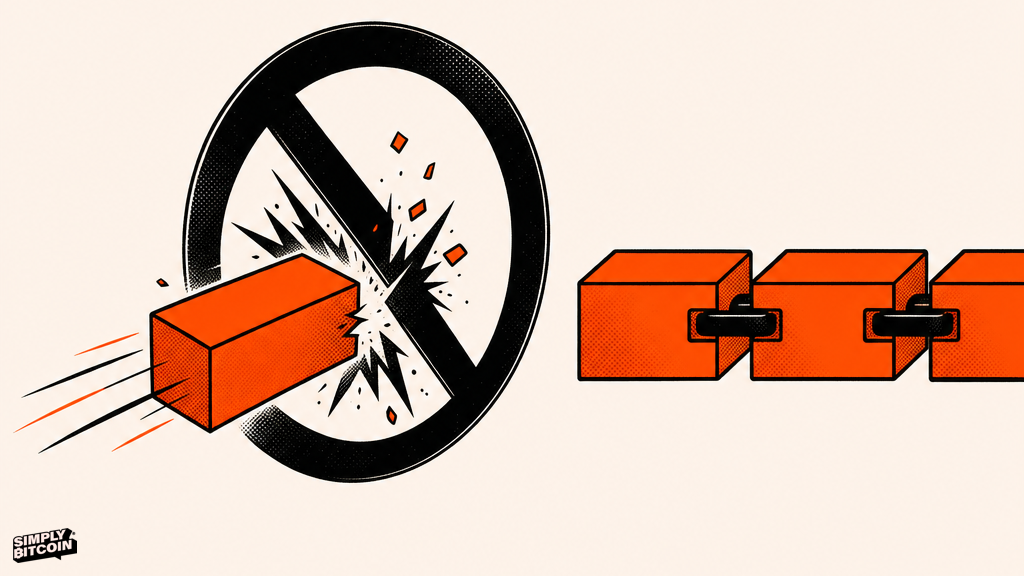
THE LEDGER DOESN'T NEGOTIATE WITH CHARISMA
This is the part that should actually change how you listen to the next confident voice. A pundit's track record is a social fact. It exists only as well as someone else's willingness to maintain it, and it can be talked around, reframed, or simply forgotten between one segment and the next. Bitcoin's price history and its chain of blocks are not social facts. They are public, timestamped, and checkable by anyone with an internet connection, for free, right now, without asking anyone's permission or trusting anyone's memory.
That difference is the whole argument. A prediction about Bitcoin can be wrong for years and still get a platform, because nothing in the media apparatus forces a reckoning. A block that violates Bitcoin's rules does not get a platform for even one confirmation, because the system that judges it does not care how certain anyone sounded while making it.
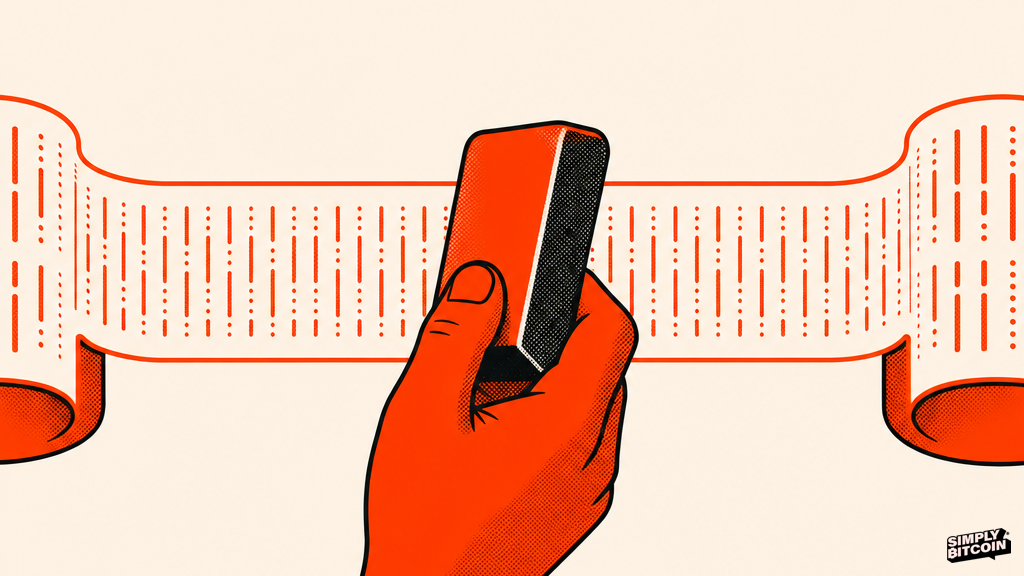
MAKE THEM KEEP SCORE
You do not actually need to build an inverse-Schiff index or wait for the next Joe Consorti to do the math. The lesson underneath the joke is simpler than the spreadsheet. The asset at the center of this argument already has a built-in refusal to be talked out of its own rules, and a public record that nobody gets to edit after the fact. The pundits are not the story. The fact that their industry has no equivalent to a rejected block is.


Daily Bitcoin news, analysis and interviews. New shows every single day.
Subscribe on YouTube